restaurant designer

Restaurant Interior Design Cost: Budgeting Guide

Stop treating your floor plan like a decorative expense and start treating it like the revenue engine it is. The most expensive restaurant design isn't the one with the highest fee; it's the one that fails to fill your seats or slows down your service. Understanding the true restaurant interior design cost requires you to move past surface-level aesthetics and focus on operational efficiency and per-guest spend.

You're right to be skeptical of "fluff" and vague fee structures that seem designed to drain your capital before the first plate hits the table. You need a clear, actionable budget that satisfies investors while ensuring your space actually works for your staff and your bottom line. It's about protecting your investment from hidden costs like MEP requirements and permit delays that derail most amateur projects.

This guide strips away the mystery. I'll provide you with a definitive framework for exactly what you should expect to pay for a high-impact interior that maximizes table turnover and commands respect in a crowded market. We'll break down fee structures, expose the risks of hiring a mere "decorator," and give you the confidence to build a space that delivers a measurable return on investment.

Key Takeaways

  • Stop confusing a cosmetic refresh with a strategic rebranding investment. as today’s costs reflect a new reality of specialized labor and material rates that demand a sophisticated budgeting approach.

  • Calculate your restaurant interior design cost based on market-specific demands, factoring in the aggressive competition found in high-stakes hubs like Miami and Philadelphia.

  • Differentiate between hourly traps and flat-fee protection to ensure your capital is spent on high-impact results rather than endless billable hours.

  • Leverage professional space planning to transform your layout into a high-performance machine that drives table turnover and maximizes per-guest spend.

  • Recognize that the most expensive design is the one that fails to generate revenue, making a strategic consultant an essential partner for a successful venture.

Table of Contents

The Reality of Restaurant Interior Design Costs
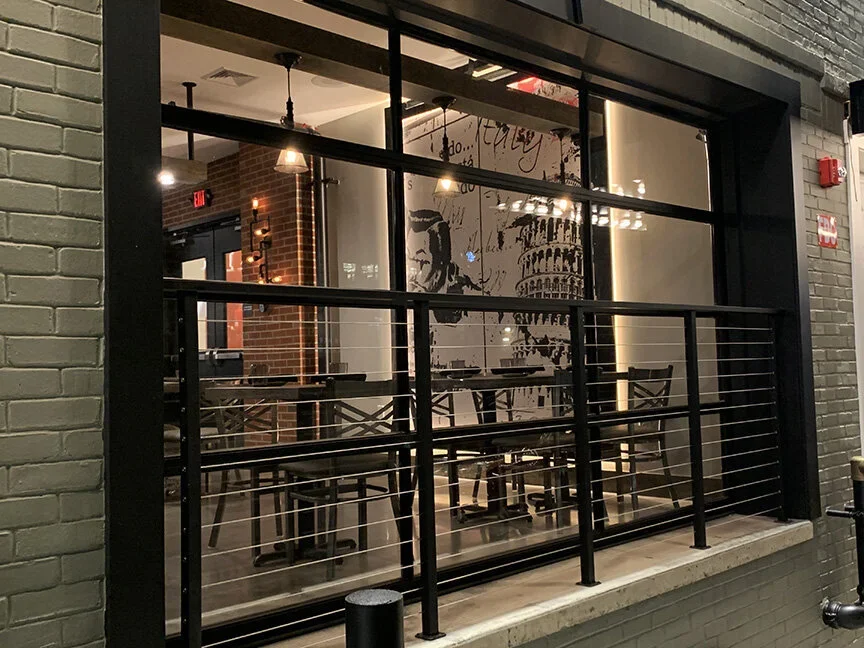
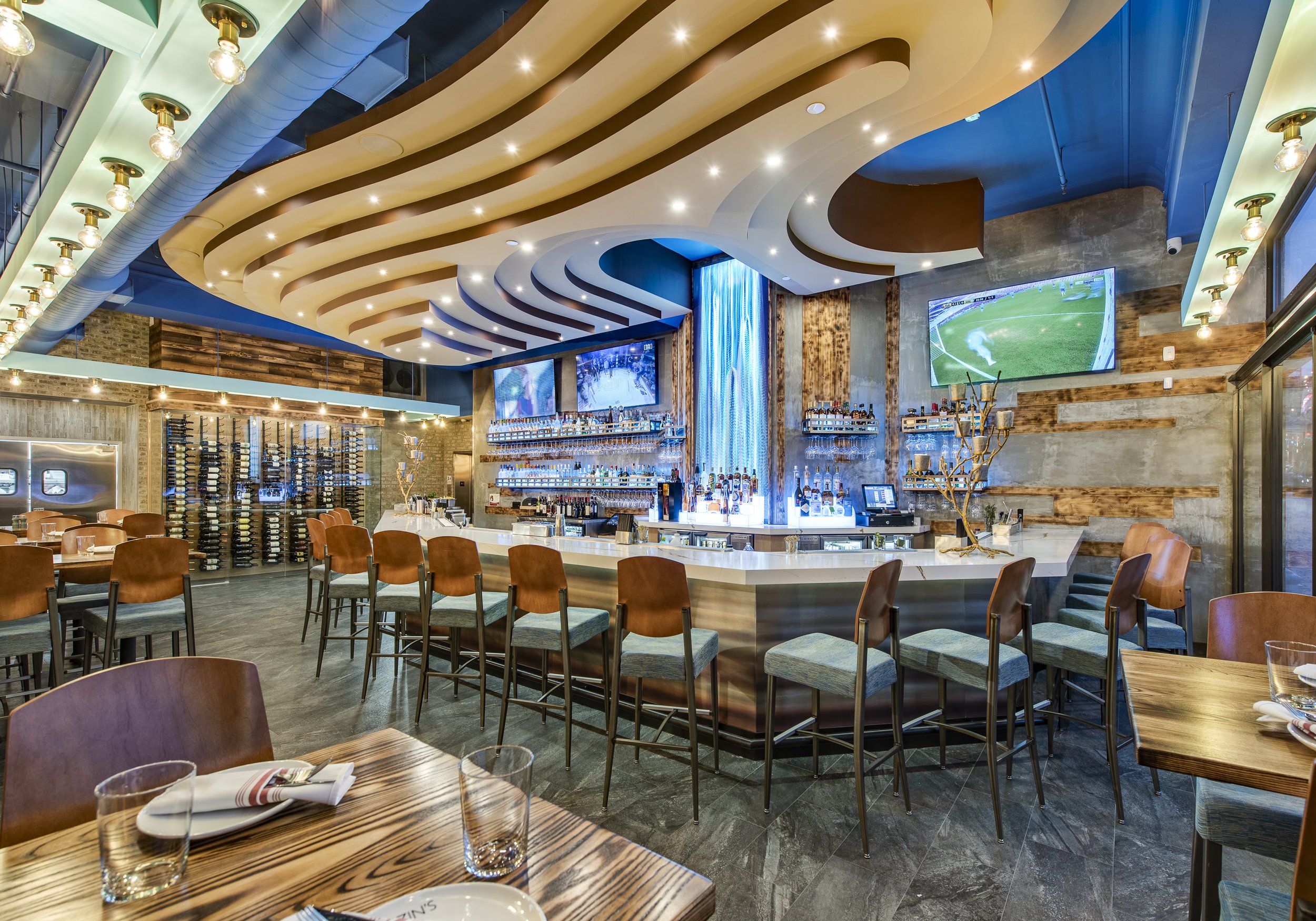
New restaurant facade with garage doors designed by Raymond Haldeman, The Restaurant Designer

Stop looking at national averages. They're irrelevant for high-stakes markets like Miami or Philadelphia. A realistic restaurant interior design cost for a competitive, high-end venue currently sits between $150 and $350 per square foot. This isn't just for "decor." It covers the strategic environment that dictates how much your guests spend and how fast your tables turn. If you're building a brand intended to dominate its neighborhood, you can't budget based on outdated 2022 figures.

Why is the floor higher today? Material scarcity and the rising cost of specialized labor have shifted the baseline. You aren't just paying for a look; you're paying for the expertise of professional interior designers who understand how to navigate supply chain volatilities while delivering a premium finish. Don't confuse a cosmetic refresh with a total rebranding investment. A refresh might swap out light fixtures and paint. A total rebrand is a surgical strike on your business model, repositioning your brand to capture a higher-spending demographic and correcting deep-seated operational flaws.
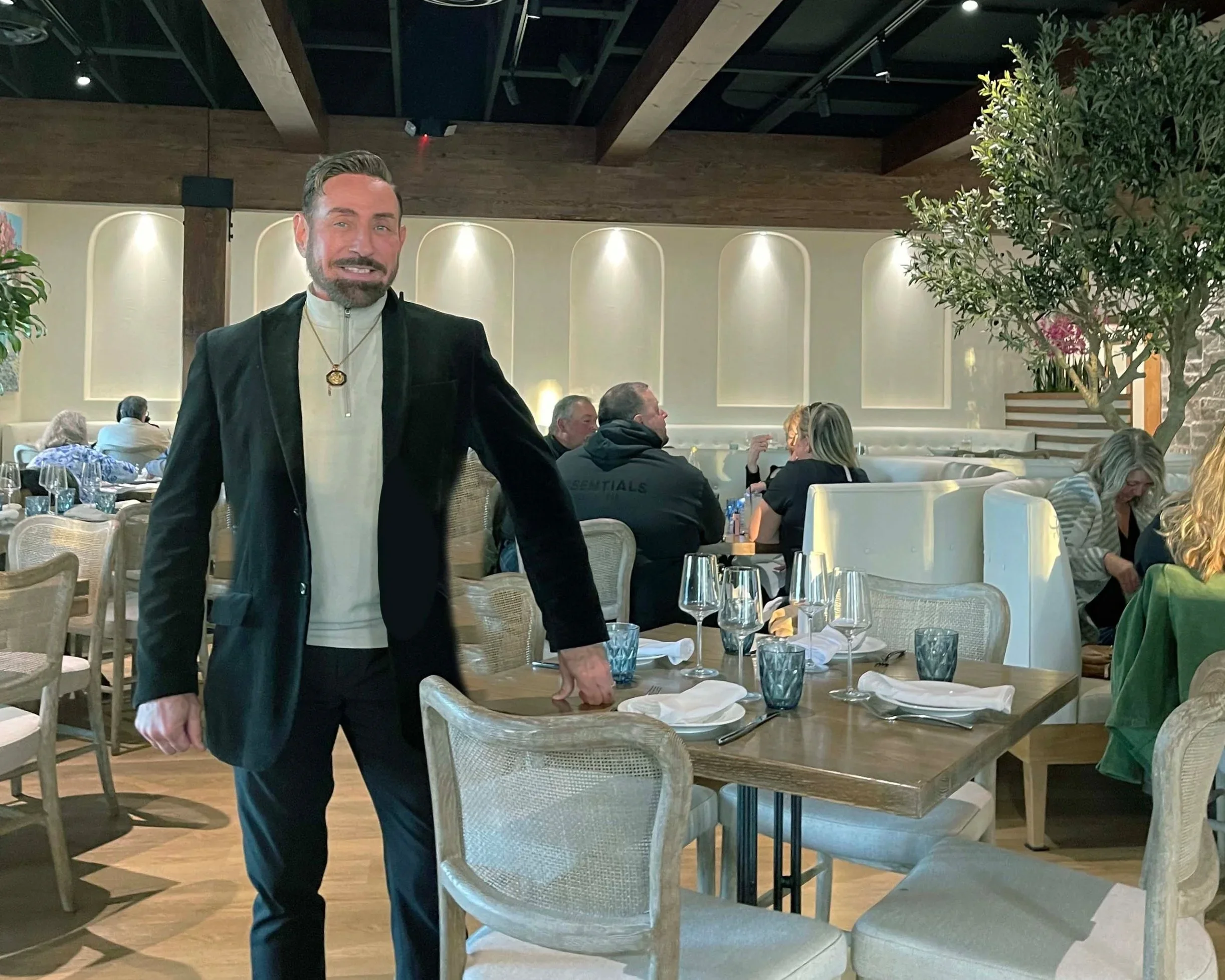
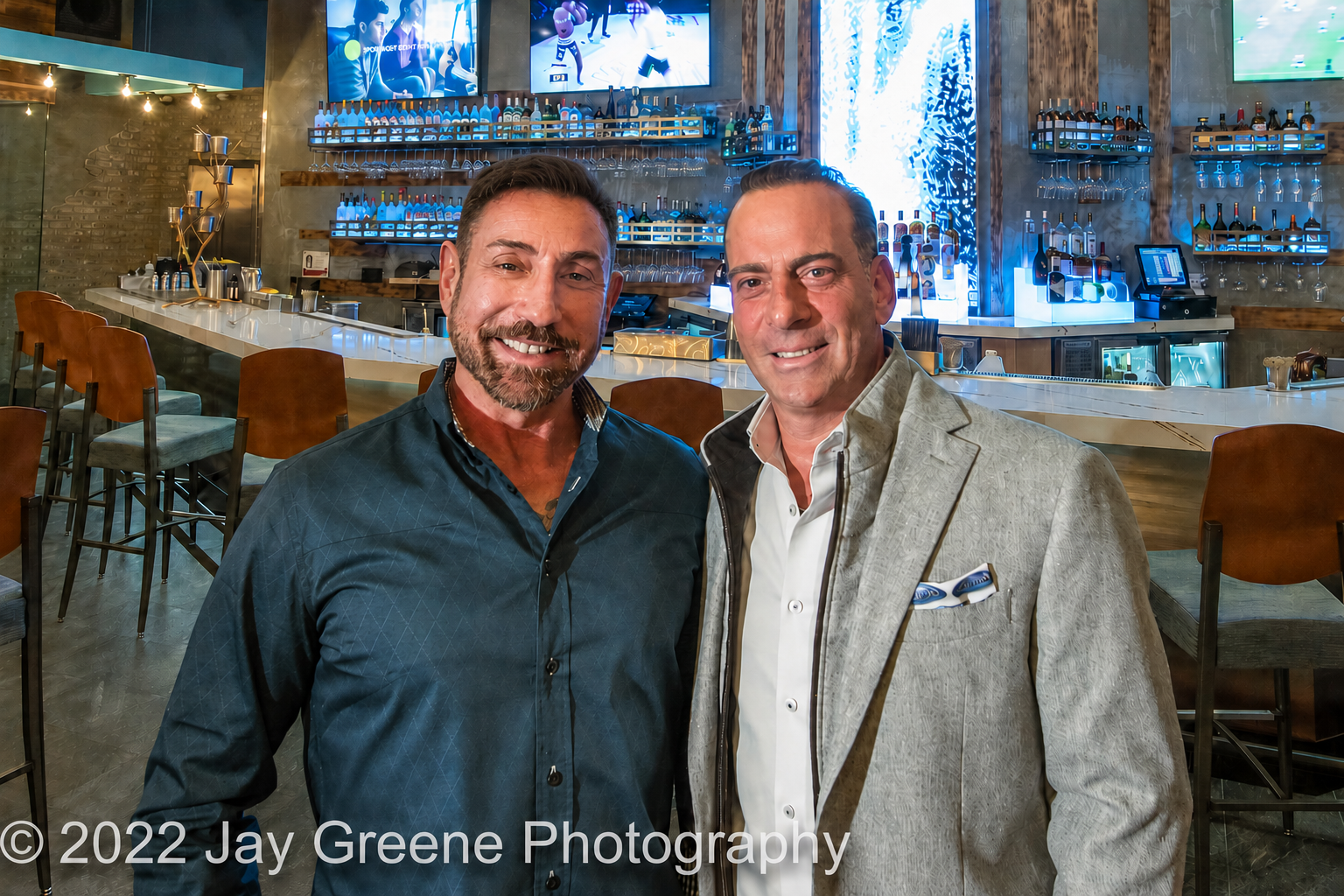
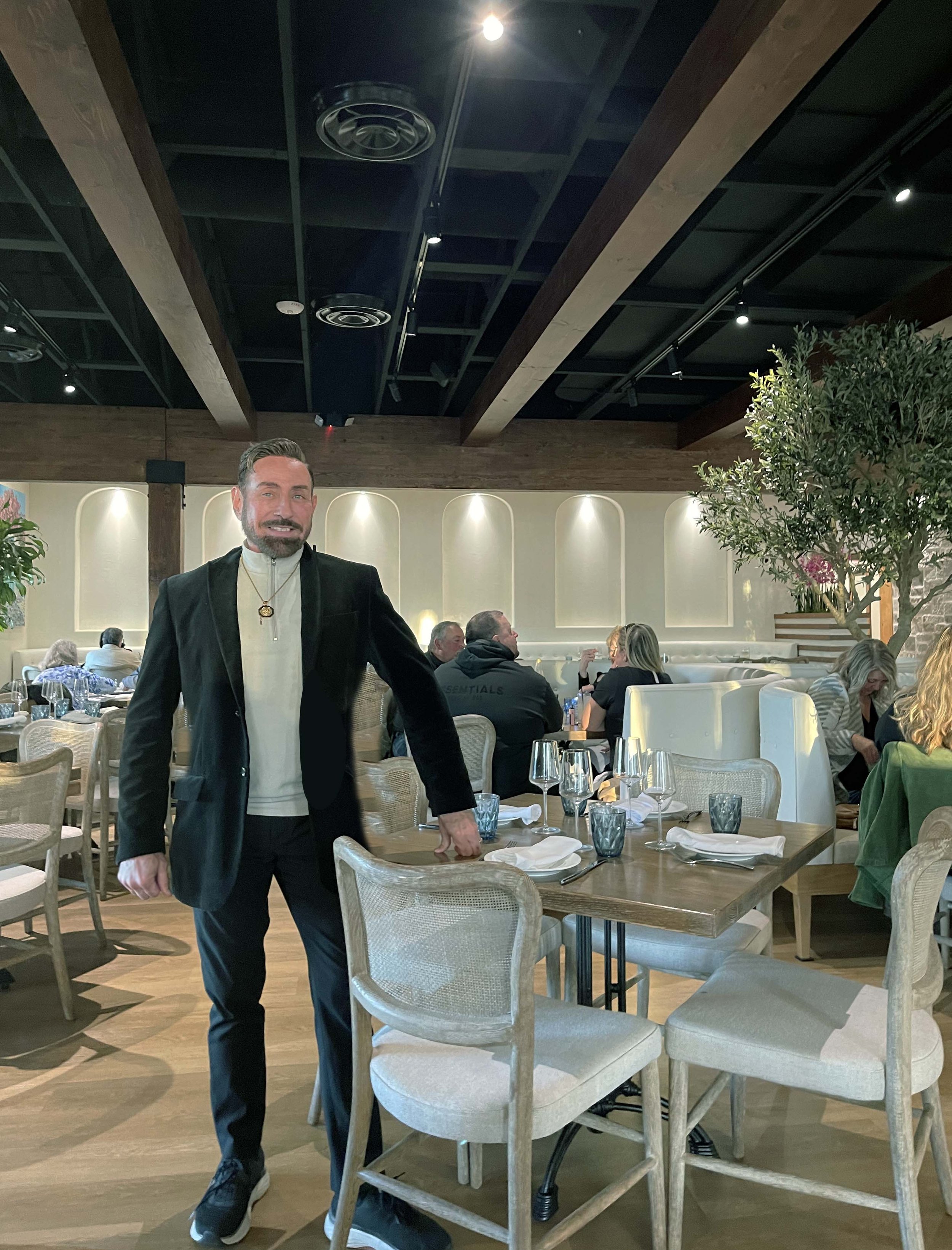
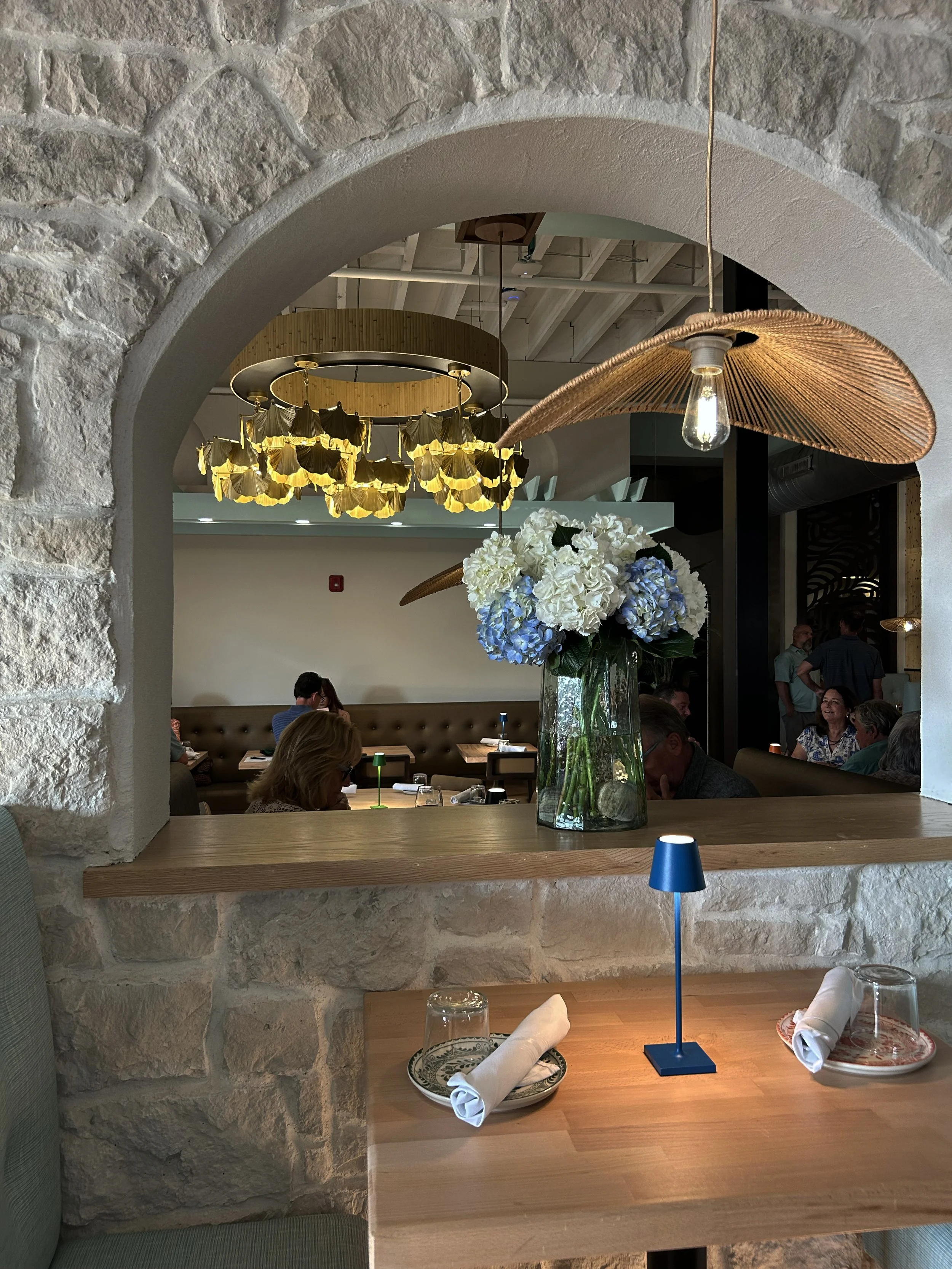
restaurant designer Raymond Haldeman at Naxos

Restaurant Designer, Raymond Haldeman

The "Cheap" Design Trap

Cutting corners is the fastest way to kill your ROI. If your layout creates bottlenecks for your servers or makes guests feel cramped, you've wasted every dollar spent. The "DIY" approach often results in brand confusion and missed revenue. Professional space planning ensures your floor plan works as hard as your chef. Remember this: design usually accounts for only 10% of your total startup budget, yet it dictates 90% of your operational success and guest satisfaction. A "cheap" design is actually the most expensive mistake you'll ever make because it costs you guests every single night you're open.

FOH vs. BOH Budget Allocation

Your front-of-house (FOH) carries the heavy lifting for the guest experience. This is where you invest in high-impact visual touchpoints that justify premium menu pricing. While your kitchen must be a model of functional efficiency, the dining area is your revenue engine. You'll naturally see a higher premium on FOH design because the materials must be both aesthetically superior and durable enough to withstand high-volume traffic. To find the right balance, allocate 60% of your interior budget to the front-of-house experience and 40% to back-of-house operational infrastructure to ensure both aesthetic dominance and kitchen speed.

Decoding Professional Design and Consulting Fees

Stop confusing construction labor with design strategy. Your restaurant interior design cost isn't just a line item for aesthetics; it's the price of a blueprint for profitability. Elite designers don't just decorate. They engineer spaces to handle high-volume stress while maintaining a premium guest experience. These days, you'll encounter three primary fee structures: hourly rates, percentage of build-out, and flat project fees. Demand transparency from the start to avoid the "budget creep" that kills new ventures.

Hourly rates are suitable for a two-hour consultation or a quick floor plan tweak, but they are dangerous for a total rebranding. You want a partner who's focused on the result, not the clock. For comprehensive projects, the industry standard has shifted to 10% to 20% of the total build-out cost. This aligns the designer's effort with the scale and complexity of your vision. However, for those who require absolute budget certainty, flat project fees are the gold standard. They provide a fixed cost for a defined scope, ensuring your capital remains protected while you focus on the launch.

What Your Design Fee Actually Covers

Your investment buys more than a mood board. It secures high-level space planning and layout engineering designed to maximize every square foot of your footprint. This includes concept development that resonates with your target demographic and aesthetic rebranding strategies that command premium menu pricing. Crucially, it pays for professional project oversight. Having an expert eyes-on-site ensures that contractors execute the vision without making the costly errors that lead to delays or "change order" nightmares.

The Consultant Advantage

Hiring a restaurant design consultant is a prerequisite for success in high-stakes markets. You aren't just paying for creativity; you're paying for a straight-talk advisory voice that has seen it all. A seasoned consultant prevents the "7 Design Mistakes" that cripple table turnover and guest satisfaction. From lighting that misses the mark to acoustics that drown out conversation, these errors are expensive to fix after the fact. If you want to ensure your layout is a high-performance machine from day one, you need a partner who prioritizes your bottom line. Investing in strategic rebranding now prevents million-dollar mistakes later.

Regional Cost Variables: From Philadelphia to Miami
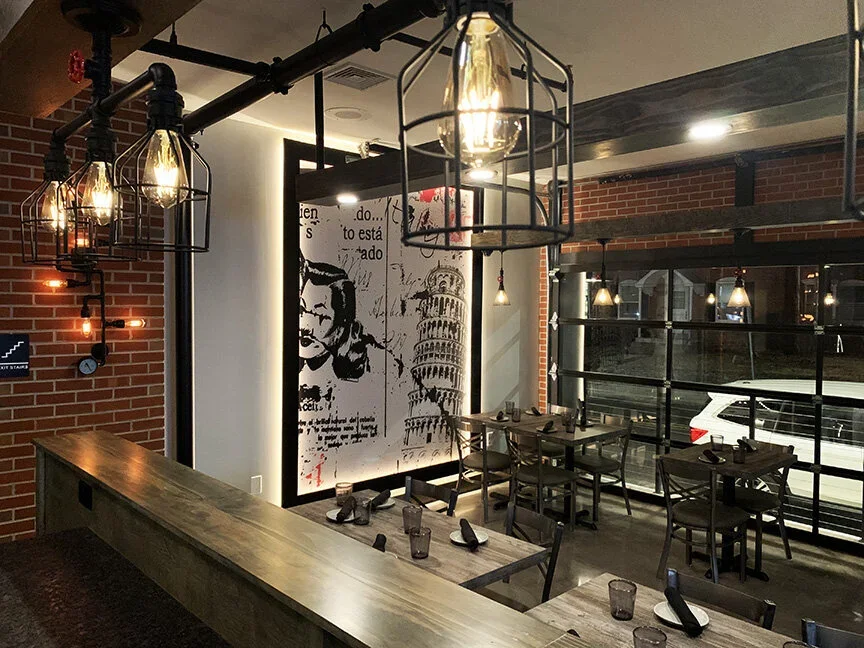
eclectic restaurant design by The Restaurant Designer

“Broad Street” designed by Raymond Haldeman

Geography is the invisible hand moving your budget. Don't assume a suburban West Palm Beach budget works in Center City Philadelphia or South Beach. Your restaurant interior design cost fluctuates based on local labor availability, material shipping, and the competitive density of your neighborhood. Urban centers demand a significantly higher investment in "vibe" and atmosphere design because you aren't just selling a meal. You're selling an experience that justifies the commute. In markets like Maryland and Delaware, local regulations can trigger unexpected structural design costs if your consultant doesn't anticipate MEP requirements from the start. Failing to account for these regional nuances is a guaranteed way to blow your budget before the first table is set.

The Mid-Atlantic Market Dynamics

Budgeting for restaurant rebranding in Pennsylvania requires navigating the high expectations of the NJ/Philly corridor. Philadelphia operators must invest more in atmosphere to compete with a relentless wave of new openings that prioritize high-impact visual storytelling. If your design feels dated, your menu price won't matter. You need a layout that handles the volume of an urban lunch rush while transforming into a high-end evening destination. New Jersey markets often require a focus on versatile space planning that accommodates both family dining and late-night bar traffic, necessitating a sophisticated approach to lighting and acoustics that can shift with the clock.

Designing for the Miami Heat

The "Miami Premium" is a reality of the Florida market. Successful Miami restaurant design requires an aggressive focus on experiential dining. You're factoring in a higher restaurant interior design cost due to the demand for premium materials that project luxury while surviving the heavy wear of a high-volume hospitality scene. Positioning your venue in this saturated market means moving beyond basic aesthetics. You need a visionary guide who understands how to build a space that feels exclusive yet remains operationally efficient. In Miami, your interior is your most effective marketing tool. It must perform as well on social media as it does on your profit and loss statement.

Consult with a Miami design expert today

Why "Cheap" Design is Your Most Expensive Mistake

Stop viewing your budget as a list of expenses to be trimmed. In the high-stakes hospitality world, your restaurant interior design cost is actually your most powerful capital investment. A poorly executed layout is a permanent tax on your earnings, dragging down your efficiency every single night you're open. While a "cheap" designer might save you $20,000 upfront, they'll cost you hundreds of thousands in lost revenue through awkward guest flow, slow service, and a lack of atmosphere that fails to drive repeat business. Getting it right the first time is significantly cheaper than a mid-season re-do when you realize your space isn't performing.

The math of a professional build-out is clear. A strategic $100,000 design investment can realistically generate $1,000,000 in new revenue by repositioning your brand and optimizing your floor plan. This isn't magic; it's the result of expert intervention that aligns your physical space with your financial goals. Raymond Haldeman serves as the essential strategic partner for new restaurant openings, ensuring your launch isn't just a party, but the start of a profitable legacy.

Engineering for Table Turnover
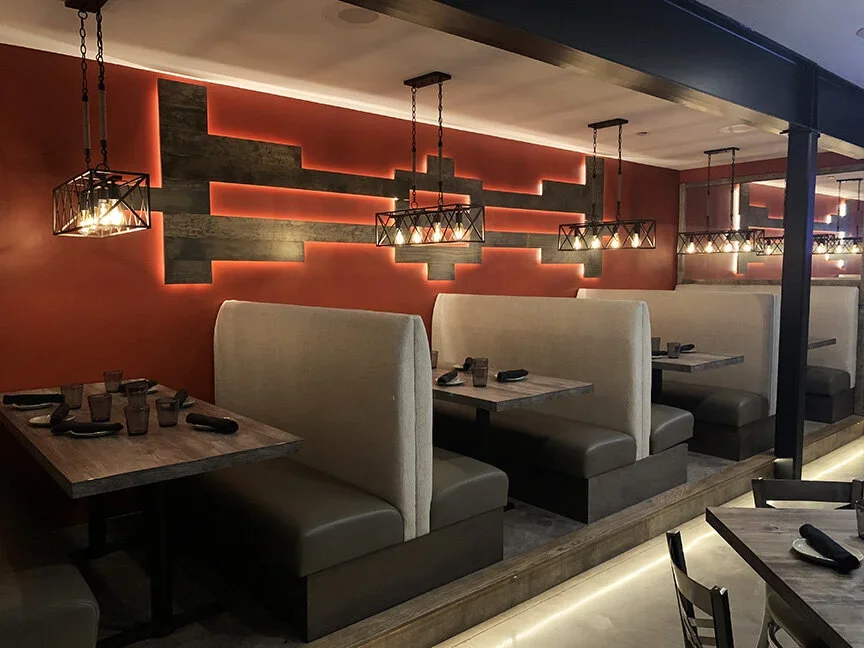
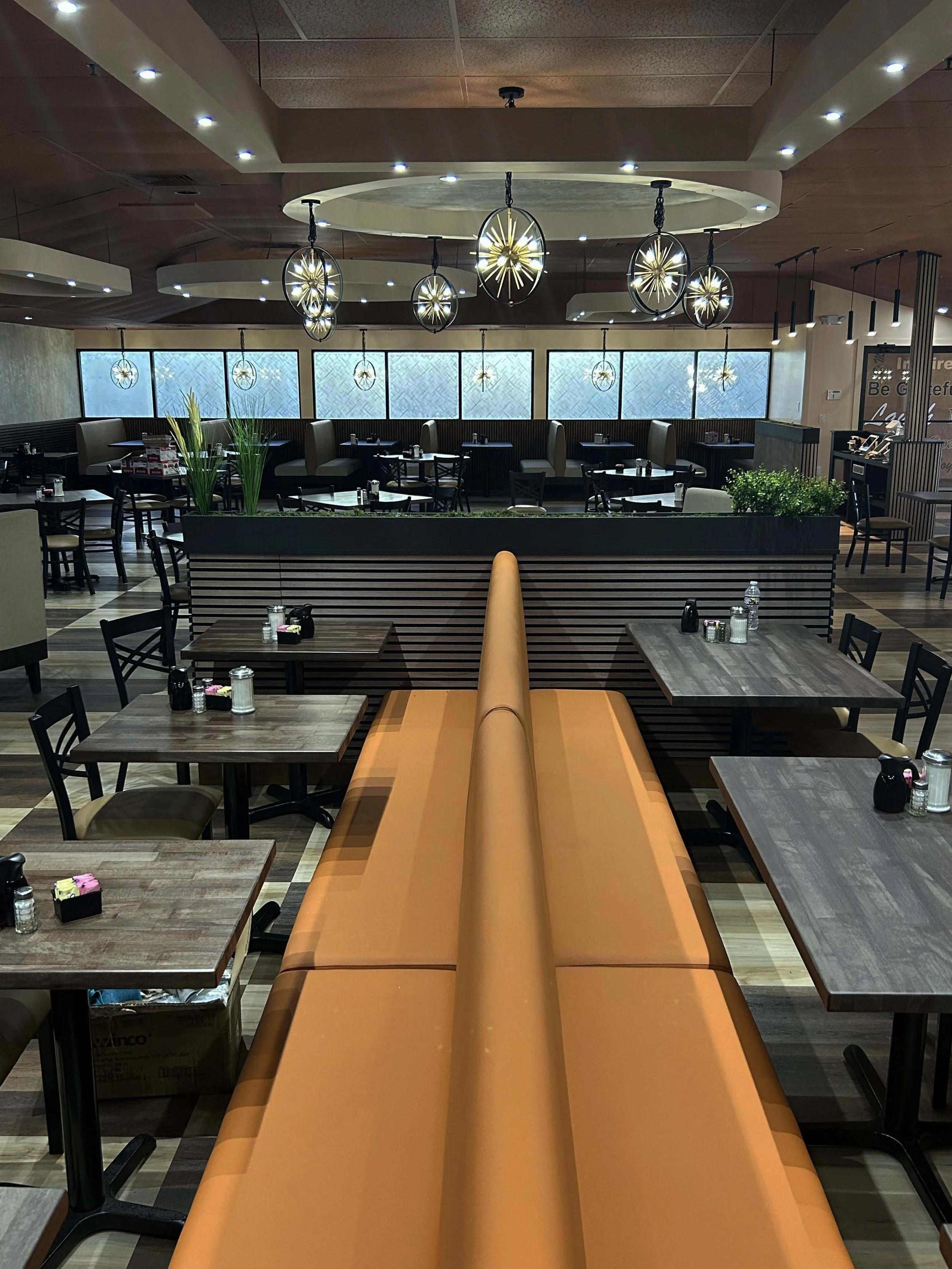
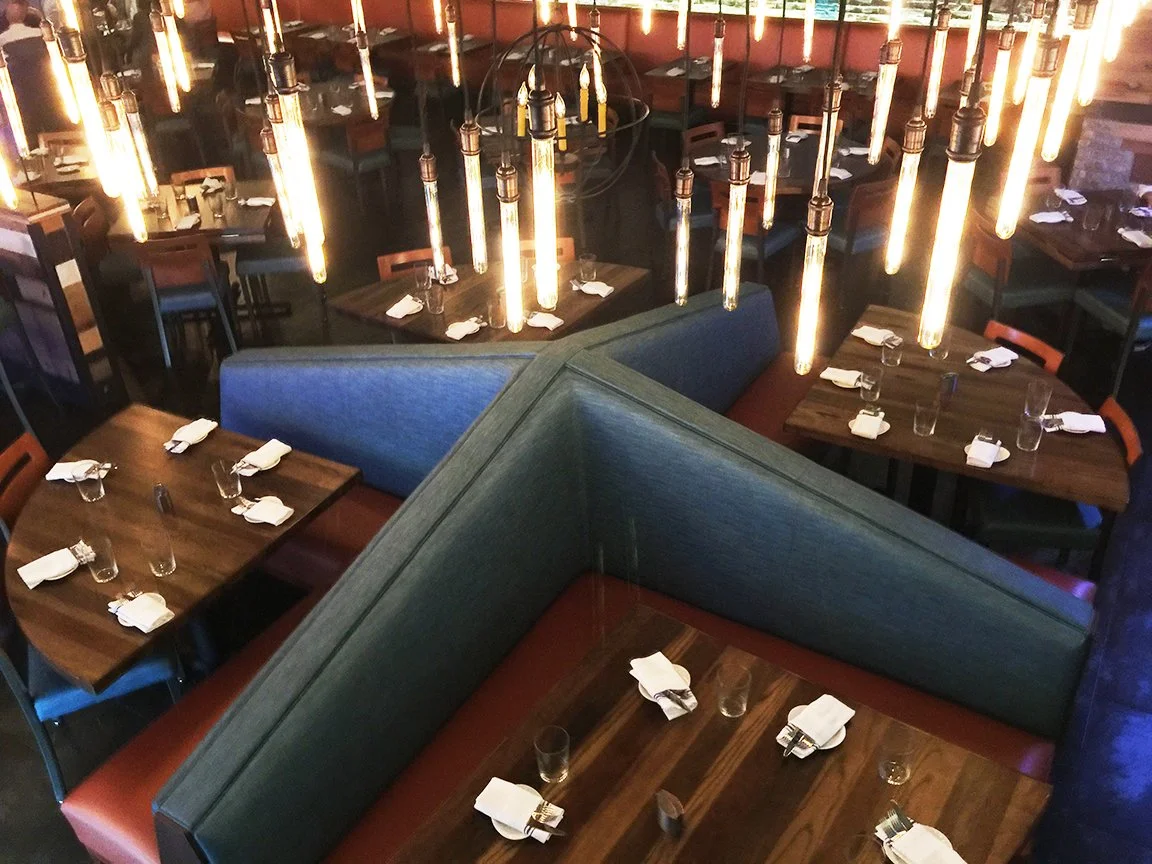
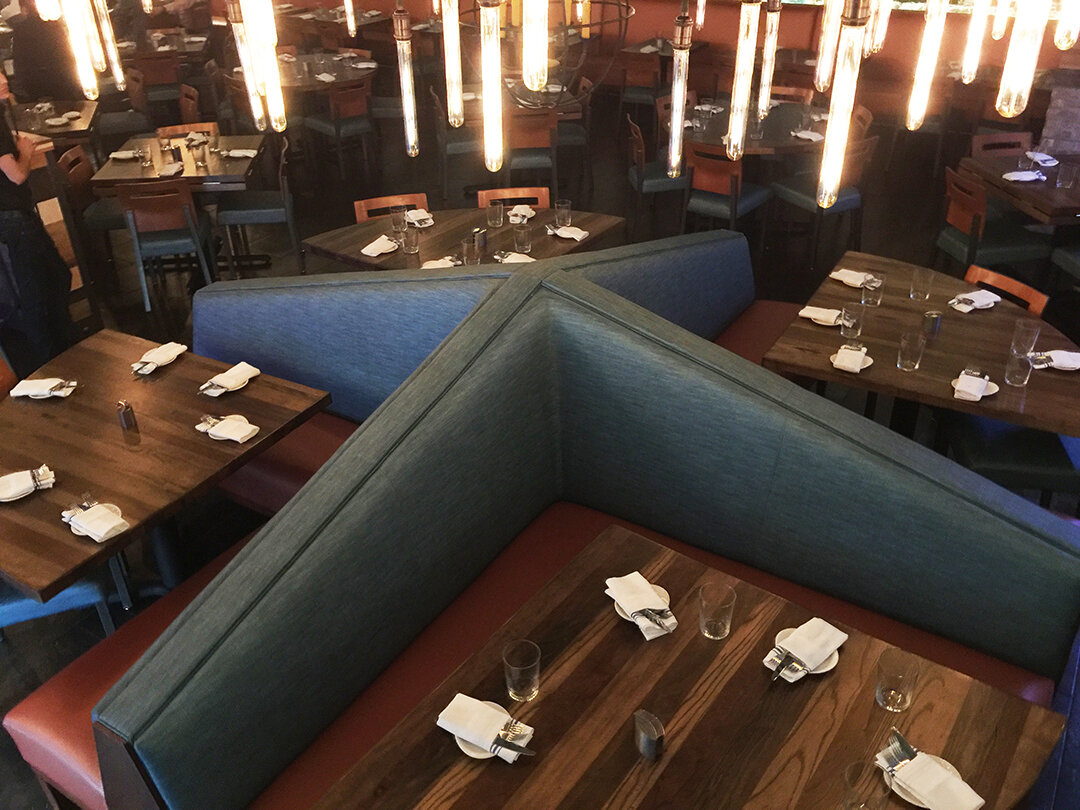
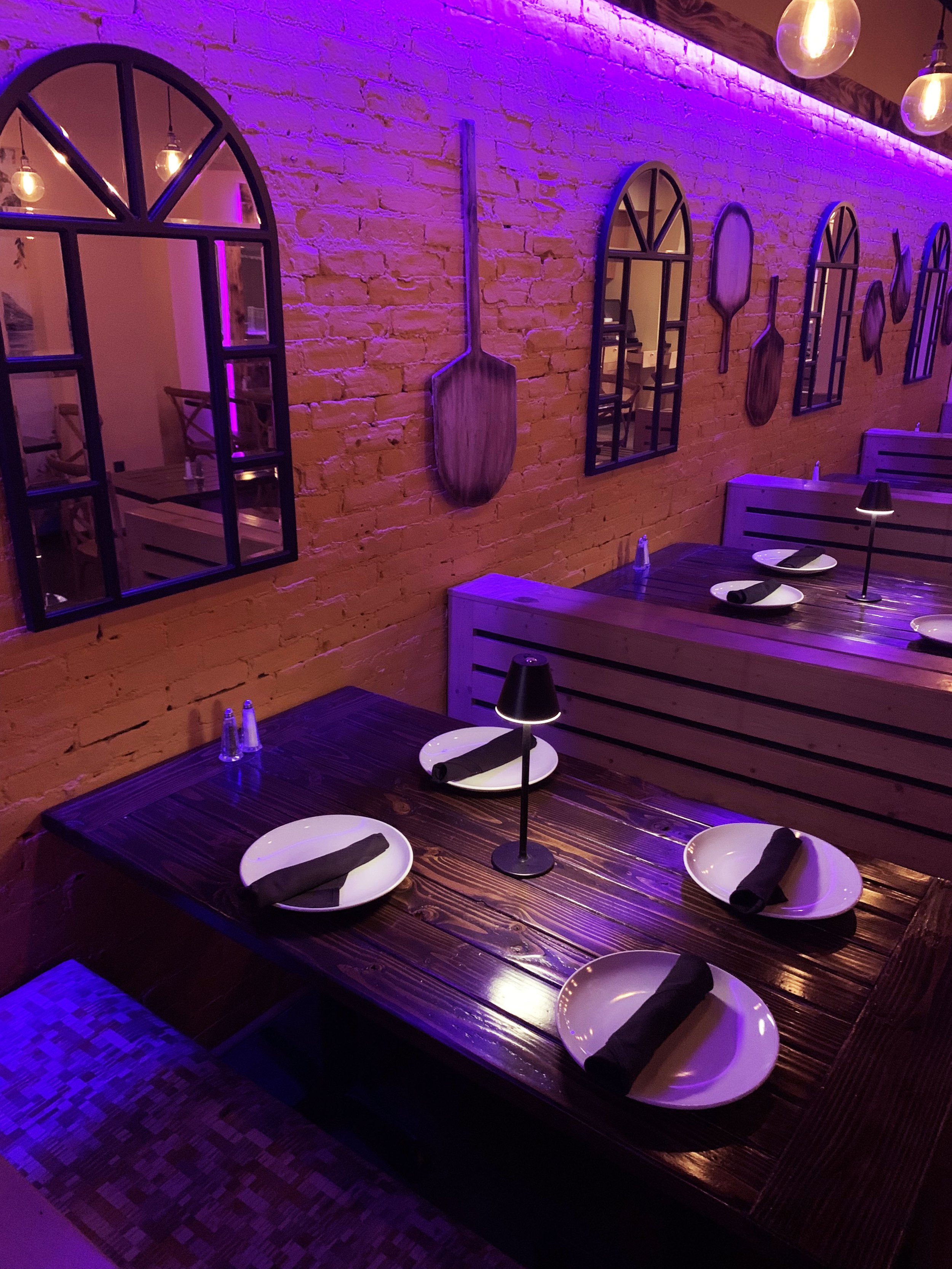
booth seating designed by Raymond Haldeman

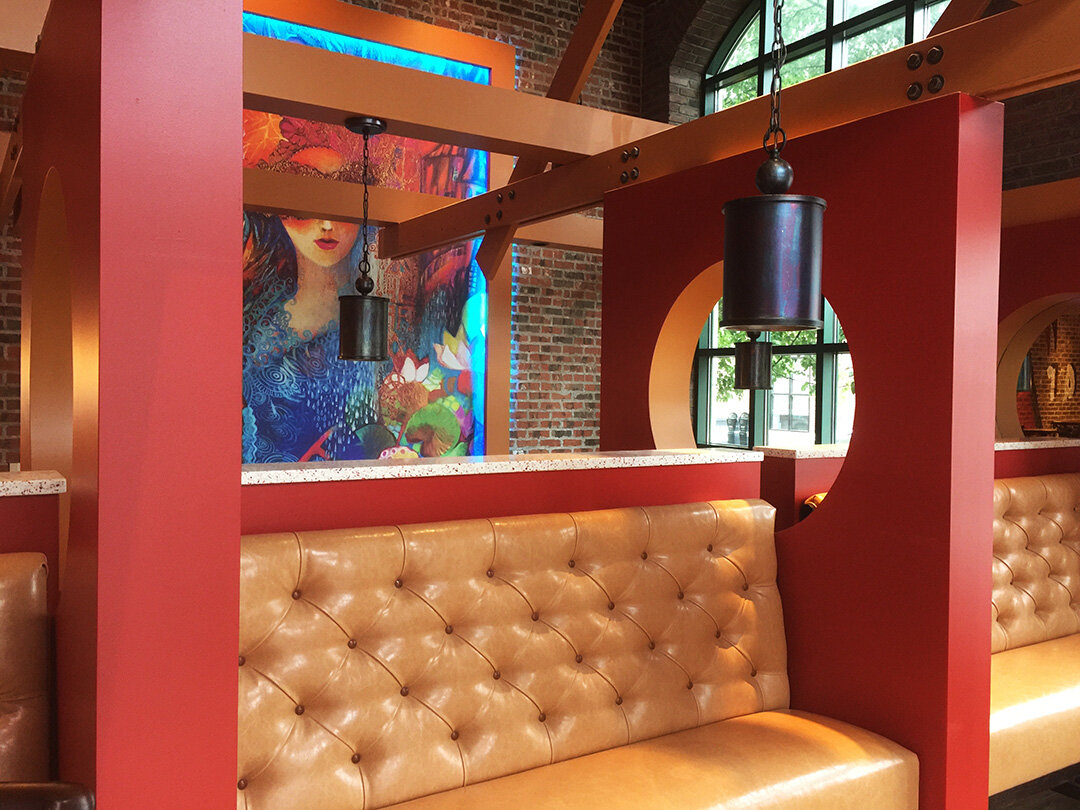
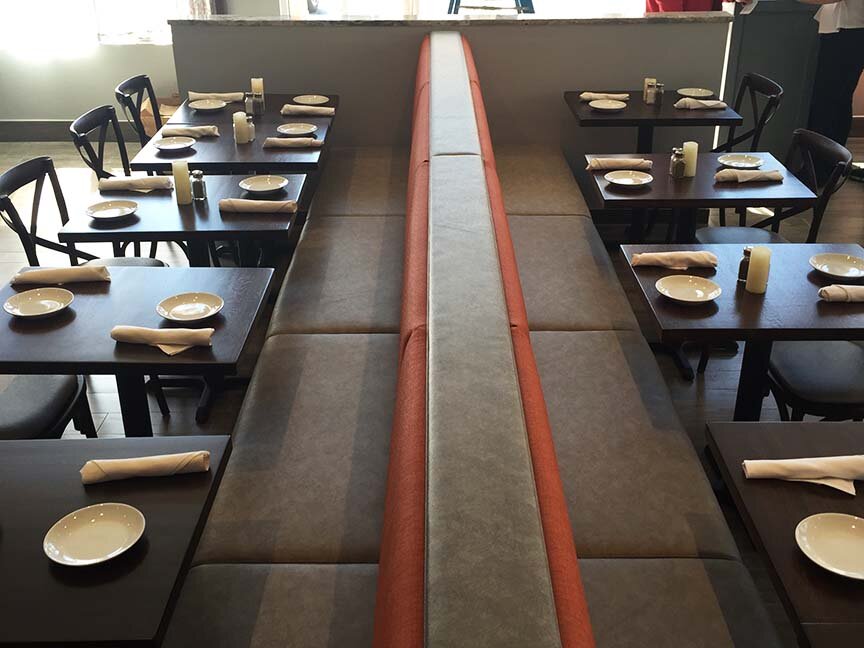
Elevated booths designed by Raymond Haldeman, The Restaurant Designer

Layout is a science, not a hobby. Professional space planning dictates your profit per square foot by eliminating bottlenecks and maximizing seating capacity without sacrificing guest comfort. If your servers are constantly bumping into chairs or your bar area feels like a waiting room, you're losing money. We use "Atmosphere Engineering" to design bars that drive high-margin alcohol sales and dining rooms that naturally encourage guests to spend more. For high-volume venues, a professional floor plan is a non-negotiable requirement for operational sanity.

The Rebranding Investment

When a restaurant begins to fail, the instinct is often to cut costs. The reality is that you need to invest your way out of a slump. Calculating the cost of rebranding against the risk of total closure shows that a visual identity refresh is a protective measure for your capital. A strategic redesign breathes new life into a stagnant establishment, signaling to the market that you've evolved. Don't just hire a decorator to pick out colors. Hire a revenue strategist who understands that every design choice must serve the bottom line. Your space is your most aggressive salesperson; make sure it's trained to win.

Secure Your Competitive Edge

Navigating your restaurant interior design cost requires you to look beyond the surface level of paint and fixtures. You've seen how market-specific demands in Miami and Philadelphia shift the financial baseline and why flat-fee transparency is your best defense against budget creep. Don't let the fear of "fluff" lead you into the trap of a cheap, non-functional layout that destroys your table turnover before you even open. Elite design is a revenue engine, not an administrative hurdle.

Success in this high-stakes industry depends on engineering a space that works as hard as your culinary team. Every square foot must be optimized to drive per-guest spend and operational efficiency. Whether you're launching a new concept or executing a surgical rebrand of a failing establishment, your design must be your most aggressive sales tool. It's the difference between a venue that merely exists and one that dominates its market.

Contact Raymond Haldeman for a Straight-Talk Design Consultation

Take control of your venture's future by partnering with a specialist who has mastered high-impact rebranding across NJ, PA, and Miami. It's time to build a space that commands respect and delivers a measurable return on your investment. You have the vision; now secure the expertise to make it profitable.

Frequently Asked Questions

How much does a typical restaurant interior design cost per square foot?

High-end hospitality venues in competitive markets typically range from $150 to $350 per square foot for a complete interior transformation. This figure accounts for the strategic design, high-impact finishes, and professional oversight required to dominate a neighborhood in 2026. Don't rely on generic national averages that ignore the specific demands of urban hubs like Miami or Philadelphia. Investing in this range ensures your physical environment supports higher menu pricing and maximum operational speed.

What is the difference between a flat fee and a percentage-based design fee?

A flat fee provides budget certainty by locking in a specific price for a defined scope of work. This is ideal for rebranding projects where you need to satisfy investors with a predictable capital outlay. A percentage-based fee typically ranges from 10% to 20% of the total build-out cost. This aligns the designer's compensation with the project's complexity and scale, ensuring they remain invested in every detail of the construction phase from start to finish.

Do restaurant design costs include kitchen equipment and MEP engineering?

Design fees primarily cover the aesthetic, functional, and strategic layout of the front and back of house. While a consultant integrates kitchen workflows into the space plan, the actual purchase of kitchen equipment is a separate capital expense. MEP engineering (Mechanical, Electrical, and Plumbing) is often billed separately by specialized engineers. However, a professional designer coordinates with these experts to ensure your vision meets local building codes and permit requirements without costly delays.

Can professional interior design really increase my restaurant’s revenue?

Yes, a strategic layout directly impacts your bottom line by optimizing table turnover and increasing the average per-guest spend. Professional design isn't just about appearance; it's about engineering a space that encourages high-margin sales and eliminates service bottlenecks. By creating a compelling atmosphere that resonates with your target demographic, you can command higher prices and ensure your venue becomes a destination, rather than just another dining option in a crowded, competitive market.

How much should I budget for a restaurant rebrand vs. a new build?

A new build requires a comprehensive investment starting from a shell, often involving higher structural and MEP costs. A restaurant rebrand focuses on transforming an existing space to correct failing business models or outdated identities. While a rebrand can be more cost-effective, it must be aggressive enough to change public perception. You should budget for a total overhaul of visual touch points and layout to ensure the market recognizes your establishment as a completely new experience.
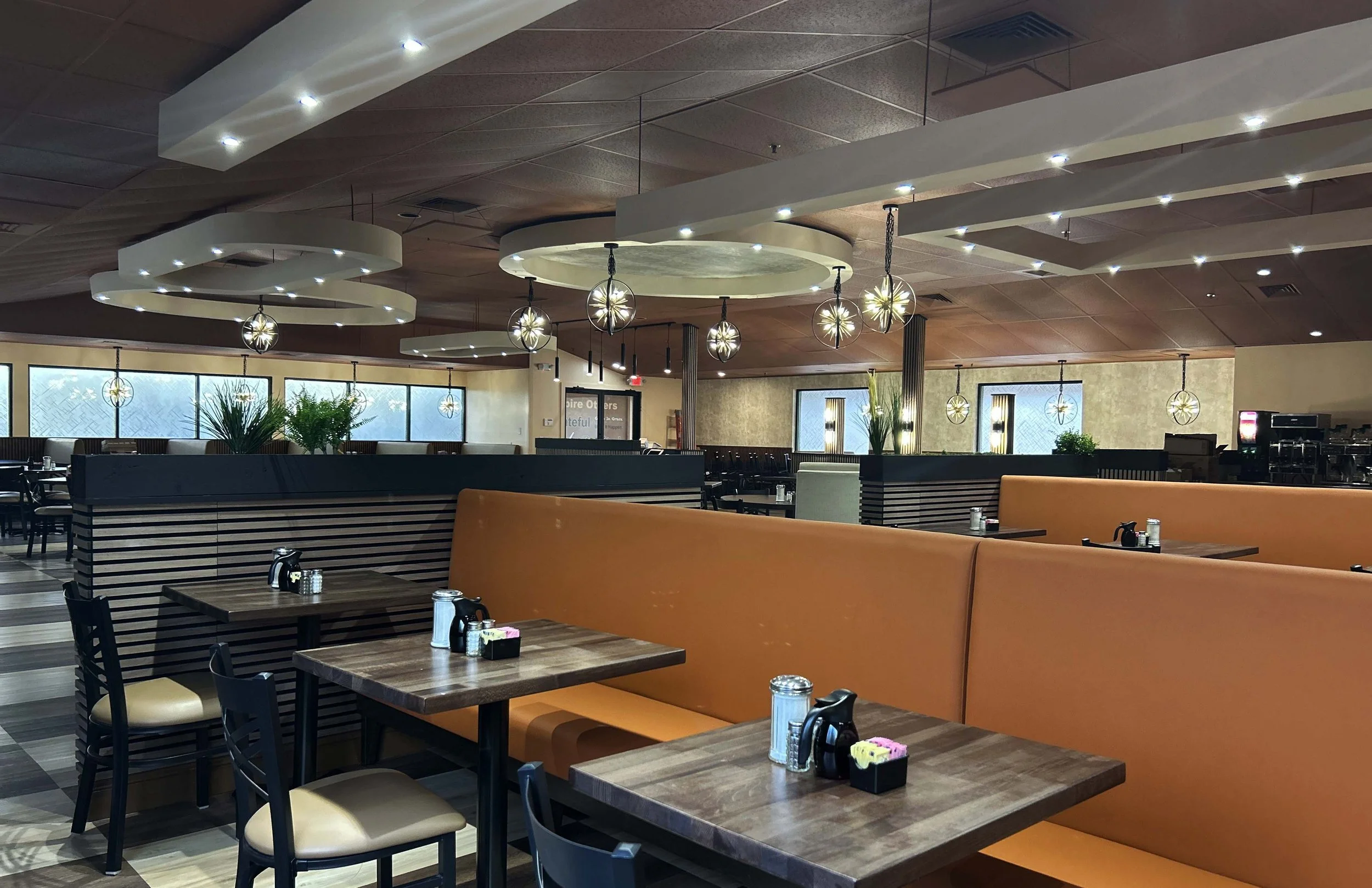
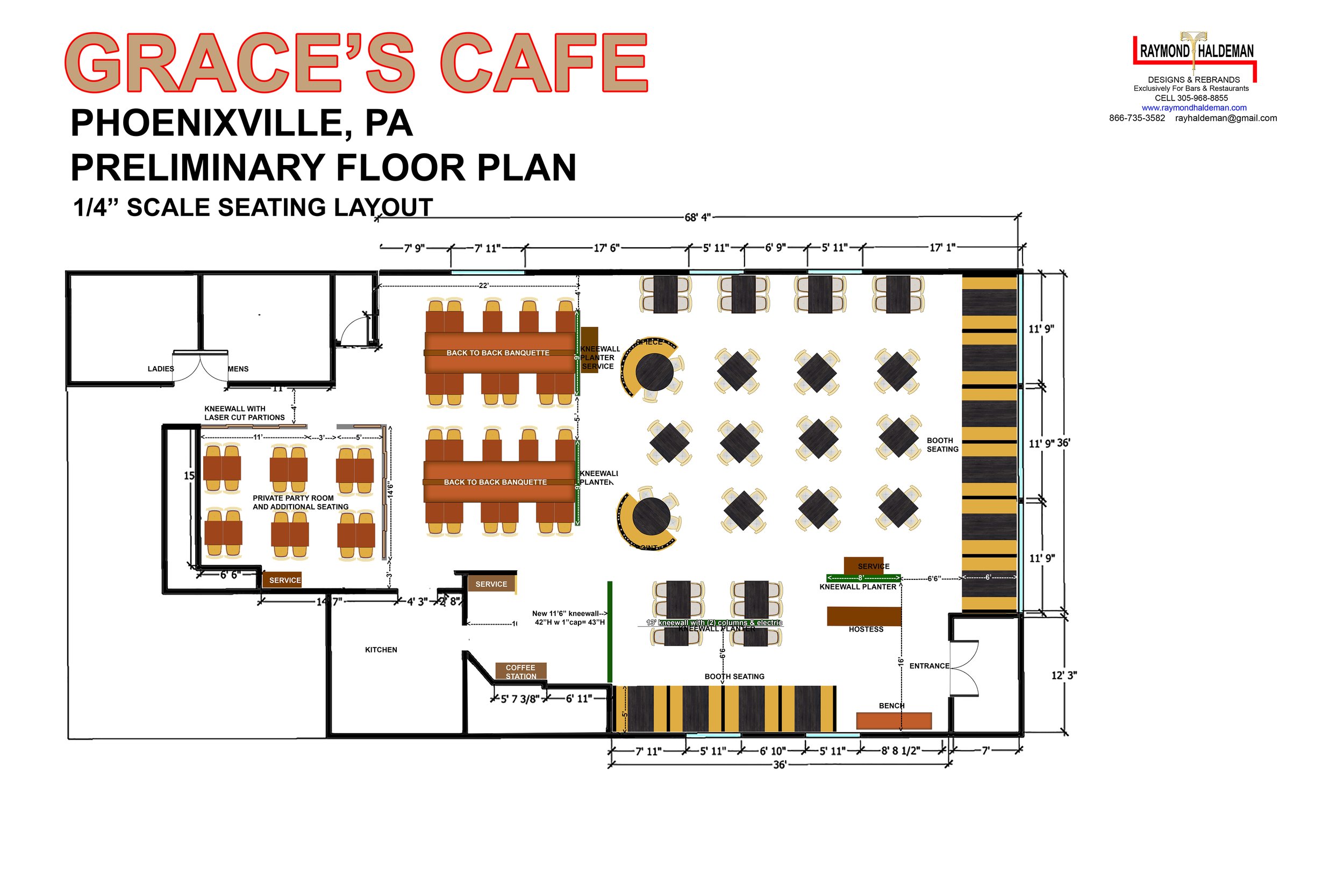
Best Restaurant Designer Practices: NJ & PA Success Guide

A beautiful restaurant that loses money is just an expensive hobby. If you are operating a venue in New Jersey or Pennsylvania, you already know that a packed house doesn't guarantee a healthy bottom line. High table turnover is useless if your margins are thin and your staff is constantly fighting against an inefficient layout. Implementing the best restaurant designer practices isn't about picking a trendy color palette; it's about engineering a high-performance revenue engine where every square inch justifies its existence on your P&L statement.

You deserve a space that commands premium pricing and operates with surgical precision. This guide masters the strategic design principles required to transform dated interiors into modern, high-capacity powerhouses. We'll examine how to optimize your floor plan for maximum seating, integrate the 2026 biophilic trends, and navigate critical regulatory shifts like the New Jersey "Skip the Stuff" law and Pennsylvania's updated building codes. Stop settling for a decorator when you need a visionary guide to secure your brand's future in a competitive market. Here's how you build a venue that survives and thrives.

Key Takeaways

  • Stop treating design as art and start engineering your space using the Design-to-Profit ratio to maximize average check sizes.

  • Deploy psychological architecture and "Anchor Table" strategies to command the room’s energy and eliminate revenue-killing seating zones.

  • Apply the "Total Immersion" rule to your rebranding efforts to ensure your new concept resonates with modern diners and survives the 2026 market.

  • Master the best restaurant designer practices that transform inefficient layouts into high-performance revenue engines through expert space planning.

  • Follow a professional roadmap from initial consultation to grand reopening to avoid the critical failure points that derail most new launches.

Table of Contents

The Strategic Foundation: Why Best Restaurant Designer Practices Start with ROI

Design is not a decorative luxury; it is a financial strategy. The best restaurant designer practices focus on the intersection of brand identity, operational flow, and guest psychology. If you treat your interior as a secondary expense after the kitchen equipment, you've already lost. Your space must be a high-performance revenue engine that generates returns. This is why professional restaurant design for new openings is a critical investment. It prevents the massive expenses that occur when you have to fix a broken layout after the doors are already open.

Consider the Design-to-Profit ratio. Every seat in your house has a daily value, and every square foot must pay rent. If your seating density is too low, you're leaving money on the table. If it's too high, you compromise the guest experience. Lighting also dictates spend; specific levels encourage longer stays and higher alcohol consumption. This strategy mirrors Menu Engineering Principlesby using visual cues and psychological placement to drive profitability.

The Cost of 'DIY' Design Mistakes

Amateurs build 'dead zones.' These are the tables next to the bathroom or the drafty entrance that every guest rejects. Poor space planning creates bottlenecks for your servers, slowing down service and killing your table turnover rates. Acoustics are another silent killer. If guests can't hear each other, they won't stay for dessert. Implementing the best restaurant designer practices avoids these pitfalls. Don't follow fleeting Instagram trends; if your brand is built on a gimmick, it will feel dated within 18 months, forcing a premature and expensive rebrand.

Engineering the First Impression

The 'threshold effect' is real. Within three steps of entering, your guest has already decided what your food is worth. If the entrance feels cheap, they'll balk at a $50 entree. Use focal points like a statement bar or lighting installation to command attention and establish your authority in the market. Your entrance sequence must communicate your entire brand promise in under three seconds to secure immediate guest buy-in.

Psychological Architecture: Managing Guest Behavior Through Layout

Every chair in your establishment is a psychological trigger. Layout is not just about fitting as many bodies as possible into a room; it is about controlling guest behavior to maximize spend. The best restaurant designer practices distinguish between 'money-makers' and 'revenue-killers.' Tables tucked near high-traffic restroom corridors or drafty service stations are dead weight. In contrast, the 'Anchor Table' strategy places VIP seating in high-visibility areas to broadcast an energetic vibe that influences the entire room. As noted by this culinary arts school on restaurant design, a unified aesthetic that considers the guest journey is non-negotiable for success.

Lighting and acoustics are your silent sales force. Use layered lighting to direct the eye. Ambient light sets the mood, but task and accent lighting should illuminate high-margin menu items or the premium bar display. If your acoustics are poorly engineered, you lose control over table turnover. Too quiet, and the room feels clinical. Too loud, and guests leave before ordering coffee. Balance the 'vibe' with the ability to conduct a clear conversation to keep the checks growing.

Optimizing the Restaurant Floor Plan for Efficiency

An inefficient layout is a tax on your labor costs. Engaging a professional restaurant floor plan consultant ensures that server paths are minimized. Every extra step a server takes is a delay in service and a hit to your profit margin. In high-volume bars and nightclubs, flow is both a safety requirement and a revenue priority. You must balance kitchen-to-table proximity with guest privacy. If your staff is constantly bumping into chairs, your design has failed.

Color Theory and Sensory Triggers

Colors dictate appetite. Use warm tones to stimulate hunger and cool tones to encourage faster turnover in high-volume concepts. Sensory design extends to touch and smell. Scent integration can subtly nudge guests toward dessert or specialty cocktails. Even the weight of your silverware matters. If you claim to offer a premium experience but provide flimsy cutlery, you've broken your brand promise. Every tactile detail must match your assertive brand voice. If you're ready to fix your layout, a professional space planning consultation is the next logical step.

Rebranding Best Practices: Rescuing a Failing Concept

A failing restaurant is often a victim of its own stagnant environment. If your tables are empty while the competitor down the street is packed, your interior is likely broadcasting obsolescence to every passerby. Critical failure points include dated lighting that flattens your food's appeal, worn-out upholstery, and a layout that forces guests into awkward proximity. Applying the best restaurant designer practices means more than a fresh coat of paint. It requires a strategic overhaul that addresses the root causes of your declining revenue and restores your market authority.

Adopt the "Total Immersion" rule. Changing your logo while leaving the same tired booths in place is a waste of capital; it signals to your customers that you're only interested in a superficial fix. To see real results, you must align the physical space with your new brand promise. Managing the restaurant rebranding cost effectively involves prioritizing high-impact visual changes, like lighting and seating, that immediately shift the guest's perception of value. By adhering to the best restaurant designer practices during a concept rescue, you ensure that every dollar spent contributes to a measurable increase in foot traffic.

The Anatomy of a Successful Rebrand

Consider the transformation of a classic New Jersey diner into a sophisticated modern bistro. This isn't just about changing the menu. It involves a complete visual identity redesign that signals a shift in quality and management to the local community. You must modernize without alienating your core base by retaining subtle nods to your history while elevating the overall sophistication. A successful rebrand is not a cosmetic mask; it is the physical manifestation of a brand's evolution from a struggling past to a profitable future.

Operational Rebranding: Beyond the Paint

Modern beverage trends demand updated bar and nightclub layouts. If your bar is still designed for high-volume domestic beer but you're trying to sell craft cocktails, your staff will struggle and your service will lag. Integrate modern POS stations and digital menus seamlessly so they don't break the aesthetic vibe of the room. Use strategic lighting to hide architectural elements that are too expensive to move. This creates a fresh, high-end look without the price tag of a full demolition.

Transform your venue with a strategic rebranding consultation

The Elite Consultation: Navigating the Design Process

Don't leave your launch to chance. Hiring a restaurant rebranding consultant is a prerequisite for a successful debut. A portfolio filled with residential "pretty houses" is a massive red flag for a commercial operator. You aren't building a living room; you're building a high-volume commercial machine. The best restaurant designer practices prioritize ROI and operational flow over mere aesthetics. If your designer doesn't understand the nuances of NJ and PA zoning laws or the specific guest expectations in markets like Miami, they are a liability, not an asset.

Your success depends on a methodical roadmap. This journey moves from initial space planning and conceptualization through to the final grand reopening. It requires a strategic partner who can navigate the complexities of local regulations while maintaining the integrity of your brand promise. You need an expert who knows how to translate a vision into a floor plan that facilitates speed, minimizes labor costs, and maximizes seating capacity without compromising the guest experience.
Defining the Scope of Work

A comprehensive design fee must cover more than just a mood board. It should include meticulous planning, project management, and rigorous site oversight. There is a world of difference between a decorator and a hospitality design specialist. A specialist understands the ergonomics of a service station and the sightlines of a host stand. When communicating your vision, focus on your business goals. Tell your designer how you want the space to perform, not just how you want it to look. This ensures the final product is a functional revenue engine.

Execution and Project Oversight

Opening delays are profit killers. Manage your contractors with an iron fist and a clear timeline to avoid the common traps that push back your launch date. The designer's role remains critical during the final execution phase. They must lead the final punch list and handle the atmospheric fine-tuning. This includes adjusting lighting dimmers, speaker placement, and furniture alignment to ensure the room’s energy is perfect from the moment the first guest arrives.

Ready to stop winging it? Schedule a consultation with a leading restaurant design consultant.

Secure Your Competitive Edge Through Strategic Design

Your restaurant's interior is either a high-performance revenue engine or a financial liability. Stop treating design as a secondary expense and start viewing it as the foundation of your P&L statement. Success in the New Jersey and Pennsylvania markets demands a blend of psychological architecture and operational precision. If your layout frustrates staff or alienates modern diners, you are burning capital every day. You don't need a decorator; you need a strategic partner who understands that every square inch must justify its existence.

Mastering the best restaurant designer practices is the only way to ensure your brand identity commands premium pricing in an increasingly crowded hospitality landscape. Raymond Haldeman specializes in high-stakes restaurant, bar, and nightclub rebranding, delivering modern, functional designs engineered specifically for ROI. With deep expertise across the Northeast and Miami, we provide the visionary guidance required to ensure your venue survives and thrives in the 2026 market.

Transform your venue with a high-impact restaurant design consultation

You have the vision for a world-class establishment. Now, give it the structural foundation it deserves to dominate the market and secure your legacy.

Frequently Asked Questions

What are the most important restaurant design practices for 2026?

Success in 2026 requires a focus on biophilic elements, warm minimalism, and flexible layouts that accommodate varying group sizes. You must also account for regulatory shifts like the New Jersey "Skip the Stuff" law and Pennsylvania's adoption of the 2021 International building codes. These best restaurant designer practices ensure your venue remains compliant while providing the unique, shareable moments modern diners demand before they even book a table.

How much should I expect to pay for professional restaurant interior design?

Professional fees are typically calculated based on the total construction budget or as a fixed per-square-foot rate. Don't make the amateur mistake of shopping for the lowest bid. A strategic partner provides a shortcut to success by preventing costly post-launch corrections. You aren't just paying for drawings; you're investing in a revenue-generating asset that ensures your business thrives in a high-stakes, competitive industry.

Can a new restaurant layout really improve my table turnover rate?

Strategic space planning directly impacts how quickly your staff can serve and reset tables. By minimizing server steps and eliminating bottlenecks between the kitchen and the floor, you reduce wait times and increase efficiency. A professional layout ensures guests feel comfortable but doesn't encourage "camping," allowing you to seat more covers during peak hours without making the dining experience feel rushed or clinical.

What is the difference between restaurant rebranding and a simple renovation?

A renovation is a cosmetic update, whereas rebranding is a strategic overhaul of your entire business identity. Renovation might involve new paint or flooring; rebranding changes the "soul" of the venue. It aligns the physical space, service style, and brand promise into a unified experience. If you change the logo but keep the same tired layout, you haven't rebranded; you've just put a mask on a failing concept.
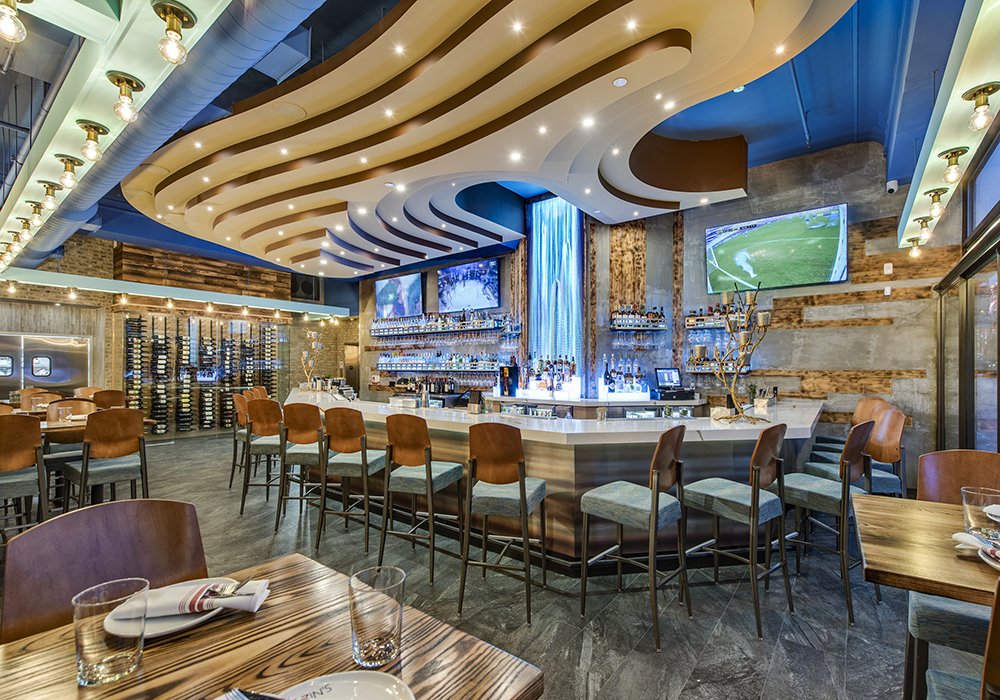
How do I choose the best restaurant designer for my specific concept?

Look for a specialist with a proven track record in hospitality, not a generalist who designs homes. The best restaurant designer practices require an understanding of commercial kitchen flow, bar ergonomics, and guest psychology. Vet their portfolio for measurable results, not just aesthetics. Ensure they have deep local expertise in markets like NJ and PA to navigate specific zoning laws and building codes that general decorators often overlook.

Is it possible to rebrand a failing restaurant without closing for months?

Strategic phasing allows you to execute high-impact changes without a total shutdown. By prioritizing "Total Immersion" in visible areas like the entrance, bar, and main dining room, you can signal a shift in quality immediately. Some operators choose to close for a short, intensive "blitz" period rather than months of demolition. This approach protects your cash flow while still delivering the dramatic transformation required to rescue a struggling concept.

A Bar Designer and Restaurant Consultant Can Turn Your New Jersey Venue into a High-Profit Destination

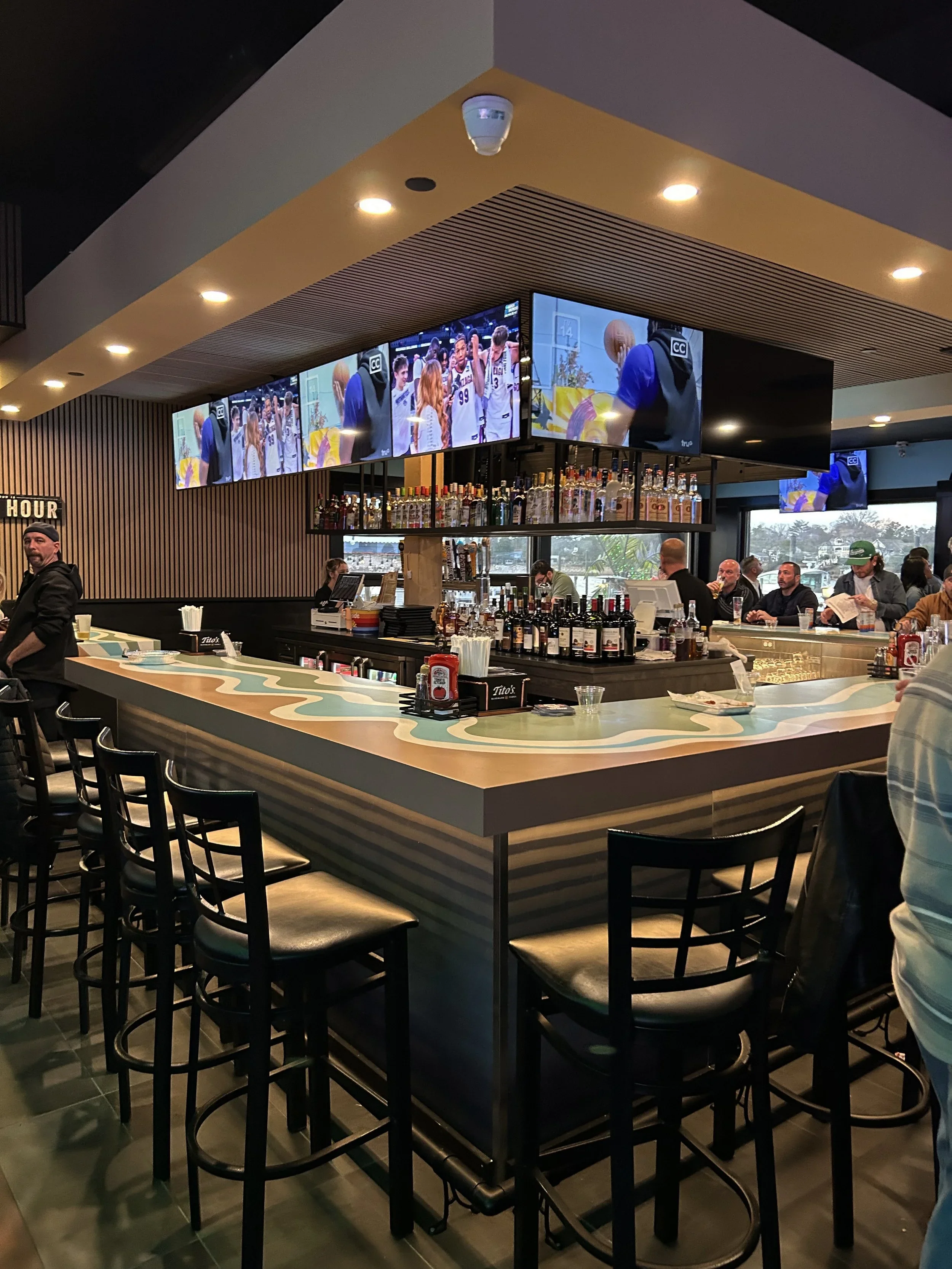
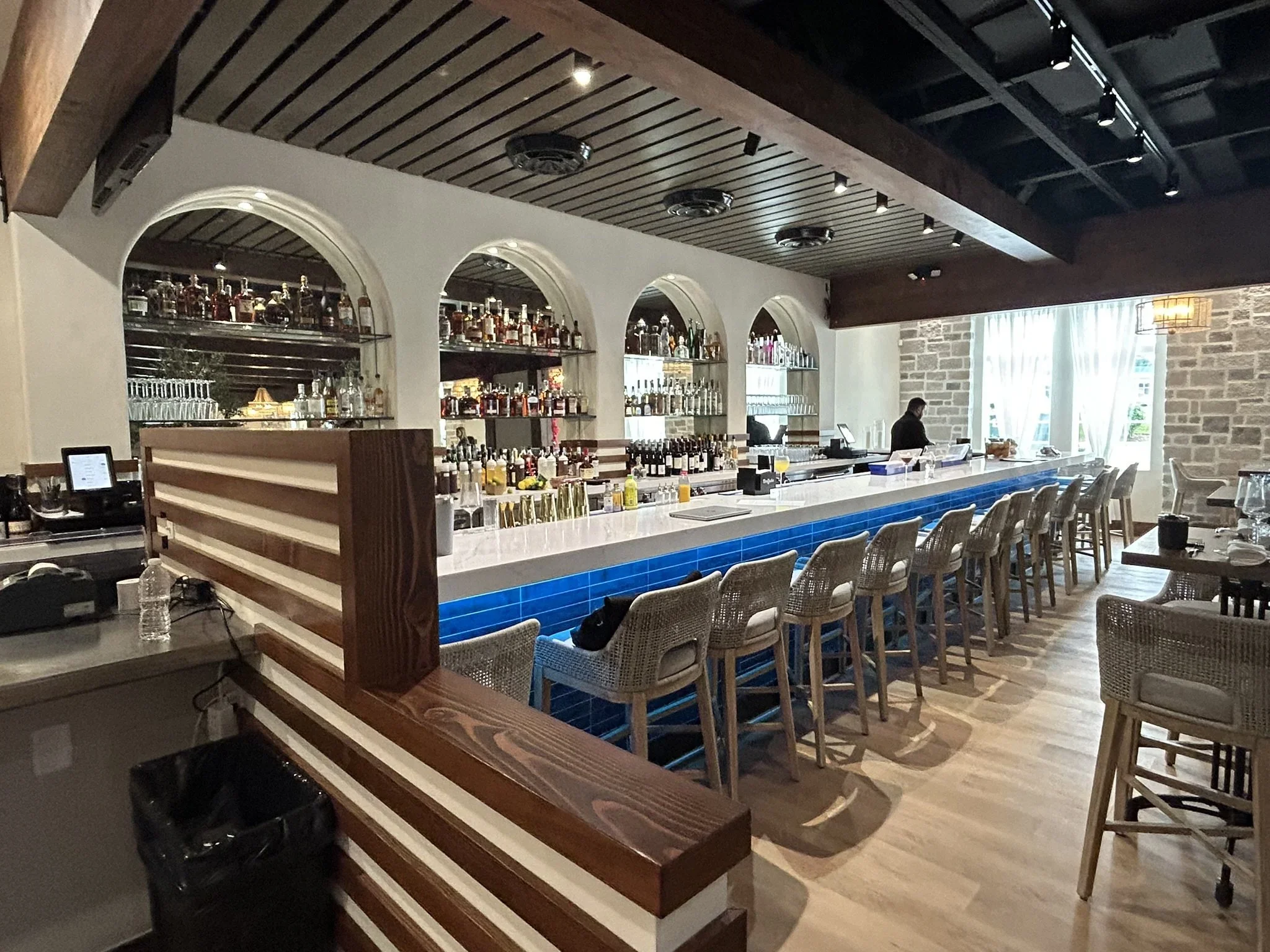
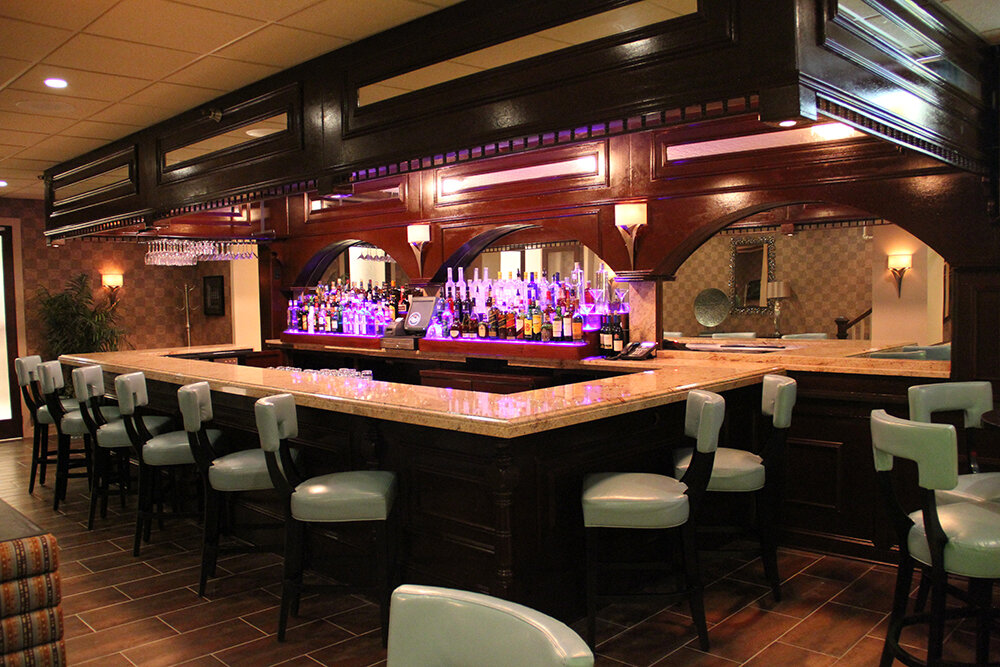
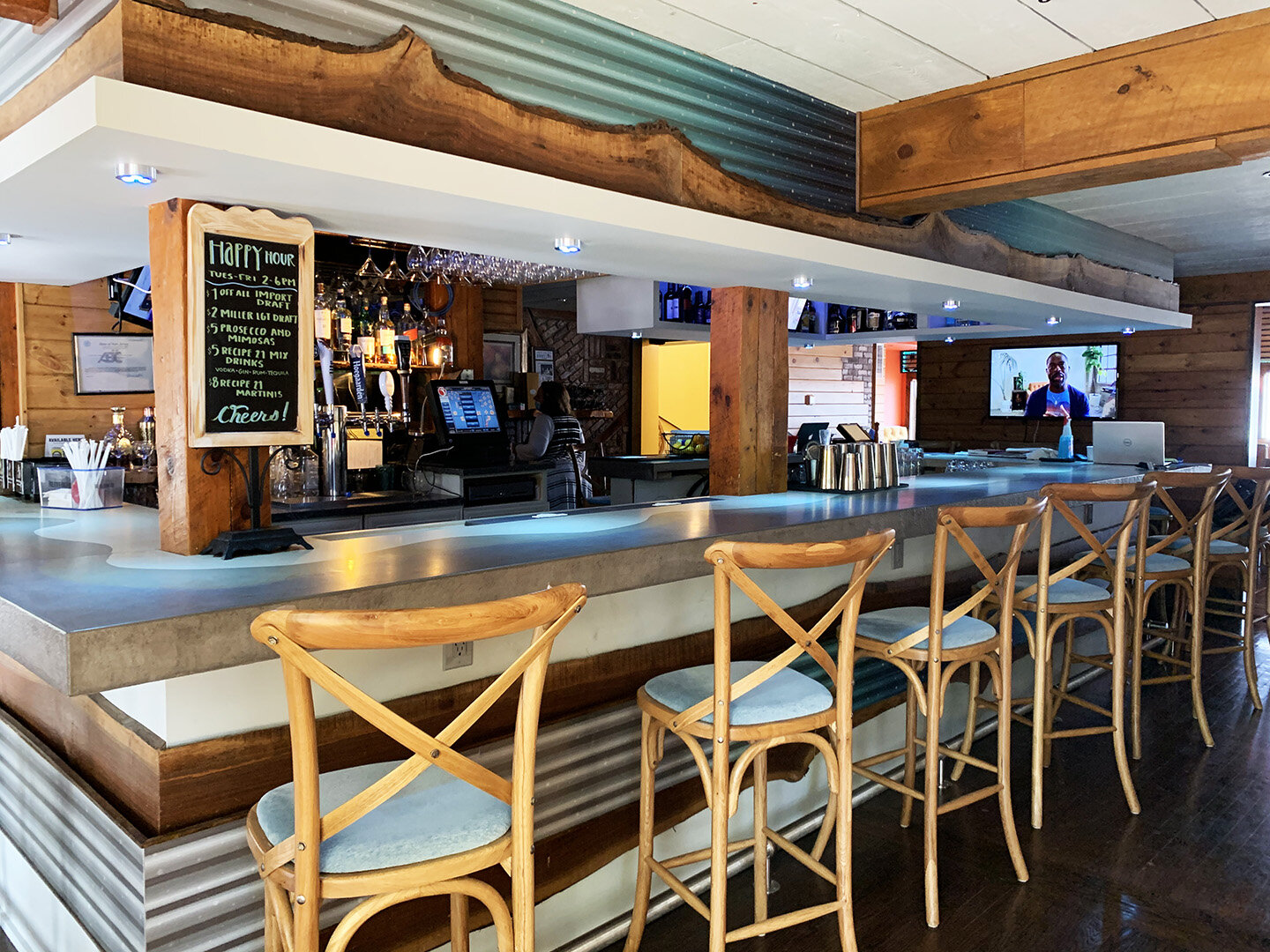
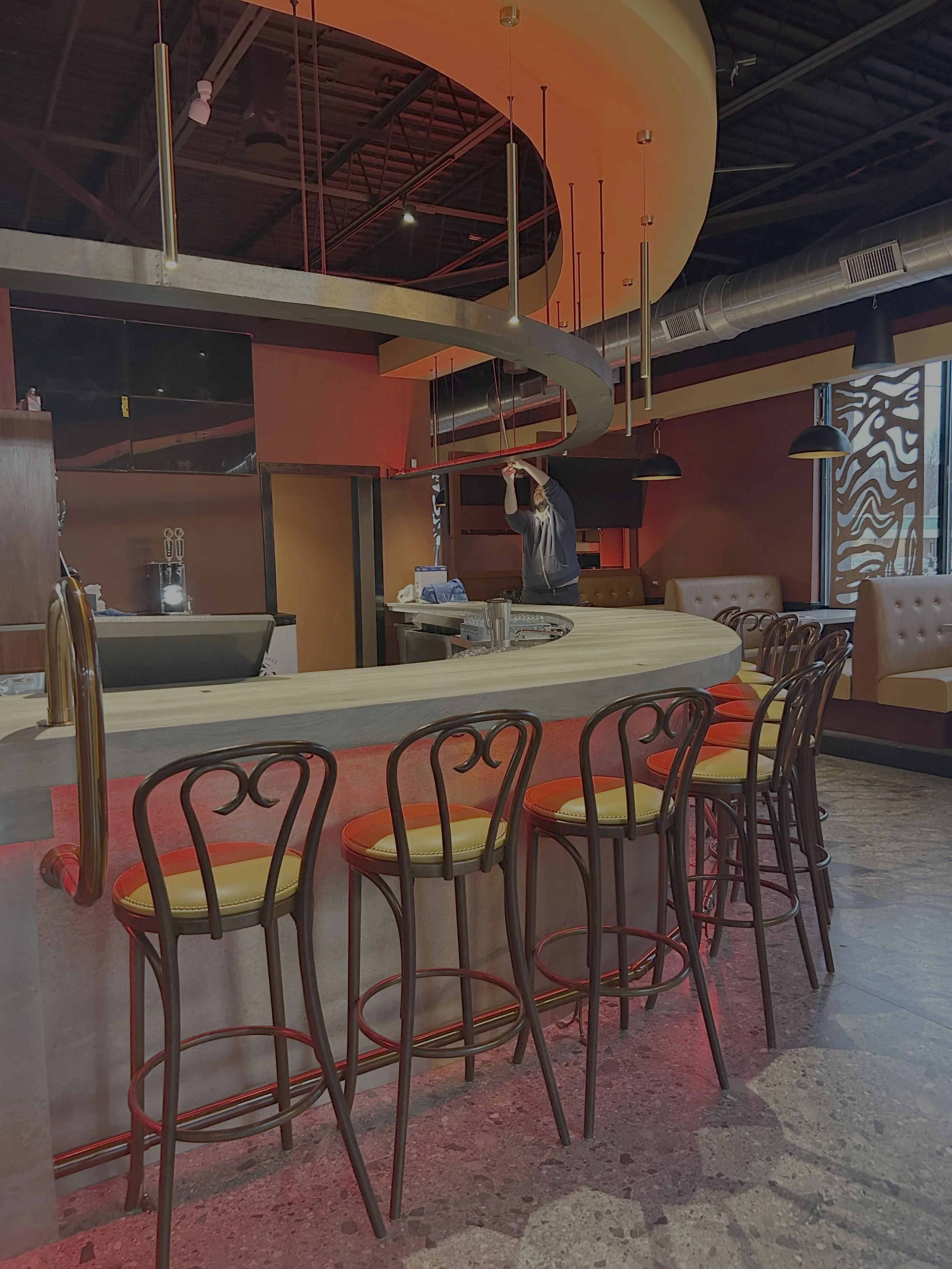
River Rock Bar Designed by Raymond Haldeman

Your venue probably isn't struggling because the drinks or the food are bad. More often it's the floor plan quietly working against you, turning every shift into an obstacle course that eats into your margins. Declining table turnover and an average check that won't budge are usually symptoms, not the disease. This is where an NJ bar designer or restaurant consultant tends to make the real difference between a closed door and a line at the host stand. It's a hard thing to watch guests choose the newer spot down the block while your staff fights a layout that slows service to a crawl. A brand identity that worked five years ago in Hoboken or Asbury Park may simply not be pulling the same weight today.

A professional redesign isn't a cosmetic add-on. In a market as saturated as New Jersey, it functions more like a tactical necessity for any owner trying to turn a stale concept into a real revenue engine. This guide covers how strategic space planning and a rebuilt brand identity can support premium pricing and faster service, along with a realistic roadmap for moving from a struggling spot to a destination that holds its own in a competitive local market. We'll also look at how shifting guest habits, including a growing interest in more mindful drinking among younger diners, could shape how a New Jersey venue should be designed in 2026.

Key Takeaways Treating design as a strategic investment rather than a cosmetic afterthought is usually the first shift a restaurant consultant makes with a client. Lighting and layout choices influence the price a guest is comfortable paying, long before the menu is even in their hands. A forensic audit of the floor plan tends to surface the operational bottlenecks that are quietly limiting table turnover. Aligning brand identity with current guest habits is often what separates a stale concept from a genuine revenue engine. Working with an experienced NJ bar designer can help an owner avoid the renovation mistakes that tend to be the most expensive to fix later.

Table of Contents Why an NJ Bar Designer Belongs on Your Team in 2026 The Psychology of Profit: How Design Shapes What Guests Order The Five-Step Bar and Restaurant Redesign Process Why Raymond Haldeman Is a Strong Fit for a New Jersey Redesign

Why an NJ Bar Designer Belongs on Your Team in 2026

A bar or restaurant is not just a room where people eat and drink. It's closer to a machine built to generate profit, and a clunky or outdated one loses money every night it's open. A restaurant consultant or NJ bar designer isn't there to pick out curtains and trendy wallpaper. The role is closer to a strategic partner who works through the physical space to fix the business underneath it. In a competitive corridor stretching from Jersey City down through Red Bank and Cherry Hill, a tired environment tends to be a slow but steady drain on revenue. Guests in this market have too many options to settle for a venue that still feels like 2015.

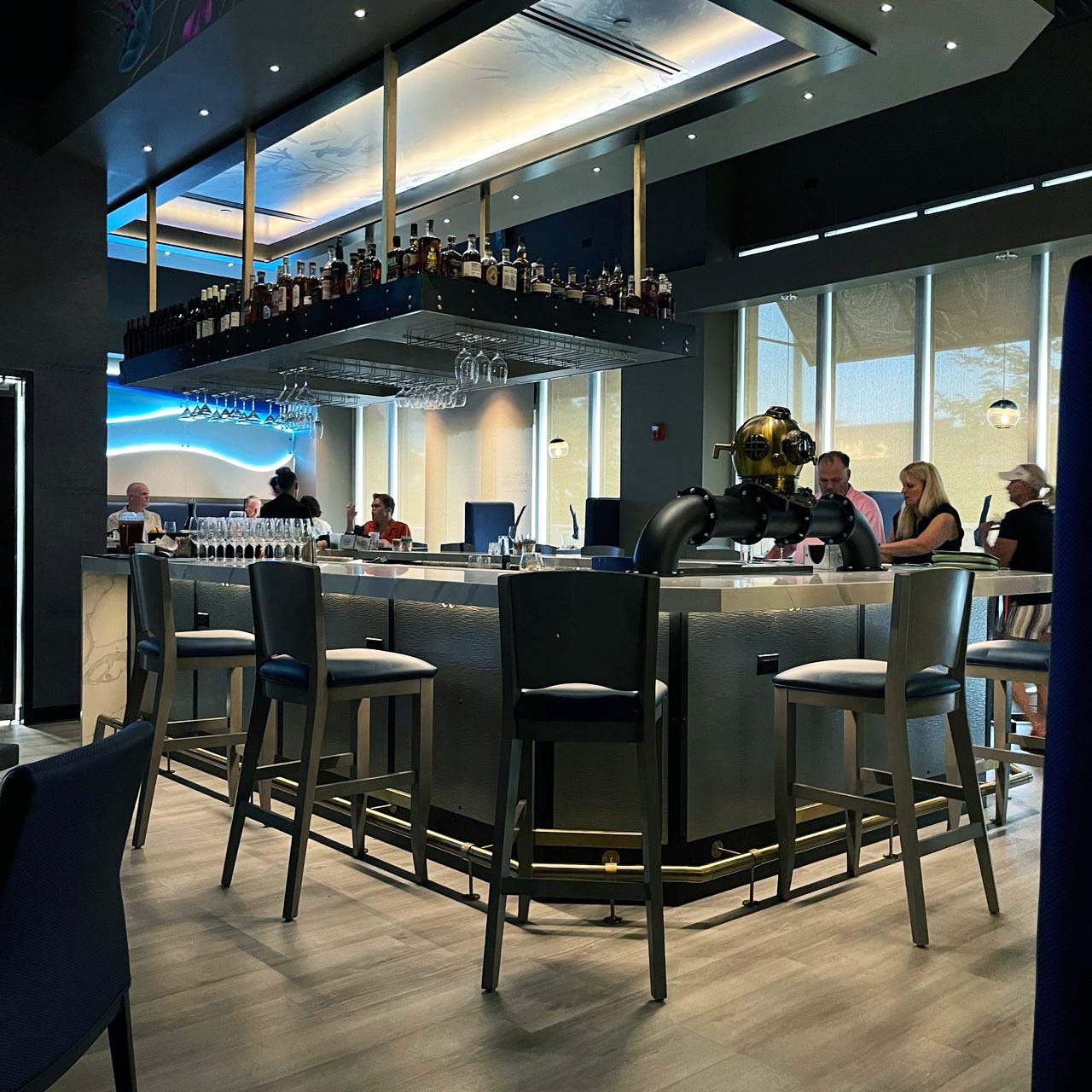
Bar at Naxos designed by Restaurant Design Consultant Raymond Haldeman

A lot of the leak in a struggling business traces back to poor design. An inefficient floor plan creates friction for guests and burnout for staff. Bartenders shouldn't be running the length of the room for a garnish tray, and guests shouldn't feel like they're navigating a crowd just to reach the restroom. That friction slows service, cuts into how many rounds a table orders, and eventually pushes good staff toward a competitor with an easier shift. A professional audit tends to catch these bottlenecks before they show up in the numbers.

The High Stakes of a Struggling Concept

In a market like New Jersey, "good enough" design rarely holds up for long. It's worth being aware of the common restaurant rebranding mistakes that quietly drain capital without ever delivering a return. Owners are often too close to their own space to see the blind spots clearly. A familiar corner to the owner might be a dead zone to a consultant, one that could become a high-margin private nook instead. As restaurant formats continue to evolve, a venue needs enough flexibility to capture a new demographic without losing what made it work in the first place. An experienced restaurant consultant tends to spot these opportunities long before the first wall comes down.

Consultant First, Contractor Second

Hiring a general contractor before there's a design strategy in place is one of the more common and costly sequencing mistakes an owner can make. Contractors are built to execute a plan, not to originate one. Without a consultant-led design, change orders alone can turn into a significant unplanned expense once construction is underway. A restaurant consultant provides the blueprint first, so every dollar spent on construction is working toward the finished brand rather than being spent and adjusted twice.

The Psychology of Profit: How Design Shapes What Guests Order

Every element in a venue should be pulling its weight toward revenue. If a design choice doesn't support a higher average check or a faster turnover, it's probably not worth the expense. An experienced restaurant consultant tends to treat the floor plan almost like a psychological map, one built to encourage guests to stay a bit longer, order one more round, and feel comfortable paying a premium for the experience. The goal isn't just selling drinks or entrées. It's selling a mood guests are genuinely willing to pay for.

Lighting does more of this work than most owners expect. Strategic lighting isn't primarily about helping guests read the menu. It's about how it makes people feel, and people who feel good at a table tend to order more. That lighting often shapes the price a guest is willing to pay for a cocktail before the ingredients even register. A strong visual identity at the entrance works the same way, giving a venue enough pull on a busy street to draw guests in rather than let them keep walking.

Engineering the Right Feel

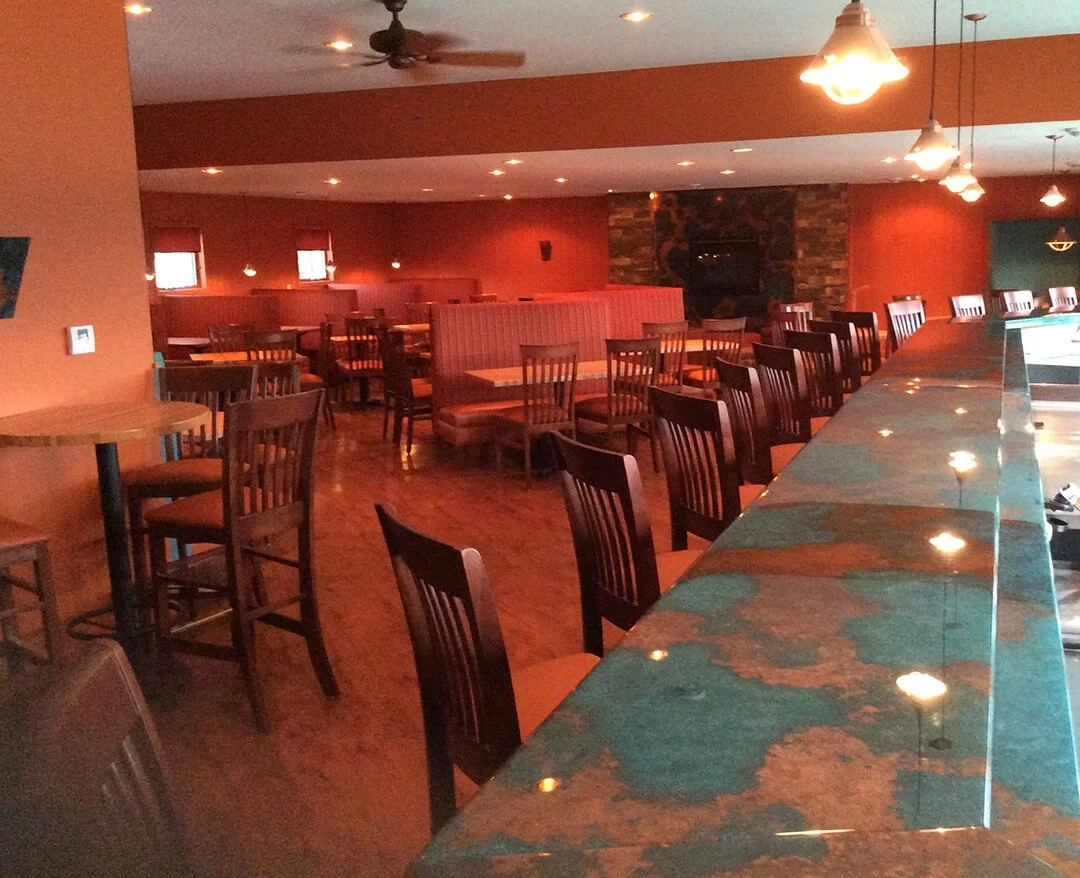
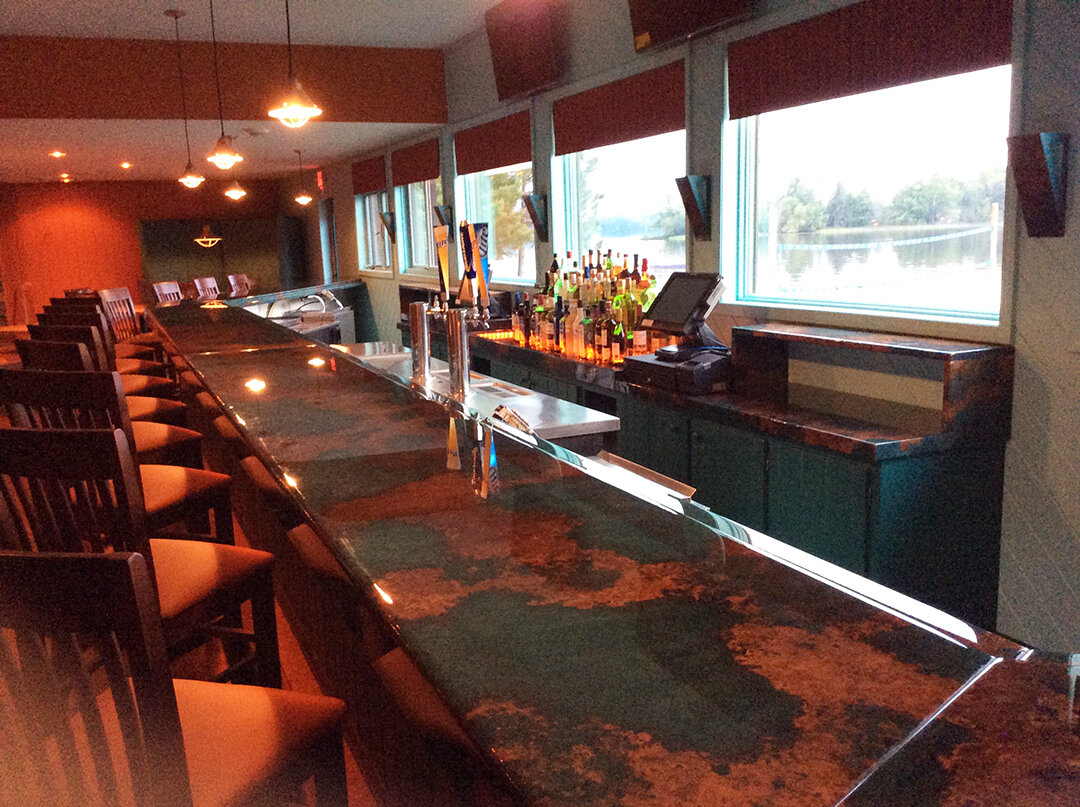
copper bar designer in new jersey

Patina Copper Bar Top designed by Raymond Haldeman, The Restaurant Designer

Color and texture aren't just decorative choices. They influence how quickly a room feels like it's moving. Deeper, richer textures tend to suggest a slower, more premium pace, which fits well in a spirit-forward lounge. Brighter, higher-energy colors can support faster turnover in a high-volume room. This is really environmental psychology applied to restaurant design, and it works best when the physical space matches the financial goals behind it. Bringing that thinking into the furniture and finishes, sometimes described as hospitality branding and design, helps create a cohesive space that can support premium pricing in a dedicated VIP or bottle-service area.

Space Planning for Speed

Speed tends to be the quiet partner of profit. This is why a restaurant floor plan consultant spends real time on what's sometimes called the bartender's path. When staff have to cross lanes or hunt for supplies mid-shift, ticket times climb and volume drops with them. The layout should keep every movement efficient, and seating should maximize density without tipping into discomfort. Guests want to feel the energy of a full room, not the frustration of being crowded into it. Owners ready to move past guesswork can review how a strategic redesign tends to change these numbers.

The Five-Step Bar and Restaurant Redesign Process

Success in this kind of project rarely happens by accident. It's closer to engineering than decorating. A restaurant consultant generally follows a structured process so capital goes toward changes that convert rather than vanity choices that don't. The process moves from high-level strategy down to the details of execution, which keeps the owner focused on outcomes while the design work handles the vision.

Phase 1: The Forensic Audit. A close look at current performance and untapped potential, going beyond a simple walkthrough to understand exactly where turnover is lagging and where the layout is quietly leaking revenue. Phase 2: Concept Development. Building the new brand identity, the blueprint for how the venue will hold its own in the local New Jersey market and connect with the target guest. Phase 3: Space Planning. Every seat and service station placed with real precision, balancing aesthetics with the operational flow that supports speed and comfort. Phase 4: Material and Finish Selection. Choosing finishes that read as high-end while holding up to the real wear of a busy bar or dining room night after night. Phase 5: Implementation Oversight. Making sure the contractor sticks to the plan rather than simplifying it for convenience, so the finished space matches the profit-driven design.

Schedule a consultation to begin the forensic audit for your venue.

From Concept to Reality

Turning a vague idea like "modern lounge" into a concrete set of design specifications is where a lot of owners lose momentum. Without precise specs, a project can drift into a disjointed mix that doesn't photograph well or function well. In 2026, a design that includes a few genuinely shareable moments tends to earn organic reach that paid marketing can't easily replicate. That visual strategy is often the bridge between a struggling concept and a launch that actually generates buzz on its own.

Navigating New Jersey Regulations

Local codes and permitting can slow or derail a project before it starts. Municipal requirements vary across New Jersey, and a consultant who understands how to work through them tends to save an owner real time and expense. Careful space planning can meet fire and safety requirements without giving up high-value seats in the process. Getting ahead of these requirements early keeps a building inspector from quietly deciding how much revenue potential the room actually has.

Why Raymond Haldeman Is a Strong Fit for a New Jersey Redesign

Treating a venue's future as trial and error tends to be an expensive way to learn. Every night spent operating with a flawed concept is a night of lost revenue and slipping market share. Raymond Haldeman works as a restaurant consultant and NJ bar designer for owners who are ready to stop losing ground to the newer place down the street. With decades spent actually owning and operating hospitality venues, Raymond brings a direct, operator's perspective to the table rather than a purely decorative one. He's less interested in picking colors and more interested in building a room that performs, informed by having made the same mistakes himself early on and learned to avoid them.

A Strategic Partner, Not a Vendor

Raymond's role on a project tends to look more like a partnership than a service transaction. He works as a guide through the revenue leaks and blind spots an owner is often too close to the business to see clearly. A consultation is a reasonable, low-risk starting point for an owner who wants to stop the bleeding and start the transformation. For a New Jersey operator ready to move past "good enough" and start commanding real pricing, that conversation is the first step.

A Track Record Across the Region

From Hoboken and Jersey City to Asbury Park, Morristown, and the Jersey Shore corridor, Raymond's design work spans some of the more demanding hospitality markets on the East Coast, including years operating nightclubs and restaurants of his own. He understands the regulatory and cultural texture that shifts from town to town across New Jersey, so a design stays both compliant and genuinely compelling. Whether the project is a new build or a rescue of a struggling venue, the goal is the same: a space built for real velocity and guest loyalty, not just a fresh coat of paint.

Every night your venue runs on an outdated floor plan is revenue quietly walking out the door. Put an operator's eye on the project instead of guessing your way through another season.

Claim Your Market Position

A venue's current trajectory usually traces back to its physical and strategic limits, not bad luck. Declining check sizes and staff burnout tied to an outdated floor plan don't have to be permanent. Partnering with a restaurant consultant or NJ bar designer means getting a profit-focused design approach that turns the space itself into a working part of the business. We've covered how lighting, layout, and surgical space planning can shift the environment toward guests spending more and service moving faster.

Raymond Haldeman brings direct, operator-level guidance to venues across New Jersey, drawing on a career built inside restaurants and nightclubs rather than a design portfolio alone. For an owner looking for a shortcut past the usual renovation mistakes, that experience tends to be the difference.

Schedule a Strategic Bar and Restaurant Design Consultation with Raymond Haldeman

Frequently Asked Questions

What does a restaurant consultant or bar designer actually do?
A restaurant consultant or NJ bar designer works as a strategic partner focused on re-engineering a venue for better performance, not just a new look. That usually starts with a forensic audit of operations and space planning, followed by a cohesive brand identity and oversight through construction. The goal is a layout built for speed and guest comfort, backed by a real strategy rather than a mood board alone.

How long does a typical bar or restaurant redesign take from concept to launch?
Timelines depend on the scope of the project. A focused refresh might run 12 to 16 weeks, while a full overhaul of a struggling venue can stretch past six months. Every week spent operating with an inefficient layout tends to cost more in lost revenue than people expect, so it's often worth starting the consultation before the situation becomes urgent.

Will a redesign really increase my venue's revenue?
A well-planned redesign turns more of the physical space into a working part of the business. Optimizing staff movement and using lighting deliberately tends to reduce friction and support the price guests are comfortable paying. Guests increasingly choose venues that feel current and worth talking about, so a space that doesn't hold attention is often leaving revenue on the table.

How do I know if my bar or restaurant needs a full redesign or just a refresh?
Table turnover and average check size are usually the clearest signals. If staff are constantly working against the floor plan or the brand feels invisible to the current local demographic, a full redesign is often the better investment. A refresh tends to make more sense for a venue with strong operational bones that mainly needs an aesthetic update. A professional audit can settle the question either way.

Can a consultant help a bar or restaurant that's already losing money?
Yes, and it's often the more common starting point. Identifying the less visible issues, like poor zoning or inefficient service stations, tends to be the first step in rebuilding a struggling concept into something that actually performs. Waiting too long to address structural issues in the space usually makes the eventual fix more expensive.

What's the difference between a designer and a consultant?
A designer typically focuses on finishes and aesthetics. A consultant works across space planning, branding, and operational efficiency, treating the design as one part of a larger business strategy. A restaurant consultant who understands the commercial side of hospitality is generally aiming for a space that performs financially, not just one that photographs well.

Cuzin's Clam Bar, NJ | A Restaurant Designer Master Class | Raymond Haldeman

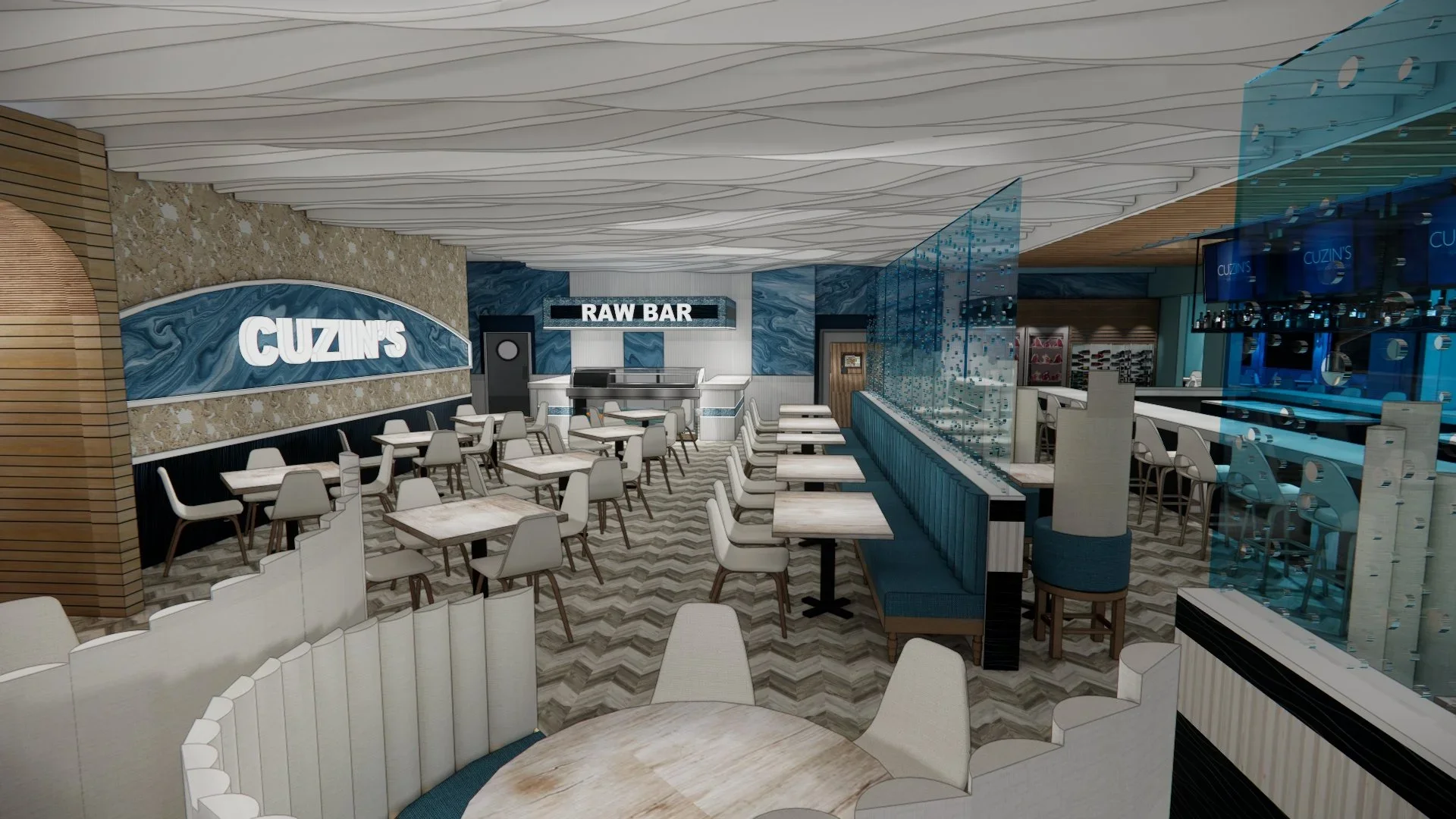
Survival in today's fiercely competitive hospitality scene isn't about luck; it's about engineering a brand soul that refuses to be ignored. Many operators believe a trendy interior and a flashy social media feed are the keys to longevity in this cutthroat market. They're mistaken. In an environment where operational costs are soaring and initial permit expenses can drain significant capital before you even open your doors, chasing fads is a fast track to bankruptcy. You need more than a decorator. You need a strategic New Jersey restaurant designer whose expertise is forged in the demands of high-stakes, high-volume environments, someone who understands that space planning is a revenue driver, not just an aesthetic choice. Cuzin's Clam Bar, a beloved Jersey institution, hasn't grown by accident. It has mastered the art of brand soul across multiple locations.

Restaurant designer Raymond Haldeman conceived and designed all three Cuzin's Clam Bar locations: the original in Marlboro, NJ, the New Brunswick, NJ location, and the third now under construction in Brick, NJ. You likely fear that modernizing or expanding your brand will strip away the authenticity that built your loyal following. It's a valid concern, but staying stagnant while the market evolves is a guaranteed way to lose your edge. This article, presented by Raymond Haldeman, reveals the strategic design and branding secrets behind Cuzin's success. We'll explore actionable insights on brand longevity, how to replicate a signature concept across multiple sites, and why space planning is the ultimate ROI for your business.

Cuzin's Clam Bar restaurant design by Raymond Haldeman, Marlboro NJ

The Pinwheel Banquette © designed for Cuzins by Raymond Haldeman, is affectionately called “Earth” by customers and is always in high demand.

Key Takeaways

  • Understand why "Brand Soul" is the foundation of longevity and how a singular signature product secures your market position against fleeting trends.

  • Discover why high-end finishes often destroy authentic hospitality and how a professional New Jersey restaurant designer engineers a "lived-in" atmosphere that drives revenue.

  • Learn how a proven concept can be faithfully replicated across multiple locations without diluting its core DNA.

  • Master the Raymond Haldeman checklist for future-proofing your venue, turning intangible "soul" into your most profitable asset.

The Anatomy of a Jersey Icon: Why Cuzin's Clam Bar Endures

Most restaurant owners mistake "brand" for a logo or a color palette. They're wrong. Brand soul is the intangible character that keeps a business alive while neighbors fold under the weight of rising rents and fickle trends. Cuzin's Clam Bar isn't just a restaurant; it's a strategic fortress of identity. While many operators settle for a generic seafood spot, Cuzin's leaned into bold, distinctive, totally original design — a space with genuine wow-factor that still manages to exude comfort. This isn't a happy accident. A veteran New Jersey restaurant designer knows that a room with real personality and style is what commands loyalty, not a safe, forgettable one. By designing something exciting and unmistakably its own, owner Charles Mayo and designer Raymond Haldeman built generational trust — and a brand strong enough to carry to a second and now a third location.

Cuzin's has understood that consistency is a premium currency. In a market crowded with copycats, Cuzin's stood its ground. They didn't chase the latest design fads. Instead, they engineered an environment that feels authentic and welcoming. This psychological anchoring is what turns a one-time visitor into a lifelong advocate. You don't build a multi-location Jersey institution by being pretty; you do it by being essential.

Restaurant designer Raymond Haldeman with Cuzin's Clam Bar owner Charles Mayo

Designer Raymond Haldeman with Cuzin’s owner and founder Charles Mayo built generational trust

The Power of a Signature Product: Fresh Jersey Clams & Seafood

You need a hero. Without a singular product anchor, your menu is just a list of options that customers will eventually forget. Cuzin's built its identity around fresh, no-nonsense clams and seafood — the physical manifestation of the brand. In a market saturated with generic seafood spots, that focused reputation differentiates them instantly. It isn't just about taste; it's about recognition. Strategic product identity serves as the primary engine for brand recall and long-term market dominance. Every successful New Jersey restaurant designer will tell you that the floor plan must support the hero product's delivery and theater — from the raw bar to the pass.

Location as Identity: The Neighborhood Institution

Your neighborhood should dictate your brand voice. Cuzin's positioned itself as a genuine local institution, embracing its Jersey roots rather than trying to be a generic tourist trap. By owning a specific niche and a loyal community, each location transforms a physical address into a gathering place. This is the ROI of professional space planning and branding: it turns a building into a landmark that families return to for years.

Atmosphere Over Aesthetics: Design Secrets from a New Jersey Restaurant Designer

Expensive finishes alone don't create great hospitality. Many operators spend heavily on marble and brass only to wonder why their room still feels cold and generic. A seasoned New Jersey restaurant designer understands that atmosphere is built through bold, deliberate design, not just a shopping list of luxury materials. At Cuzin's, the wow-factor isn't a happy accident; it's the result of striking, original design choices — dramatic lighting, standout materials, and a smart layout — that deliver excitement and style while still making guests feel completely comfortable. When you prioritize the principles of restaurant design, you create a space that is distinctive and unforgettable, yet warm and inviting.

Cuzin's Clam Bar restaurant design, New Brunswick NJ

Cuzin’s digital waterfall and free form reverse tiered ceiling design by Raymond

In a business where every square foot carries a cost, you can't afford dead space. This is where the expertise of a restaurant floor plan consultant becomes your most valuable asset. Cuzin's works because it avoids the sterile, cookie-cutter layout of a franchise while still delivering the efficiency a high-volume clam bar demands. If you're struggling to maximize your revenue per square foot, you might need to re-evaluate your spatial strategy before you lose another month to poor flow.

[PHOTO: Cuzin's Clam Bar, New Brunswick, NJ]

The Destination Effect: Bold Design That Draws a Crowd

redesign restaurant designer new jersey

Raymond invented this ceiling wave to hide unmovable low hanging pipes without compromising ceiling height!

Most seafood spots settle for forgettable. Cuzin's does the opposite. A skilled New Jersey restaurant designer engineers a sense of arrival and energy — bold, distinctive, and completely original — that makes guests feel they've found something special the moment they walk in. Through dramatic lighting, standout materials, and a layout built around the raw bar, you deliver real wow-factor while still exuding comfort. You aren't just selling seafood; you're selling a place people drive across the county to reach.

Preserving the "Soul" in Modern Hospitality Design

Modern hospitality is currently plagued by sterile, trend-driven designs that will look dated in twenty-four months. Gimmicks made for social media feeds don't build long-term loyalty. Raymond Haldeman advocates for personality-driven interiors grounded in authentic materials and a genuine sense of place. These elements provide a tactile connection to the brand's roots and resist the hollow feel of "Instagrammable" decor. Don't fall for the trap of over-designed spaces. Your restaurant's soul is a tangible, engineered asset that must be protected to ensure decades of profitability.

INFOGRAPHIC — Engineering Brand Soul

The Blueprint for Restaurant Longevity & Profit — Lessons from a New Jersey Icon: Cuzin's Clam Bar

Brand Longevity: Foundation vs. Fad

The Fad Trap:

  • Chasing fleeting trends and "Instagrammable" moments.

  • Believing high-end finishes create authentic atmosphere.

  • Sanitizing brand identity to appeal to everyone (and no one).

  • Ignoring space planning as a critical revenue driver.

The Enduring Foundation:

  • Engineering an authentic, unignorable "Brand Soul."

  • Anchoring the brand with a singular, signature product.

  • Prioritizing "Atmosphere" over sterile aesthetics.

  • Replicating a proven concept without diluting its DNA.

Case Study: The Cuzin's Clam Bar Blueprint

  1. The Signature Product Anchor — Fresh Jersey Clams & Seafood. In a market saturated with generic seafood spots, a focused, no-nonsense product identity provides instant differentiation and is the primary engine for brand recall.

  2. Location as Identity — The Neighborhood Institution. By embracing its Jersey roots, Cuzin's built a loyal local following that turns each address into a community gathering place.

  3. Atmosphere Over Aesthetics — Bold, Original, and Comfortable. A distinctive, high-style space with genuine wow-factor that still feels warm and welcoming. Deliberately engineered excitement and comfort drive revenue.

  4. The Multi-Location Advantage — One Concept, Faithfully Replicated. From Marlboro to New Brunswick to Brick, a proven concept is repeated without losing its soul.

The Future-Proofing Checklist

  1. Anchor Your Brand — champion a single, unforgettable hero product.

  2. Engineer Atmosphere, Not Aesthetics — prioritize a lived-in feeling over sterile luxury.

  3. Master Your Footprint — treat space planning as your most critical ROI.

  4. Own Your Niche — root your brand's voice in your specific community.

  5. Replicate Without Diluting — when you expand, protect the DNA.

Strategic Design by Raymond Haldeman — raymondhaldeman.com

Modernizing a Legacy: When to Refresh a Classic Brand

Legacy is a double-edged sword. While it provides a foundation of trust, it can also become a trap that prevents growth. If your decor feels tired rather than welcoming, you're already losing ground to hungrier competitors. A strategic refresh isn't about erasing your history; it's about sharpening it for a modern audience. When you work with a top-tier New Jersey restaurant designer, the goal is to enhance the "soul" we've discussed, not replace it. Stagnation is the silent killer of the hospitality industry. You must recognize when your brand identity is no longer communicating the quality of your product.

The Raymond Haldeman method focuses on identifying the core DNA that still resonates, then building on it. You must modernize your technology and POS systems to keep pace with rising labor costs and high-volume takeout and delivery demands without diluting the bold, distinctive character guests love. That is exactly the discipline that lets a single Cuzin's location become a second and a third: you carry forward what works and upgrade only what holds you back.

Consult with Raymond Haldeman on your restaurant refresh: https://raymondhaldeman.com

Subtle Shifts: Updating Visual Identity Without Alienating Regulars

Never shock your loyalists. Apply the "10% Rule" when refreshing logos or menus. This involves keeping the "color palette of memory" while cleaning up typography and material textures. If customers feel the change but can't quite pinpoint what it is, you've succeeded. Communicate these updates as an investment in their experience to build excitement rather than fear. A sharpened look signals that you're still a leader, not a relic of the past.

Engineering Efficiency: Space Planning for High-Volume Seafood

A busy clam bar lives and dies on flow. A professional New Jersey restaurant designer must find ways to improve table turnover without making guests feel rushed. This requires the strategic placement of service stations and the raw bar to minimize staff travel time. You must also optimize the kitchen-to-counter flow to handle the surge in takeout and delivery orders. Space planning is the difference between a cramped, chaotic room and a high-performance revenue machine.

Cuzin's Clam Bar under construction in Brick NJ, designed by Raymond Haldeman

Sneak peek at the “new” Cuzin’s in Brick, NJ

Future-Proofing Your Restaurant: Engineering Your Own Legacy

Soul isn't a luxury; it's a survival mechanism. In a competitive market, your margin for error is slim. You can't afford to be a flash in the pan that burns out when the next trend arrives. A professional New Jersey restaurant designer doesn't just pick colors; they build a strategic ecosystem that thrives for decades. Cuzin's didn't grow into a multi-location brand by chasing "aesthetic" fads. It built a culture that became an asset. If you want to replicate that success, you must stop thinking like a decorator and start thinking like a visionary.

The Raymond Haldeman checklist for a lasting brand focuses on three pillars: functional flow, emotional resonance, and unshakeable product identity. Every decision you make during the design phase must pass the longevity test. If a design element won't be relevant in ten years, cut it. This is why restaurant design for new openings must prioritize enduring value over fleeting gimmicks. Your legacy is built on the foundation you lay today.

The ROI of Authenticity: Why Soul Sells

Guests pay a premium for experiences they can't find anywhere else. Authenticity isn't a buzzword; it's a high-yield financial strategy. When your space reflects a genuine soul, you create design-driven loyalty that significantly reduces your long-term marketing costs. Your customers become your ambassadors. There is a fundamental difference between a temporary "concept" and a lasting "culture." One is a liability that requires constant reinvestment; the other is a self-sustaining engine of profit.

Partnering with a Visionary: The Straight-Talk Advisory

You are likely too close to your business to see the "hidden gold" buried in your brand. A professional consultant provides the objective, experienced voice needed to navigate high-stakes hospitality. You don't need a "yes man" who will agree with your every whim. You need an expert who has been an owner and operator himself, and who can guide you toward a shortcut to success. Don't leave your legacy to chance. Take the first step toward securing your future and start a rebranding audit for your establishment today.

Secure Your Hospitality Legacy

Cuzin's Clam Bar is a blueprint for survival and growth in a market that routinely devours the unprepared. You now understand that brand soul isn't a vague concept; it's a tangible asset engineered through strategic design and unshakeable product identity. Relying on fleeting trends is a liability you've got to avoid as labor and permit costs climb. A seasoned New Jersey restaurant designer provides the professional intervention necessary to transform a footprint into a high-performance revenue machine, and to repeat that success across new locations. Don't wait for your sales to stagnate before you decide to modernize.

Raymond Haldeman offers a portfolio built on real ownership experience and a direct, advisory voice for owners who demand results. He is a specialist in maximizing profitability and ensuring brand longevity for bars, restaurants, and nightclubs. Your restaurant deserves a partner who has been there and knows how to navigate the high stakes of the hospitality industry. Take command of your brand identity before the competition does it for you.

Ready to build a legacy? Consult with Raymond Haldeman for your restaurant design or rebrand today:https://raymondhaldeman.com

Success in this industry is reserved for those who act with vision and authority. Secure your future now.

Frequently Asked Questions

What makes Cuzin's Clam Bar a Jersey icon? Cuzin's status is built on "Brand Soul" and a refusal to chase fleeting design fads. By anchoring its identity in fresh clams and seafood and wrapping it in bold, distinctive, totally original design, it created a singular, unshakeable brand. Its high-style, wow-factor atmosphere still exudes comfort, and that combination commands loyalty. That consistency builds generational trust that generic, corporate competitors simply cannot replicate, and it is strong enough to carry across multiple New Jersey locations.

How do I know if my restaurant needs a professional rebrand? You need a rebrand when your visual identity no longer reflects the quality of your product or when sales remain stagnant despite a strong menu. Consulting with a New Jersey restaurant designer helps you identify if your brand has become tired. If your decor feels dated rather than vibrant, you are losing ground to hungrier competitors who prioritize modern, functional concepts.

What are the biggest mistakes when modernizing a classic restaurant? The biggest mistake is sanitizing the "soul" of the venue with sterile, trend-driven design that alienates your loyal regulars. Operators often chase fleeting Instagram gimmicks instead of using authentic materials to ground their identity. You must modernize your efficiency and technology without destroying the tactile connection that makes your brand unique. Professional guidance ensures you refresh the brand without erasing its DNA.

Can a New Jersey restaurant designer help me open a second or third location? Yes. Replicating a proven concept across locations is one of the hardest things in hospitality, and it is exactly what Raymond Haldeman did for Cuzin's Clam Bar in Marlboro, New Brunswick, and Brick, NJ. A professional designer protects the DNA of your original while adapting each new footprint for its site, so every location strengthens the brand instead of diluting it.

How much does a professional restaurant design or rebranding consultant cost? The cost depends entirely on the project scope and the complexity of your existing footprint. You should view design and rebranding as a strategic investment for survival rather than a simple expense. A professional audit identifies "hidden gold" in your brand and prevents the catastrophic financial losses associated with poor layout or a failing concept.

How does restaurant layout impact table turnover and profitability? Layout directly dictates your profit margins by controlling the kitchen-to-counter flow and staff movement. Strategic placement of service stations reduces travel time, allowing for faster turnover without making your guests feel rushed. Professional space planning ensures every seat is a revenue-generating asset and every takeout order goes out fast, which is your most effective tool for maximizing profit per square foot.

A Restaurant Redesign of Your Visual Identity: A Strategic Guide to Top Tier

A Restaurant Redesign of Your Visual Identity: A Strategic Guide to Top Tier

Stop treating your brand like a simple coat of paint. If your restaurant looks cheap or outdated, you aren't just losing social media engagement; you're hemorrhaging revenue to competitors in Miami and Philadelphia who understand that atmosphere is a currency. Research shows that 58% of diners now choose "TikTok worthy" establishments over less aesthetic options. When your menu, website, and physical decor don't align, you create a psychological rift that drives high-spending guests away. A professional restaurant redesign, your visual identity is the only way to bridge the gap between your kitchen's promise and your guest's wallet.

You already know that a mediocre competitor with a better aesthetic is winning the demographic you want. It's a bitter pill to swallow, but visual inconsistency signals a lack of professional standards to your customers. This guide will show you how to transform your visual presence into a high-performance revenue driver. We'll explore the 3-7-27 rule of branding and how strategic menu engineering can increase your profits by more than 15%. It's time to stop guessing and start commanding the market share your expertise deserves.

Key Takeaways

  • Stop thinking of your brand as a logo; it's a sensory ecosystem of lighting, acoustics, and textures that defines your guest's experience.
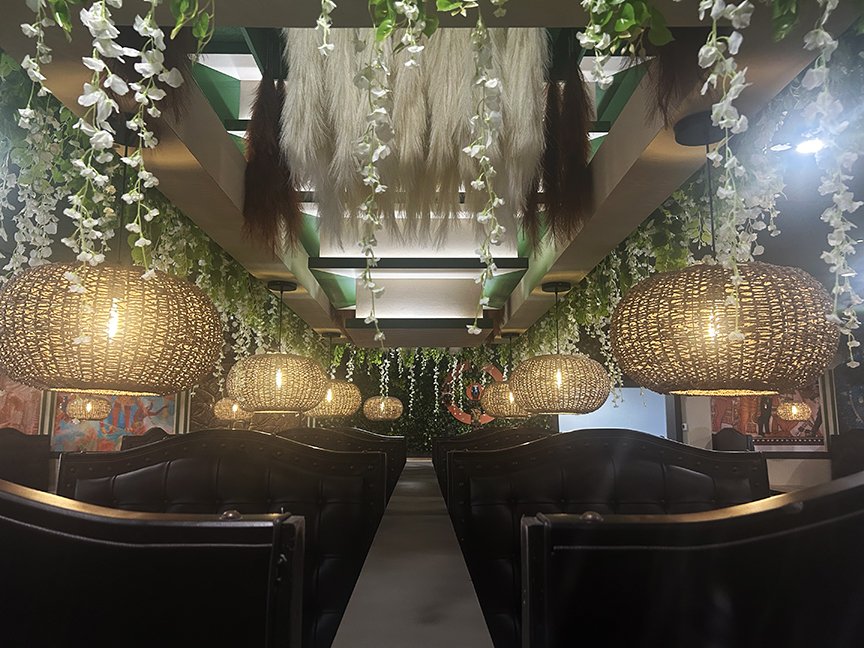
  • Master the psychology of typography and color to influence diner behavior and drive appetite before they even take a bite.
  • Execute a restaurant redesign, a visual identity that bridges the gap between your culinary promise and the physical atmosphere of your space.
  • Utilize a brutally honest brand audit to identify where your current aesthetic is hemorrhaging revenue and losing ground to local competitors.
  • Align every touchpoint-from your website to your interior layout-to create a cohesive "North Star" that attracts high-spending demographics.

Table of Contents

Beyond the Logo: Why Your Restaurant’s Visual Identity Is Costing You Revenue

Visual identity is the sum of every sensory touchpoint your guest encounters. It isn't just a logo printed on a napkin. It's the specific weight of your menu, the warmth of your lighting, and the psychological impact of your typography. In the broader scope of corporate visual identity, your restaurant's brand is the psychological bridge between your kitchen's promise and your guest's wallet. When you serve a high-end, dry-aged ribeye in a room that looks like a 1990s diner, you create a "Brand Gap." This disconnect doesn't just look bad; it actively destroys your profit margins.

In high-stakes markets like Miami and Philadelphia, you have approximately three seconds to win a guest. That's the time it takes for a potential customer to glance at your Instagram profile or peer through your front window. If your visual story is weak, they'll walk to the competitor next door. A strategic restaurant redesign of your visual identity isn't a luxury; it's a prerequisite for survival. Without it, you suffer from "demographic drift," attracting low-spenders who complain about prices while alienating the high-net-worth guests you actually need.

The Financial Impact of Visual Inconsistency

A weak identity forces you to compete on price because you haven't given guests a reason to value your brand. High-end visual cues dictate what a guest is willing to pay for a cocktail; a gold-foiled menu paired with dim, amber lighting commands a premium price tag that a laminated sheet simply cannot justify. In New Jersey and Delaware, your brand authority also determines your labor quality. Top-tier staff want to work in spaces that reflect their professional caliber. A comprehensive restaurant redesign of your visual identitycorrects these errors before they become terminal and allows you to attract the talent required to scale your operation.

Signs Your Current Identity Is Failing Your Business

You must be brutally honest about your current state. Review these signs your restaurant needs a redesign to see where your revenue is leaking. Look for these critical red flags:

  • The Clutter Test: Your logo, menu, and signage look like they belong to three different owners.

  • Visual Stagnation: Your decor hasn't changed since the previous decade, signaling a lack of innovation to your guests.

  • The Social Void: Your bar lacks "visual moments" that guests feel compelled to capture and share on social media.

In 2026, a lack of social-media-ready environments is a death sentence for modern bars. Every corner of your space must be curated to be captured and shared. If it's not worth a photo, it's not worth the square footage.

The Core Components of a Strategic Visual Identity Redesign

A successful restaurant redesign of your visual identity isn't a collection of pretty pictures; it's a calculated deployment of psychological triggers. You aren't just choosing colors and fonts. You're defining the guest's expectations before they even see a menu. Research into effective branding proves that consistency across these visual cues is what builds consumer trust and justifies premium pricing. If your visual elements are disjointed, your guests will subconsciously devalue your culinary expertise.

Materiality and texture play a critical role in this perception. The weight of your menu and the finish of your business cards signal "premium" or "budget" instantly. If your menu feels flimsy, your guests will expect flimsy service. You also need a "Hero Graphic." This is a singular, iconic visual element that becomes synonymous with your venue, creating a mental shortcut for your brand in a crowded market. It's about owning a piece of your customer's mind.

Strategic Color Theory for Hospitality

Forget the tired cliche that red makes people hungry. Modern hospitality requires sophisticated palettes that define specific zones within your floor plan. Use deep, moody tones to anchor your bar area and lighter, organic shades like sage or terracotta to signal freshness in the dining room. You must also adapt for regional tastes. A vibrant, high-contrast palette that thrives in Miami will likely feel garish in a Philadelphia industrial space. If you're unsure how to balance these elements, it's time to consult with a professional who understands regional market dynamics.

Typography and Brand Voice

Typography is your brand's silent spokesperson. Serif fonts suggest tradition and heritage, while sans-serif fonts signal modern efficiency and speed. Your font choice must survive the "dim light test" common in high-end bars. If a guest has to use their phone flashlight to read your menu, you've failed. Your typography strategy must also align with your operational goals. Just as a restaurant floor plan consultant optimizes for flow and speed, your font choice dictates how quickly guests can process information and make a purchase. Use bold, statement typography for signage to pull foot traffic in from the street and establish your presence immediately.

The Brand Gap

Raymond Haldeman

Article by

Raymond Haldeman

Raymond Haldeman spent decades as a hands-on owner and operator of bars, restaurants, and nightclubs before parlaying that experience into a second career designing and rebranding some of the most exciting restaurant spaces in the country. Every place he designs is built on years of actually running the business, paying the bills, and knowing exactly what it takes to make a restaurant full of people say, "WOW!"

Why Your Restaurant's Visual Identity is Costing You Revenue

Logo

Atmosphere is a Currency.

In today's market, a weak visual identity isn't just a missed opportunity—it's a direct path to lost profits. When your decor, menu, and online presence are misaligned, you create a "Brand Gap" that drives high-spending customers to your competitors.

A mediocre competitor with a superior aesthetic is winning the demographic you want.

58%

of diners now choose

"TikTok Worthy" establishments

over less aesthetic options.

Is Your Visual Identity Failing?

Be brutally honest. These red flags indicate your brand is hemorrhaging revenue.

The Clutter Test

Your logo, menu, and signage look like they belong to three different businesses, creating customer confusion and signaling a lack of professionalism.

Visual Stagnation

Your decor hasn't changed in a decade. This tells guests your brand lacks innovation and is out of touch with modern tastes.

The Social Void

Your space lacks "visual moments" that compel guests to share on social media. If it's not worth a photo, it's not working for you.

The Solution: A Strategic Redesign

A successful redesign is a calculated deployment of psychological triggers, not just pretty pictures. It's about building a cohesive sensory ecosystem.

Beyond the Logo: A Sensory Ecosystem

Your brand is the sum of every touchpoint: the warmth of the lighting, the acoustics of the room, and the texture of the menu. Consistency across these elements builds trust and justifies premium pricing.

Strategic Color & Type

Use sophisticated palettes to define zones (e.g., moody tones for a bar, organic shades for dining). Typography is your brand's silent spokesperson, conveying elegance, casualness, or tradition.

Materiality & Menu

The physical weight and texture of your menu instantly signals "premium" or "budget." Strategic menu engineering can increase overall profits by more than 15%.

The Payoff: From Visuals to Value

A cohesive visual identity isn't an expense; it's a high-performance revenue driver. It allows you to stop competing on price, attract high-spending demographics, and command the market share your culinary expertise deserves.

Command Premium Pricing

High-end visual cues, from gold-foiled menus to amber lighting, justify higher price points for your offerings.

Attract Top Talent

The best staff want to work in spaces that reflect their professional caliber, improving service quality.

Increase Profitability

Strategic alignment can increase profits by over 15% through better menu design and perceived value.

Logo

raymondhaldeman.com

The Psychology of Perception: Aligning Brand Identity with Physical Space

Stop thinking in two dimensions. Your brand isn't a sticker you slap on the front door; it's a physical environment that guests must inhabit. A high-impact restaurant redesign of your visual identity requires your graphic language to live within the architecture itself. Lighting levels and acoustic design aren't technical afterthoughts. They are the "vibe" that defines your brand's soul. When your lighting is too harsh or your acoustics are tinny, you contradict your high-end logo and immediately lose the guest's trust.

An effective restaurant marketing strategy demands a seamless transition from your digital presence to your physical space. You must design specific "Instagrammable" corners to act as organic marketing engines. These areas aren't just for show. They are strategic assets that compel guests to promote your venue to their own networks. A seasoned restaurant design consultant understands how to bridge the gap between two-dimensional graphics and three-dimensional architecture to ensure your brand feels cohesive from every angle.

From 2D Logo to 3D Experience

Translate your brand patterns into custom wall coverings or floor tiles to create an immersive experience that feels curated rather than assembled. Use these visual markers to improve guest flow and reduce congestion at the host stand. Your branding must remain consistent from the moment a guest approaches the host stand until they visit the restroom. If the design quality drops off in the hallways, your brand's perceived value drops with it.

Modernizing Without Losing Your Soul

You don't always need a sledgehammer to fix a failing brand. Learn how to modernize a restaurant by identifying legacy elements that still carry emotional weight with your regulars. A "Soft Refresh" might update your upholstery and lighting to align with a restaurant redesign of your visual identity, while a "Total Overhaul" reimagines the entire footprint. Diagnose which one your venue actually needs before you waste capital on unnecessary demolition.

Secure a strategic consultation to align your physical space with your brand vision.

Executing the Redesign: From Concept to Profitable Reality

Execution is where most owners fail. You don't just "get a new look" and hope for the best. A strategic restaurant redesign of your visual identity requires a methodical, four-phase deployment. First, you must conduct a brutally honest audit. This isn't about what you like; it's about how your guests actually perceive your brand. Second, you develop the "North Star" concept. This is the governing vision that ensures every napkin, light fixture, and menu font serves the same objective. If your vision is blurry, your results will be too.

The third phase is integration. This is the high-stakes coordination between your restaurant rebranding consultant and your contractors. If the graphics don't match the physical build, the entire investment is wasted. Finally, you execute the launch. Use your new identity to generate massive PR buzz. You only get one chance to create "New Opening" energy with an existing venue. Don't waste it on a quiet rollout. Demand attention and capture the market share you've been missing.

Why DIY Branding Is a Recipe for Failure

Cheap design is the most expensive mistake you can make. Signage that fades in six months, menus with unreadable fonts, and files that don't print correctly are the hallmarks of amateur work. A general graphic designer doesn't understand the hospitality environment. They don't know how colors shift under specific restaurant lighting or how font weights behave on textured paper. A specialized hospitality consultant brings decades of industry-specific data to the table. This expert advantage ensures your design choices are based on proven revenue drivers rather than personal whims.

Measuring the ROI of Your New Look

A redesign must pay for itself. Track your metrics. You should see an immediate increase in average check size as your new visual authority justifies higher price points. Monitor your social media tag frequency. If guests aren't photographing your new space, your brand health is failing. A professional restaurant redesign of your visual identity isn't just a temporary fix; it's a long-term asset. When executed correctly, your brand won't need another refresh for at least a decade. That longevity is the ultimate return on investment for any serious operator.

Dominate Your Market Through Visual Authority

Your brand's visual presence is either a barrier or a bridge to your revenue goals. A mediocre aesthetic doesn't just look bad; it actively signals to your target demographic that your standards are slipping. You've seen how typography, color theory, and environmental design must converge to create a high-performance guest experience. A strategic restaurant visual identity redesign is the single most effective way to reclaim your market position and justify the premium pricing your kitchen deserves.
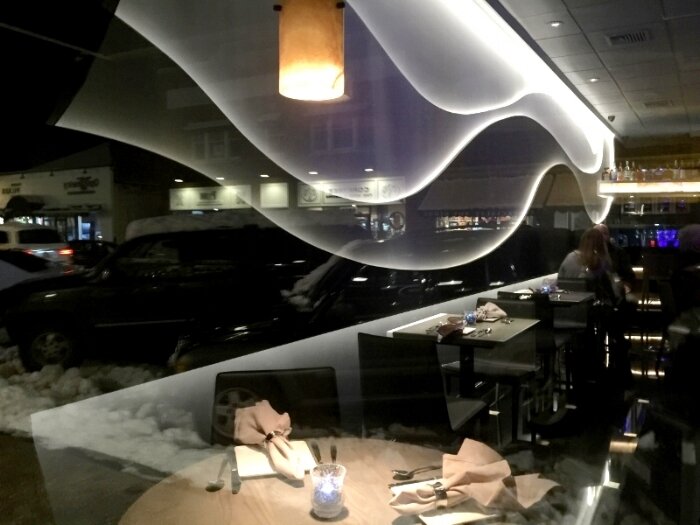
Don't leave your legacy to a generalist or a DIY template. You need a partner who understands the high stakes of hospitality and the specific demands of the East Coast and Miami markets. With over 30 years of high-stakes hospitality design experience, Raymond Haldeman provides a specialized focus on revenue-driven rebranding that generalists simply cannot match. You get direct access to the principal designer via a toll-free US line to ensure your vision is executed with surgical precision. It's time to stop settling for a brand that feels like a decorative afterthought and start building a visual engine that drives consistent growth.

[Stop losing guests to dated design, Consult with Raymond Haldeman Today](https://raymondhaldeman.com)

Take the first step toward a more profitable future. Your restaurant's transformation starts with a single, expert decision.

Frequently Asked Questions

How much does a restaurant redesign of your visual identity cost in 2026?

Industry data for 2026 indicates that professional brand identity systems typically range from $12,000 to over $75,000 for comprehensive strategy and asset rollout. These figures reflect the high-stakes nature of the hospitality market where a surface-level logo is no longer sufficient to drive growth. You're investing in a revenue-generating system, not just a graphic file. Treat this as a capital expenditure that dictates your long-term market value.

Can I redesign my visual identity without changing my restaurant’s name?

Yes, you can and often should retain your name if it carries significant local equity. Executing a restaurant redesign of your visual identitywhile keeping your name allows you to shed an outdated "cheap" image while maintaining the trust you've built in markets like Philadelphia or Miami. It's a strategic way to signal a new era of quality to your guests without starting from zero.

How long does a typical restaurant rebranding project take to implement?

A professional rebranding project usually spans eight to sixteen weeks from the initial audit to the final design delivery. This timeline accounts for the deep psychological analysis and concept development required to create a "North Star" for your business. The physical integration into your space may take longer depending on your contractor's schedule and the complexity of your new interior design elements.

What is the difference between a logo refresh and a full visual identity redesign?

A logo refresh is a minor facelift that updates an existing mark to look more modern. A full visual identity redesign is a total sensory overhaul that aligns every touchpoint including lighting, acoustics, menu textures, and staff uniforms. One is a cosmetic touch-up; the other is a strategic transformation of your entire guest experience to maximize profitability.

How do I know if my restaurant’s visual identity is actually the reason my sales are down?

Look for "demographic drift" where you're attracting bargain hunters instead of high-spenders. If your social media tags are non-existent and your decor feels like a relic of a previous decade, your brand is failing. When your visual cues don't justify your menu prices, guests will subconsciously devalue your food and look for reasons to complain about the check.

Should I hire a local designer in Philadelphia or a national hospitality specialist?

Don't make the mistake of hiring for proximity over expertise. A general local designer lacks the hospitality-specific data required to understand operational flow and menu engineering. You need a specialist who understands the commercial landscape of the US East Coast and can act as a visionary guide. A specialist ensures your design isn't just "pretty" but is functionally built to increase your average check size.

Maryland Restaurant Designer: Modern Ideas for High-Performance Venues in 2026

Maryland Restaurant Designer: Modern Design Ideas for High-Performance Venues in 2026

Your restaurant's interior is either a strategic asset or a liability that's quietly draining your bank account. In the high-stakes MD/DC market, a dated atmosphere doesn't just fail to attract modern diners; it actively signals that your brand is irrelevant. If you aren't working with a specialized Maryland restaurant designer to modernize your space, you're hemorrhaging profit to competitors who already understand the 2026 landscape. You know the frustration of watching overhead climb while table turnover remains stagnant. It's a dangerous cycle that demands an immediate, professional intervention before your margins disappear entirely.

Stop settling for an average eatery and start building a high-profit hospitality destination. This guide reveals the strategic design concepts and professional consulting secrets used to engineer venues for maximum revenue. You'll learn how to optimize your floor plan for better seating flow and create an immediate "wow" factor that resonates with sophisticated local demographics. We'll preview the essential rebranding tactics and space planning shifts that turn underperforming establishments into the most profitable spots in the state. Success in this industry isn't accidental; it's designed.

Key Takeaways

  • Stop hiring residential designers for commercial hospitality projects; Maryland’s high-stakes corridor requires a specialist who understands high-concept branding.
  • Discover the 2026 design trends that transform dated interiors into high-performance venues through strategic rebranding and bold new concepts.
  • Treat your floor plan as your most critical business document by optimizing seating and service paths for maximum ROI.
  • Partner with a Maryland restaurant designer who offers a deep understanding of the hospitality business model to avoid expensive renovation mistakes.
  • Prioritize a professional consultation before spending a single dollar to ensure your venue is engineered for success from day one.

Table of Contents

Why Maryland Operators Need a Specialized Hospitality Interior Designer

Stop treating your restaurant renovation like a home kitchen remodel. Hiring a residential designer for a commercial hospitality project is a recipe for financial disaster. A living room doesn't need to facilitate the movement of fifty servers or handle the logistical chaos of a Friday night rush. In Maryland's aggressive market, you need a Maryland restaurant designer who understands that every square foot must generate a return on investment. If your designer hasn't spent years behind the line or managing a floor, they're just guessing with your money.

Maryland's corridor between Baltimore and Washington D.C. is one of the most competitive regions in the country. To survive here, your brand needs more than just a fresh coat of paint. It requires high-concept branding that speaks to a sophisticated, diverse audience. From navigating local health department codes to optimizing space planning for maximum seating capacity, the technical requirements are immense. You can't afford to sacrifice operational speed for a "pretty" aesthetic that doesn't work when the house is full.
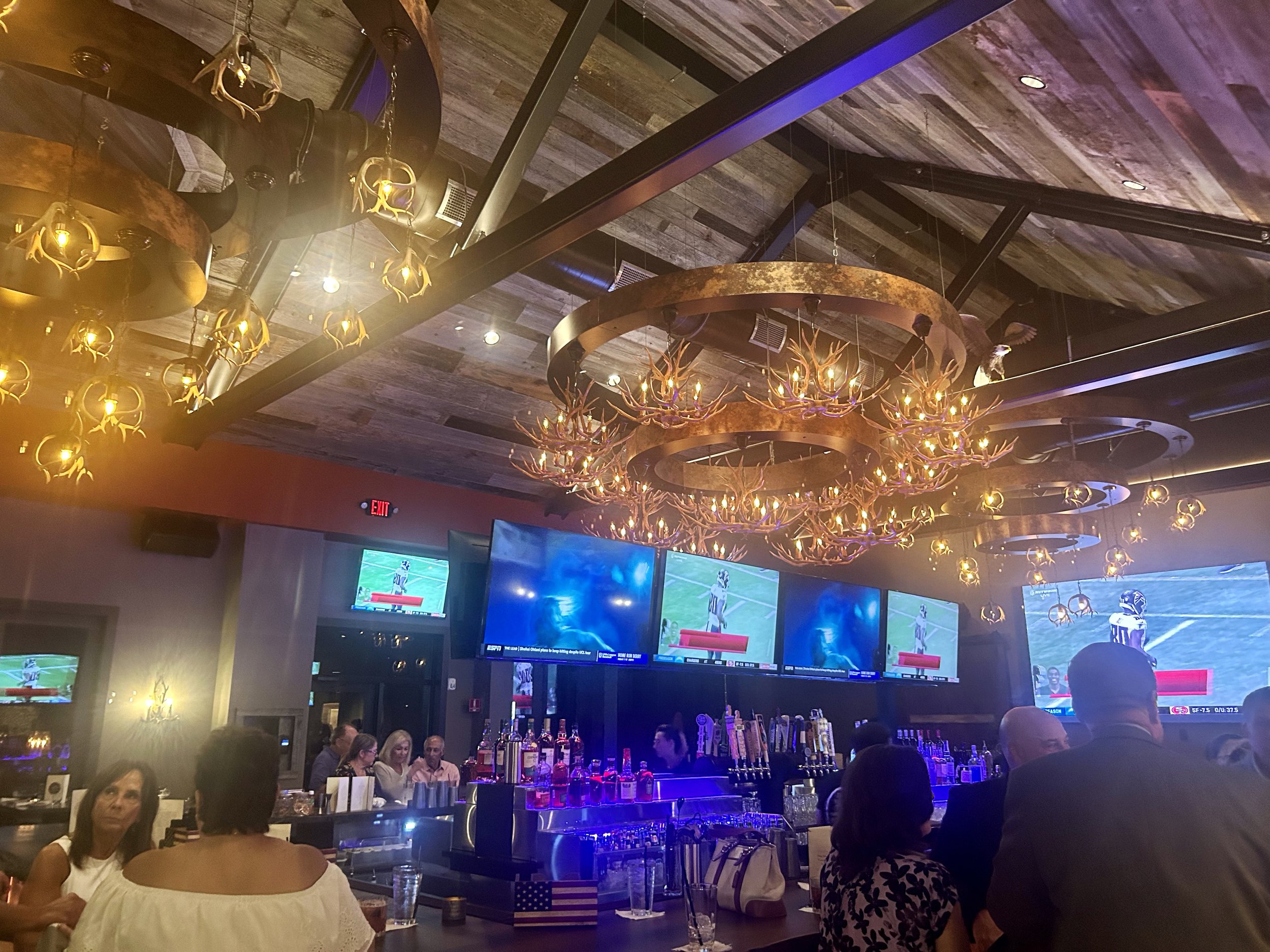
The High Stakes of the Mid-Atlantic Market

Diners in affluent pockets like Bethesda and Chevy Chase have zero tolerance for mediocrity. By 2026, "good enough" design will be the fastest way to close your doors. These patrons expect a cohesive visual identity that matches the quality of the plate. Whether you're operating an urban bistro in Baltimore or a sprawling suburban destination, your interior must command attention immediately. A generic look tells the customer your food is generic too. Don't let your venue become a background character in a crowded market.

Aesthetic vs. Operational Efficiency

A poorly designed floor plan is a silent thief. It costs you thousands in labor every month because your staff is taking too many steps to reach a table or the bar is a bottleneck. A true expert creates a money-making machine, not just a pretty room. Raymond Haldeman’s background as a former owner and operator is your secret weapon here. He understands that bar service speed and kitchen flow are just as vital as the lighting fixtures. You need a strategic partner who prioritizes the bottom line while delivering a high-end aesthetic. Before you commit to a single contractor, get the professional guidance that protects your interests.

5 Modern Restaurant Design Ideas for Maryland Establishments

Maryland operators often fall into the trap of "safe" design. That's a mistake. A professional Maryland restaurant designer creates a brand identity that stands out in a crowded market by ditching tired cliches for sophisticated textures and lighting. By 2026, the Baltimore-Washington corridor will be dominated by venues that prioritize visual impact as much as the menu. Forget the anchors and rope; modern success is built on high-concept branding that commands premium pricing. If your venue looks like it belongs in the last decade, you're already losing the battle for the modern diner's attention.

1. The "Hybrid" Indoor-Outdoor Experience

Maryland's seasonal shifts shouldn't kill your revenue. Retractable glass walls and integrated heating systems turn a summer patio into a high-margin winter lounge. For venues on the Annapolis waterfront, we are seeing a shift away from "nautical" tropes toward sleek, coastal modernism. This maximizes your square footage for year-round profitability. Don't leave money on the table just because the temperature drops below sixty degrees.

2. High-Impact Bar and Nightclub Lighting

Light is your most powerful sales tool. In Baltimore’s nightlife scene, we use dynamic lighting to define zones and influence behavior. Warm, amber tones encourage lingering and second rounds, while strategic pops of color draw eyes to high-margin premium bottles. Don't just light the room; use Bar and Nightclub Interior Design That Drives Alcohol Sales to turn your bar into a visual magnet. If your lighting is flat, your sales will be too.

3. Strategic Space Planning and VIP Zoning

Every seat in your house must perform. High-end booths are making a massive comeback because they offer the privacy and comfort modern diners crave. By creating "exclusive" pockets within the main dining room, you can drive up check averages without alienating your core audience. It all starts with an optimized restaurant floor plan that eliminates dead zones and prioritizes the guest experience. A Maryland restaurant designer ensures your layout is a tool for profit, not a logistical nightmare. Before you spend a dollar on furniture, ensure your layout is engineered for peak efficiency.
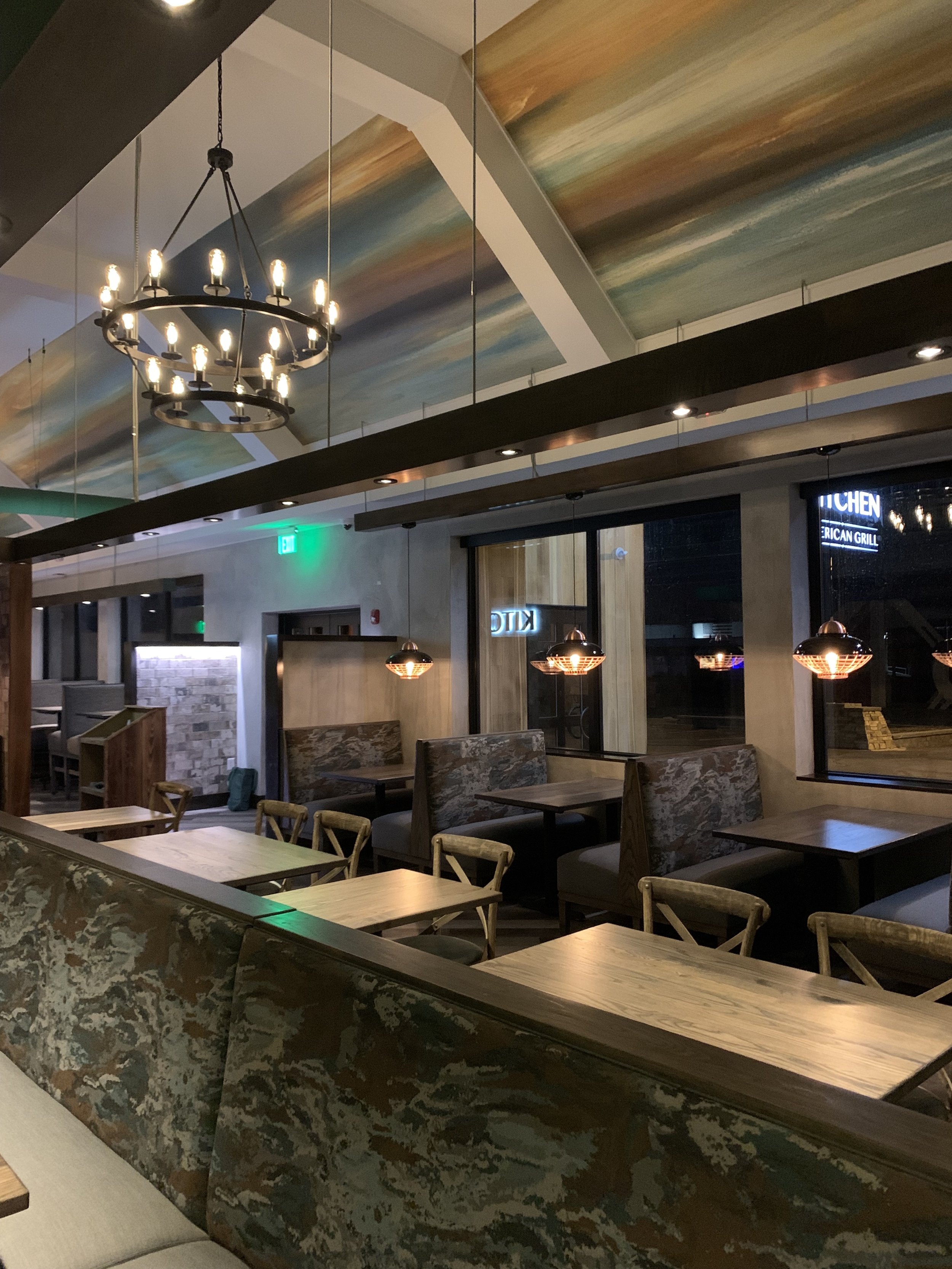
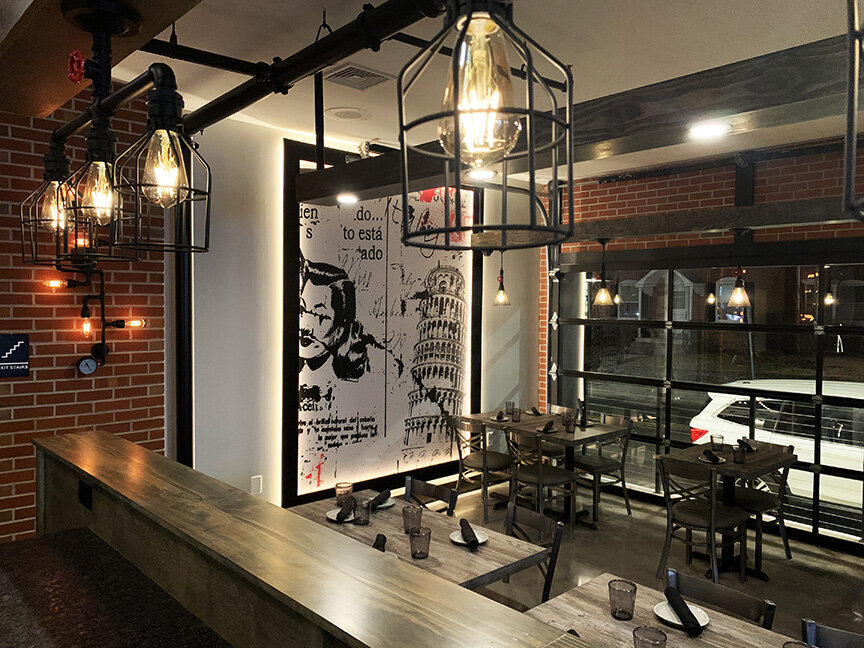
If you're ready to stop guessing and start winning, it's time to consult with an expert who has actually operated in the trenches. You can schedule a professional consultation to see exactly how these strategies apply to your specific footprint.

Logo

Designing for Profit

Raymond Haldeman

Article by

Raymond Haldeman

Raymond Haldeman spent decades as a hands-on owner and operator of bars, restaurants, and nightclubs before parlaying that experience into a second career designing and rebranding some of the most exciting restaurant spaces in the country. Every place he designs is built on years of actually running the business, paying the bills, and knowing exactly what it takes to make a restaurant full of people say, "WOW!"

The Modern Maryland Restaurant Blueprint

In the competitive MD/DC market, your restaurant's interior is either a strategic asset or a costly liability.

A dated atmosphere doesn't just fail to attract diners; it actively signals that your brand is irrelevant, hemorrhaging profit to competitors.

The Liability: Dated & Draining

  • Stagnant table turnover & high overhead
  • Actively signals brand irrelevance
  • Generic look repels sophisticated diners
  • Leads to a dangerous cycle of disappearing margins

The Asset: Modern & Profitable

  • Creates an immediate "wow" factor
  • Engineered for maximum revenue & ROI
  • Optimizes flow for faster service
  • Builds a high-profit hospitality destination

The #1 Mistake: Hiring the Wrong Professional

Stop treating your restaurant like a home remodel. A residential designer for a commercial project is a recipe for financial disaster.

Residential Designer

Focuses on aesthetics, not business.

  • × Doesn't understand operational flow
  • × Guesses with your money on logistics
  • × Creates pretty rooms that fail under pressure

Hospitality Design Specialist

Understands the business of hospitality.

  • ✓ Engineers every square foot for ROI
  • ✓ Prioritizes the bottom line
  • ✓ Navigates codes & high-concept branding

3 Modern Design Strategies for 2026

Ditch "safe" design. Dominate the market with high-impact concepts.

01

The "Hybrid" Indoor-Outdoor Experience

Turn seasonal limitations into year-round profit. Retractable glass walls and integrated heating systems transform a summer patio into a high-margin winter lounge, maximizing your usable square footage and revenue streams.

02

Strategic Space Planning & VIP Zoning

Make every seat a top performer. An optimized floor plan eliminates dead zones, while creating "exclusive" pockets with high-end booths drives up check averages by offering the privacy and comfort modern diners demand.

03

High-Impact Bar & Nightclub Lighting

Use light as your most powerful sales tool. Dynamic lighting defines zones and influences behavior—warm tones encourage lingering, while strategic color pops draw eyes to high-margin premium bottles, turning your bar into a visual magnet.

Your Floor Plan is Your Most Critical Business Document

A poorly designed floor plan is a silent thief. An optimized layout is a money-making machine.

Poorly Designed Flow

Bottleneck

Wasted Steps

Costs thousands in labor, slows service, and reduces table turnover.

Optimized Service Path

Direct to Table

Efficient Flow

Maximizes staff efficiency, improves guest experience, and increases profit.

Success in the hospitality industry isn't accidental; it's designed.

Ensure your venue is engineered for success from day one with professional consultation.

raymondhaldeman.com

Engineering Your Layout: The ROI of Professional Space Planning

Your floor plan isn't a suggestion; it is the most critical document in your entire business plan. If your layout is flawed, your revenue is capped before you even open your doors. Professional space planning is the strategic arrangement of seating, service paths, and focal points to ensure every square inch of your lease is working for you. A Maryland restaurant designer doesn't just "place furniture." They engineer a high-performance environment where staff moves faster and guests spend more. This is about the math of table turnover. Even a minor increase in efficiency can result in thousands of dollars in additional monthly profit.

In Maryland, we often deal with historic footprints in cities like Annapolis or Baltimore. These buildings have structural constraints that can easily become bottlenecks if you don't have a plan. A seasoned consultant turns these architectural quirks into unique design features, such as intimate VIP alcoves or high-impact focal bars. Don't let a "charming" old building drain your efficiency. Turn those constraints into a competitive advantage that increases your daily revenue potential while maintaining the character diners love.

Maximizing Seating Without Crowding

There is a specific "sweet spot" for seat density in upscale Maryland venues. If you crowd the room, you destroy the guest experience and lower your check average. If you under-seat, you're leaving money on the sidewalk. Never trust a general contractor with your seating layout. They are experts at building walls, not understanding the nuances of elbow room and acoustics. You need a layout that protects the bottom line while maintaining a premium, comfortable feel for your patrons.

Optimizing Service Flow and Speed

Seconds matter on a busy shift. Every extra step your server takes to reach the furthest table is labor cost you’ll never get back. We design bar layouts for high-volume service and maximum visibility, ensuring your bartenders aren't tripping over each other during the rush. For more on this, read our guide on Elite Restaurant Design for New Openings. Efficiency is the difference between a venue that survives and one that thrives in the Mid-Atlantic market.

Launch a more profitable venue with professional space planning

Choosing the Right Maryland Restaurant Design Consultant

Selecting a Maryland restaurant designer is the most consequential decision you'll make for your brand’s future. Don't be fooled by a portfolio of "pretty" pictures. A generalist firm might create a space that looks good in a magazine, but if they don't understand the hospitality business model, they’ll build you a beautiful failure. You need an expert who understands that every design choice must be a calculated move to increase your bottom line. Demand a one-on-one consultation before you spend a single dollar on renovation. It’s the only way to get realistic, straight-talk answers about costs and operational ROI.

The Mid-Atlantic market is unforgiving. If your designer is more interested in artistic expression than your P&L statement, your project is doomed from the start. A specialist understands the nuances of local demographics, the technicalities of health codes, and the psychological triggers that drive guest spending. This isn't about interior decoration; it's about business engineering. You are hiring a strategic partner to protect your interests and ensure your capital works as hard as you do.

Questions to Ask Your Designer

  • Have you ever owned or operated a restaurant? If the answer is no, they are just guessing with your capital. They won't understand why a server station placement matters or how bar lighting affects high-margin sales.
  • How will this design specifically increase my table turnover or bar sales? If they talk about "vibes" instead of metrics, walk away. Every square foot must be optimized for revenue.

For a deeper dive into vetting your partner, review The Common Sense Guide to Hiring a Restaurant Design Consultant to avoid the pitfalls that sink most new ventures.

The Raymond Haldeman Advantage

Raymond Haldeman isn't just a designer; he's a former owner and operator who has seen it all. He brings a nationwide reputation with a laser-sharp focus on the Mid-Atlantic market. Whether you're launching a new build or need a high-stakes restaurant rebranding for an underperforming venue, his approach is built on functional excellence. This is the "operator’s edge" that generalist firms simply cannot replicate. Your restaurant is an investment, not a hobby. Design it with the authority it deserves. Stop gambling with your vision and start engineering your success with a partner who understands the business of hospitality.
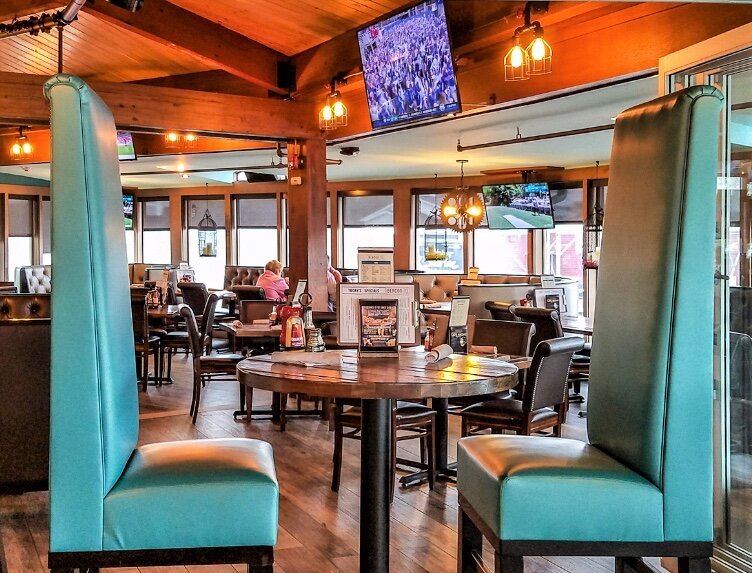
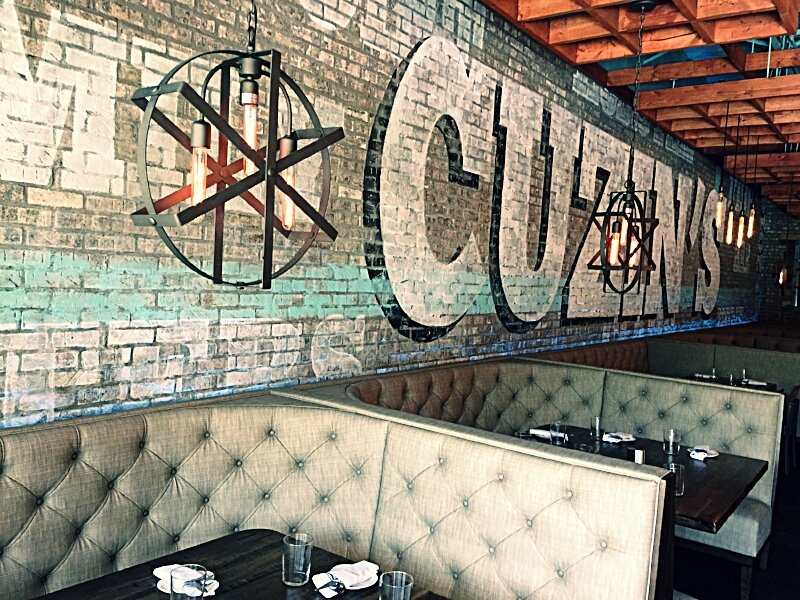
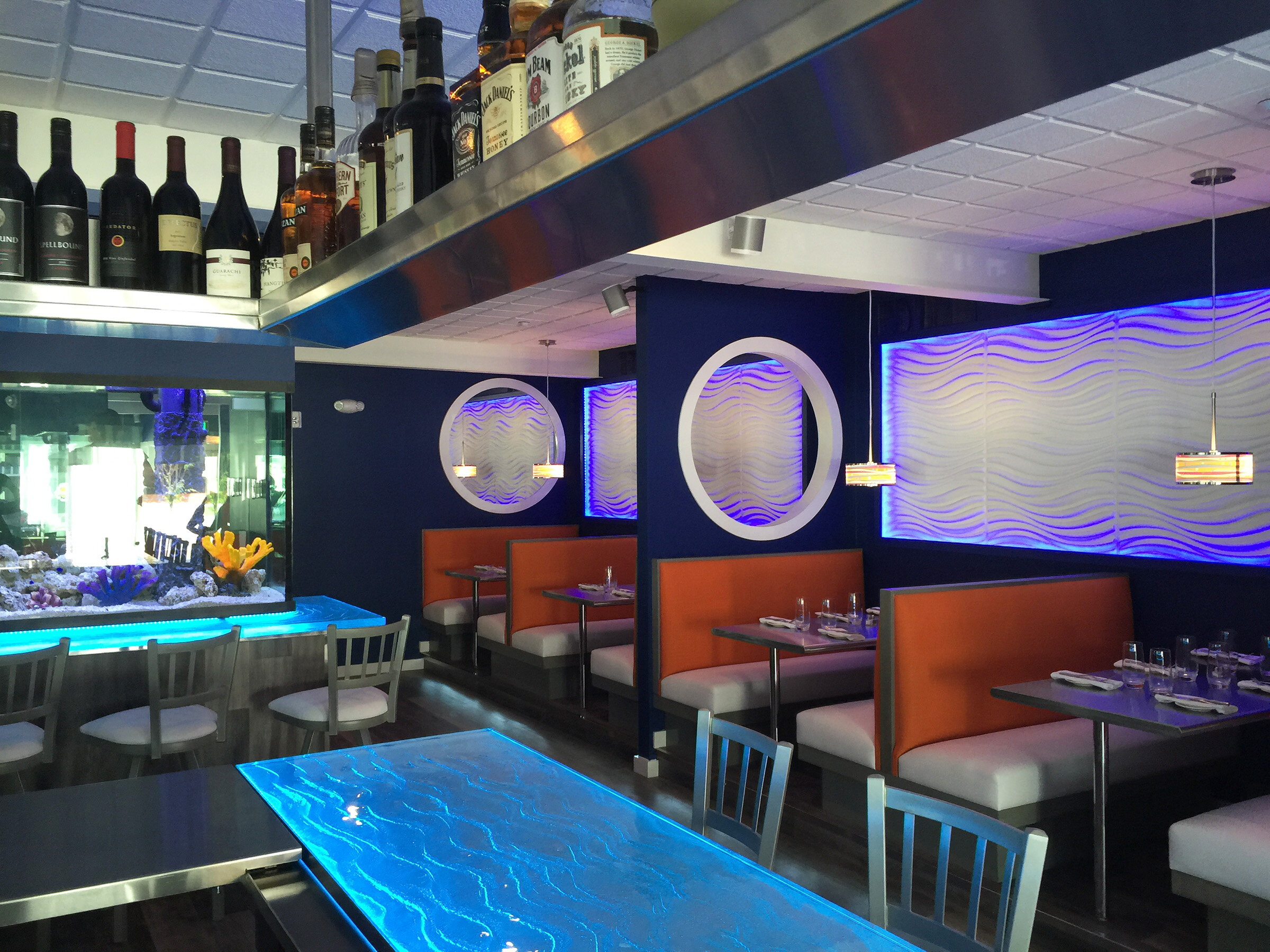
Secure Your Competitive Edge for 2026

Maryland's hospitality landscape is moving too fast for "good enough" design. Success in the 2026 market requires a venue engineered for high performance; every square foot must be a calculated profit center. You now understand that specialized space planning and high-concept branding are the only ways to stay relevant in the Baltimore-Washington corridor. Partnering with a proven Maryland restaurant designer ensures your layout maximizes turnover while your aesthetic commands the premium pricing your brand deserves.

Raymond Haldeman provides the "operator’s edge" that generalist firms lack. As a former owner and nationwide hospitality specialist, he offers the straight talk necessary to protect your capital from expensive renovation mistakes. You don't need a decorator. You need a strategic partner who has been in the trenches and knows how to build a money-making machine.

Call 1-866-735-3582 to discuss your vision directly with an expert who understands the high stakes of your business. Your path to a more profitable, high-concept venue starts with a single strategic conversation. Let's build a destination that dominates the market.

Frequently Asked Questions

What is the average cost of hiring a restaurant designer in Maryland?

Fees vary significantly based on the project's scope, including whether you are executing a full rebrand or a ground-up new build. Professional design is a strategic investment in your venue's future revenue rather than a simple line-item expense. You should prioritize the value of expertise over the lowest bid, as a cheap plan often leads to expensive construction errors. Discussing your specific needs during a professional consultation is the only way to get a realistic assessment of the required capital for your unique footprint.

How long does a typical restaurant redesign or rebrand take?

A standard timeline depends on the complexity of the space planning and the speed of local Maryland permit approvals. Most comprehensive transformations take several months from the initial concept phase to the grand reopening. You must account for lead times on custom fixtures and the logistical coordination of various trades. Rushing this critical process usually results in a compromised aesthetic and operational bottlenecks that will hurt your long-term profit margins.

Do I need a separate architect and restaurant designer for my Maryland venue?

You often need both to ensure your venue is structurally sound and operationally efficient. While an architect focuses on the building's shell and life safety codes, a Maryland restaurant designer specializes in the guest experience and revenue-generating zones. We coordinate with your architectural team to ensure the interior layout doesn't just meet local code but actually works for your staff and patrons. Don't let a generic architect handle your seating density or bar service flow.

Can a professional redesign really help a failing restaurant?

Strategic rebranding is often the most effective way to save an underperforming establishment. If your food is excellent but your tables remain empty, the problem is likely your brand's visual identity or a dated atmosphere that fails to attract modern diners. A professional redesign addresses these psychological barriers, creating a "wow" factor that attracts new patrons and justifies higher menu prices. We specialize in turning failing establishments into high-profit hospitality destinations by fixing fundamental layout and aesthetic flaws.

What are the most popular restaurant design trends in Maryland for 2026?

The 2026 market is moving toward high-concept, immersive environments that prioritize sophisticated textures and lighting over generic themes. We see a massive shift toward "hybrid" indoor-outdoor spaces and the return of high-end, private booth seating. Success for a Maryland restaurant designer requires moving beyond tired cliches and embracing a modern look that resonates with affluent Mid-Atlantic diners. Focal points must be "Instagrammable" to drive organic social media marketing for your brand.

How does a restaurant floor plan impact my insurance and local MD permits?

Your floor plan dictates your legal occupancy limits and fire safety compliance, which directly affects your insurance premiums and permit eligibility. Maryland health departments and liquor boards have strict requirements regarding kitchen flow and bar visibility. A flawed layout can lead to failed inspections and costly delays in your opening schedule. Professional space planning ensures your layout adheres to these regulations without sacrificing the high-end aesthetic your brand needs to thrive in a competitive landscape.

The Common Sense Guide to Hiring a Restaurant Design Consultant in 2026

Restaurant Designer Raymond Haldeman

Most restaurant failures are decided before the first plate leaves the kitchen, often because the floor plan was designed by an artist instead of a revenue engineer. In a 2026 market where labor and food costs have surged by 35% over the last five years, you cannot afford to treat your layout as a mere aesthetic choice. Hiring a restaurant designer who understands the brutal reality of a 10.5% profit margin is the difference between a landmark success and a quiet closing within twelve months. You need a strategic partner who prioritizes operational flow and table turnover over vanity projects that kill your bottom line.

You already know that a stunning interior is mandatory for driving social media buzz and foot traffic, but the fear of wasted square footage is a valid concern that keeps owners awake at night. This guide provides the blueprint for hiring a strategic design consultant who engineers your floor plan for maximum revenue and ensures your new venue becomes a market landmark. We will examine how to vet for operational expertise, avoid the architectural mistakes that drain budgets, and secure a signature aesthetic that actually works for your staff and your guests.

Key Takeaways

  • Treat your floor plan as a revenue engine by prioritizing strategic space planning that maximizes table turnover and alcohol sales.

  • Master the no-nonsense framework for hiring a restaurant designer who understands operational flow rather than just picking colors.

  • Protect your investment against the high risk of failure by ensuring your consultant aligns your concept with a high-performance physical environment.

  • Discover how visionary design creates a signature aesthetic that drives social media buzz and secures your position as a market landmark.

Table of Contents

  • Why Hiring a Restaurant Opening Design Consultant is Your Most Critical Pre-Launch Decision

  • Revenue Engineering: How Design Consultants Weaponize Space for Profit

  • The No-Nonsense Framework for Vetting an Elite Restaurant Designer

  • The Raymond Haldeman Advantage: Transitioning from Concept to Landmark

Why Hiring a Restaurant Opening Design Consultant is Your Most Critical Pre-Launch Decision

Opening a restaurant is a high-stakes gamble where the house usually wins. Industry data suggests that roughly 60% of independent restaurants fail within their first year. This isn't typically a failure of the kitchen; it's a failure of the business model and the physical space it inhabits. Hiring a restaurant designer who acts as a strategic consultant is your most critical pre-launch decision. This partner serves as a visionary guide who aligns your culinary concept with a high-performance physical environment designed to extract maximum profit from every square foot.

Stop confusing a design consultant with a decorator. A decorator chooses "pretty" furniture for a dining room in Philadelphia or Miami; a strategic consultant engineers a machine that moves people and product with surgical precision. If your room looks like a gallery but your servers can't navigate the floor during a rush, you have a financial liability, not a business. Applying foundational Interior design principles to a commercial hospitality setting requires a deep understanding of operational flow that most residential designers simply lack. Professional design is your ultimate insurance policy against a disastrous first year.

Concept Development: From Vision to Market Dominance

Your menu is a promise, and your design is the delivery. In crowded markets like New Jersey or Delaware, you cannot afford to be "just another bistro." You must command attention. Concept development is the bridge between a chef's vision and a brand's profitability. It ensures that every element of the guest experience, from the lighting levels to the acoustic signature, justifies premium pricing and encourages repeat visits. If your environment doesn't outshine the competition across the street, your brand is already invisible. Don't just open a restaurant; build a landmark.

The Pre-Construction Financial Advantage

The most expensive mistakes in the hospitality industry happen on paper, long before a single nail is driven. An elite consultant identifies architectural pitfalls that lead to five-figure change orders during construction. By collaborating with architects and general contractors early, they ensure the vision survives the build process without compromising operational efficiency. This proactive approach identifies cost drivers in the pre-lease phase, effectively paying for the consultant's fee through avoided disasters and streamlined renovations. Early-stage consulting is the only way to ensure your budget goes into the guest experience rather than fixing avoidable structural errors.

Revenue Engineering: How Design Consultants Weaponize Space for Profit

Design is not a decorative luxury; it is a tactical weapon. When you are operating on a razor-thin 10.5% profit margin, every square foot must justify its existence. Hiring a restaurant designer who understands revenue engineering ensures your floor plan is optimized for maximum covers without compromising the high-end experience your guests expect. This is about more than just fitting tables into a room. It is about calculating the exact ROI of your seating layout and the psychological triggers that drive guest behavior.

Front-of-house revenue drivers often center on the bar and lounge. A strategic consultant designs these areas to psychologically encourage higher alcohol sales through lighting, sightlines, and proximity. If your bar is an afterthought, you are leaving your highest-margin products on the shelf. Beyond the bar, the science of ambiance plays a critical role. Using strategic lighting and acoustics can increase check averages and influence stay duration. A great restaurant design ensures that guests feel comfortable enough to order that second bottle of wine but doesn't encourage them to linger indefinitely when you need to turn the table.

Operational flow is the invisible "dance" between the kitchen and the table. If your layout forces servers to cross paths with guests or navigate inefficient routes, your turnover rates will suffer. A professional consultant engineers these paths to be seamless, allowing your staff to perform at peak efficiency even during the busiest Friday night rush. Efficiency in the back-of-house translates directly to faster service and more seat turns in the front.

Restaurant Floor Plan Optimization

Strategic density is the ultimate goal. You must balance seating capacity with guest comfort to maximize your return on investment. As a premier restaurant floor plan consultant, the focus is on creating "Power Tables" and VIP sections. These are high-demand areas that guests will specifically request and pay a premium to reserve, turning standard floor space into a high-revenue asset that drives repeat business.

Visual Identity and Material Selection

Your brand must be bulletproof. This requires selecting high-durability materials that reflect a premium identity while withstanding the brutal wear of commercial use. Custom millwork and signature lighting elements are the building blocks of a landmark venue. Whether you are opening an entryway in Maryland or selecting bar stools in Miami, maintaining branding consistency is non-negotiable. If you want to ensure your venue dominates the market, consider a consultation with Raymond Haldeman to align your vision with operational reality.

The No-Nonsense Framework for Vetting an Elite Restaurant Designer

Hiring a restaurant designer isn't about finding an artist who likes your mood board. It's about securing a strategic partner who understands that every inch of your venue must perform. Start with a brutal portfolio analysis. Does the designer create modern, functional concepts, or are they just chasing fleeting trends that will look dated in eighteen months? You need a space that remains relevant and profitable for a decade. Trends die; functionality pays the rent.

Avoid the generalist trap. Residential designers and general commercial architects will fail your project because they don't understand the high-stakes pressure of hospitality. They don't know the difference between a lounge that drives alcohol sales and one that just looks nice in a photo. Your consultant must also possess deep regional market knowledge. The demographics and seasonal demands of the Jersey Shore are worlds apart from the high-octane expectations of Miami or the established dining culture in Philadelphia. If they don't know the local landscape, they're just guessing with your money.

Finally, apply the 'Straight-Talk' test. A true expert will challenge your bad ideas. If a consultant simply nods and takes your check, they are a liability. You aren't paying for a "yes-man"; you are paying for an authoritative guide who prevents rookie mistakes before they cost you six figures. If they won't tell you when a layout choice is a financial mistake, they shouldn't be on your payroll.

Critical Questions for Your Potential Consultant

Don't settle for vague promises. Demand specifics. Ask: "How will this layout specifically increase my table turnover rate by 15%?" If they can't explain the mechanics of the flow, they aren't revenue engineers. Ask where they have engineered additional revenue streams into the floor plan. A visionary designer finds profit in the corners of a room that others ignore. For those starting from scratch, look for expertise in restaurant design for new openings to ensure your foundation is solid.

Red Flags in Design Proposals

When you are hiring a restaurant designer, the biggest red flag is a "one-size-fits-all" proposal. If the design ignores your specific neighborhood's competitive landscape, it's a template for failure. A designer who prioritizes their personal aesthetic over your business's profitability is a vanity project you can't afford. Remember, "cheap" consulting fees are a trap. In this industry, a low upfront cost often leads to the most expensive construction mistakes and operational bottlenecks. Pay for expertise now, or pay for renovations later.

[Schedule a high-level design consultation](https://raymondhaldeman.com)

The Raymond Haldeman Advantage: Transitioning from Concept to Landmark

Elite operators in NJ, PA, and Miami don't look for a service provider; they seek a visionary guide. Hiring a restaurant designer like Raymond Haldeman means you aren't just getting a floor plan. You are gaining direct access to a principal designer who has navigated every industry pitfall imaginable. This straight-talk approach is a shortcut to success that bypasses the trial-and-error phase most new owners suffer through. When the stakes are this high, you need an authoritative partner who prioritizes your profitability over their own portfolio aesthetics.

The results speak through the bottom line. Haldeman specializes in high-impact bars and nightclubs specifically engineered to drive massive alcohol sales and VIP revenue. By weaponizing sightlines and social psychology, these designs encourage guests to stay longer and spend more. Whether you are launching a new concept or executing a high-revenue rebranding, the goal is the same: market dominance. Strategic design can save a failing concept by identifying operational bottlenecks and aesthetic disconnects that drive customers away. It transforms a struggling space into a landmark destination.

A National Portfolio of Local Success

Success requires versatility across high-competition markets. From the established dining rooms of Philadelphia to the high-energy demands of high-end restaurant design Miami, the Haldeman signature remains consistent. It is modern, functional, and unapologetically bold. This portfolio of success across the US proves that while aesthetics change, the principles of revenue-driven design are universal. Your venue needs to be more than just "pretty"; it must be a functional machine that outshines every competitor in your zip code.

Your Next Move: Securing Your Venue’s Future

Stop guessing and start engineering. Your opening date is approaching, and every day spent with a flawed design foundation is a day of lost revenue. The first step toward a successful launch is vetting your concept against market reality. Don't leave your investment to chance or trust it to a designer who doesn't understand the brutal economics of the hospitality industry. Secure your venue's future by consulting with a professional who knows how to build a landmark from the ground up.

[Contact Raymond Haldeman today to engineer your restaurant’s success.](https://raymondhaldeman.com)

Secure Your Market Dominance Today

Your venue's success isn't a matter of luck; it's the result of deliberate revenue engineering. We've established that your physical space is the most powerful tool you have for driving high-margin alcohol sales and maximizing table turnover. Don't leave your life's work to chance by hiring a restaurant designer who lacks the "straight-talk" business acumen required to survive the 2026 market. You need a visionary guide who has already transformed concepts into landmarks across NJ, PA, DE, MD, and Miami.

Elite design is the ultimate insurance policy against the industry's high failure rate. By prioritizing operational flow and high-revenue bar layouts, you ensure your project is a financial powerhouse from day one. It's time to stop guessing and start building with precision. Every square foot of your floor plan must justify its existence by contributing to your bottom line.

[Schedule Your Strategic Design Consultation with Raymond Haldeman](https://raymondhaldeman.com)

Take the first step toward a high-performance venue that defines its market. Your vision deserves the protection of an elite specialist who has seen every industry pitfall and knows the shortcut to success. Let's build a landmark that dominates the competition.

Frequently Asked Questions

What is the difference between an interior decorator and a restaurant opening design consultant?

An interior decorator focuses on the surface level, selecting colors and furniture to create a specific look. A restaurant opening design consultant is a strategic partner who engineers a profit-driven environment. While a decorator deals with "pretty," a consultant focuses on revenue engineering, operational flow, and space planning to ensure every square foot generates maximum ROI. You don't need someone to pick curtains; you need an expert to build a high-performance business machine.

How much does hiring a restaurant design consultant typically cost in 2026?

Industry data for 2026 indicates that soft costs, which include architect and design fees, typically range from 10% to 15% of the total construction budget. For a mid-range casual dining project, these fees often fall between $35,000 and $75,000. While hiring a restaurant designer is a significant investment, it acts as an insurance policy against the six-figure construction errors and operational bottlenecks that frequently sink under-planned venues.

When is the best time to hire a design consultant for a new restaurant opening?

You must hire your consultant before you sign a lease. Engaging an expert during the pre-lease feasibility phase allows you to identify structural deal-breakers or hidden costs that could inflate your budget before you are legally committed to the space. If you wait until after you have the keys, you're already losing money to the clock and likely overpaying for a layout that doesn't serve your culinary concept.

Can a restaurant design consultant help if I am rebranding a failing establishment?

Yes, rebranding is a critical intervention for establishments that are struggling due to poor market positioning or inefficient layouts. A consultant identifies exactly why your current environment is driving guests away and redesigns the space to align with a fresh, profitable identity. This process turns a failing liability into a market landmark by fixing the friction points that currently kill your margins.

Does a restaurant design consultant handle the kitchen layout and equipment selection?

A design consultant focuses on space planning, guest experience, and high-revenue bar design rather than kitchen equipment sales. While they coordinate the essential flow between the kitchen and the dining room, the specific technical equipment selection is usually handled by specialized vendors. Your consultant's job is to ensure the kitchen footprint is optimized so it doesn't steal valuable square footage from your high-profit seating areas.

How does a professional design impact my restaurant’s table turnover rate?

Professional design increases turnover by eliminating the invisible bottlenecks that slow down your staff. By engineering the "dance" between the kitchen and the tables, you reduce server travel time and expedite the clearing process. A strategic layout allows you to serve more covers during peak hours without making guests feel rushed, directly increasing your daily revenue. When hiring a restaurant designer, you are essentially purchasing a faster, more efficient service model.

Common Restaurant Rebranding Mistakes to Avoid: The 2026 High-Stakes Checklist

renovated restaurant with circular lighting soffits

Grace’s Cafe is a new restaurant rebranding design by Raymond Haldeman, The Restaurant Designer

Common Restaurant Rebranding Mistakes to Avoid: The 2026 High-Stakes Checklist

Common Restaurant Rebranding Mistakes to Avoid: The 2026 High-Stakes Checklist

Raymond Haldeman

Article by

Raymond Haldeman

Raymond Haldeman spent decades as a hands-on owner and operator of bars, restaurants, and nightclubs before parlaying that experience into a second career designing and rebranding some of the most exciting restaurant spaces in the country. Every place he designs is built on years of actually running the business, paying the bills, and knowing exactly what it takes to make a restaurant full of people say, "WOW!"

Your new logo won't save a failing floor plan. Too many owners treat a rebrand like a cosmetic mask when it should be a structural overhaul. You’ve likely noticed the warning signs: declining table turnover, a "dated" atmosphere despite a recent refresh, and a guest experience that feels disjointed. These are the symptoms of common restaurant rebranding mistakes that cost more than just money; they cost you your reputation in a market where 42% of operators struggled with profitability in 2025.

It's time to stop guessing and start leading. You need a strategy that aligns your physical space with your brand’s promise. This article provides the high-stakes checklist you need to avoid fatal design errors and execute a high-impact transformation for 2026. We will explore why strategic space planning beats simple decoration every time and how to ensure your new identity commands the respect of your patrons. You'll learn exactly how to navigate the technical and aesthetic requirements of a professional-grade rebrand that drives measurable success and protects your investment.

Key Takeaways

  • Stop treating rebranding as a cosmetic mask and start viewing it as a total market repositioning that aligns your physical space with your brand promise.
  • Master the critical difference between superficial decor and high-impact design that optimizes spatial flow and lighting to increase guest stay times.
  • Eliminate common restaurant rebranding mistakes by auditing your floor plan to remove profit-killing "dead zones" where tables never turn.
  • Execute a professional pivot that ensures your physical interior finally delivers on the high-end experience your marketing promises.
  • Understand why expert space planning and strategic consultation are the essential shortcuts to a successful, high-stakes hospitality venture.

Table of Contents

The Strategic Identity Crisis: Why Most Rebrands Fail Before They Start

Stop viewing Rebranding as a superficial paint job. It isn't a cosmetic mask; it's a fundamental shift in your market positioning. If you believe a new font or a brighter color palette can fix a broken business model, you're already losing. True transformation requires a deep dive into your restaurant’s soul before you ever touch a swatch book. You must start with the concept, not the decor. In 2026, "playing it safe" with generic, middle-of-the-road designs is the most dangerous move you can make. It guarantees your business will remain invisible in a hyper-competitive landscape.

The "Identity Gap" kills more ventures than bad food ever will. This gap occurs when your high-end digital marketing promises a sophisticated vibe that your physical interior cannot deliver. When a guest walks through your doors and feels a disconnect between the brand they saw online and the room they're standing in, you've lost their trust. This failure to align expectations with reality is one of the most common restaurant rebranding mistakes seen in struggling establishments today. Your physical space must be the ultimate realization of your brand’s promise, not a contradiction of it.

The Logo Trap: Why Graphics Can't Save a Failing Concept

A $10,000 logo sitting on top of a $0 concept development plan is a wasted investment. Graphics are merely the wrapper; the concept is the gift. You must align your visual identity with the actual, physical guest experience in the room to create a lasting impact. Brand Synergy is the precise alignment of menu, service, and space into one cohesive narrative. Without this foundation, your new logo is just a sticker on a sinking ship.

Ignoring the Local Competitive Landscape

Context is everything in hospitality. A high-energy concept that dominates the Miami scene will likely feel alien and out of place in a historic Philadelphia neighborhood or a New Jersey suburb. You cannot afford to ignore "Concept Saturation" in your specific zip code. Don't replicate what the guy down the street is doing. Instead, analyze competitor weaknesses—such as poor lighting, cramped layouts, or dated finishes—and use those specific gaps to define your new brand strengths. Success demands a localized, surgical approach to design that captures a unique share of the market.

The Physical Disconnect: Design Mistakes That Kill the Guest Experience

A new logo on your menu won't distract a guest from a cramped, poorly lit dining room. One of the most common restaurant rebranding mistakes is confusing decor with design. Decor is superficial; it's the art on the walls and the fabric on the chairs. Design is structural. It's the science of spatial flow, acoustics, and operational efficiency. If you invest in trendy aesthetics without fixing the underlying layout, you're just putting lipstick on a pig. Perhaps the biggest mistake you can make during a rebrand is assuming that "looking better" is the same as "functioning better."

Neglecting the bar area is a fatal error for your bottom line. The bar is the high-margin heart of your establishment. It should be the focal point that drives energy and revenue throughout the room. If your rebrand treats the bar as an afterthought, you're leaving thousands of dollars in alcohol sales on the table every month. A professional Bar and Nightclub Design ensures that every square foot of your high-profit zone is optimized for speed of service and guest attraction.

Lighting Design as a Strategic Revenue Driver

Dimming the lights isn't a strategy; it's a lack of one. Lighting has a profound psychological impact on how long guests stay and how much they spend. You need layers of light, including ambient, task, and accent, to create depth and direct the guest’s eye. Proper illumination highlights the food, flatters the patron, and sets the mood for a second round of drinks. For a deep dive into these techniques, consult my guide on how to Master the Glow: The Definitive Guide to Strategic Bar Lighting Design in 2026. High-stakes rebranding requires lighting that works for your P&L, not against it.

The Instagram vs. Reality Gap

Designing solely for social media is a recipe for operational disaster. A "photo op" wall might get you a few tags, but if the chairs are uncomfortable and the room is too loud for conversation, those guests won't return. Cheap, trendy materials signal a disposable brand. In high-traffic commercial environments, you must select finishes that look modern but possess the durability to withstand 2026's rigorous cleaning standards. Don't sacrifice ergonomics and acoustics for a fleeting digital trend. Your rebrand must survive the physical reality of a busy Friday night, not just a filtered photo.

Common restaurant rebranding mistakes

The Operational Blind Spot: Rebranding Without Functional Efficiency

Stop treating your floor plan as an afterthought. You can have the most beautiful room in Miami, but if your servers are tripping over each other and your guests are stuck in "dead zones," your rebrand is a failure. One of the most common restaurant rebranding mistakes is prioritizing aesthetic over operational flow. You must ensure the machine runs smoothly before you polish the gears. Don't fall for survivorship bias in restaurant branding by copying the decor of a successful competitor while ignoring the spatial engineering that actually makes them profitable.

Design is a profit-driven discipline. If your new layout creates bottlenecks at the kitchen pass or forces bartenders into awkward movements during peak hours, you're losing money on every ticket. With 96% of operators reporting increased labor costs in 2025, you cannot afford a layout that wastes staff time. High-stakes rebranding requires a surgical focus on how people move through the space. Space planning isn't a luxury; it's the prerequisite for any venue that expects to thrive in 2026. Efficiency is your only defense against rising overhead.

Engineering the Floor Plan for Maximum Profit

Every square foot must pay rent. Professional restaurant floor plan consultant services identify "Dead Corner" syndrome, where specific tables consistently underperform because they feel isolated or exposed. Reclaim this lost revenue by using strategic seating arrangements that balance capacity with comfort. You don't need more tables; you need better ones. A layout that maximizes turnover while maintaining a premium feel is the hallmark of a visionary guide.

The Bar and Nightclub Sales Engine

Your bar is your highest-margin asset. Rebranding a bar without optimizing its layout is a recipe for slow service and abandoned drink orders. You need to encourage "dwell time" through ergonomic design while ensuring your bartenders can execute at lightning speed during peak volume. Redesign your bar to facilitate movement, not hinder it. A layout that works for the staff will always work for the bottom line. Stop settling for a "pretty" bar and start demanding a high-performance sales engine.

Explore Strategic Space Planning and Layout Solutions

Executing the Pivot: How to Rebrand Without Losing Your Shirt

Stop the DIY bleeding before it drains your bank account. One of the most common restaurant rebranding mistakes is the "ego-driven" renovation, where owners try to save money by making design decisions without professional data. In reality, a failed rebrand is far more expensive than a consultant’s fee. You need an execution plan that protects your cash flow. In 2026, high-stakes ventures must choose rebranding strategies that allow them to remain operational or minimize closure time. This requires surgical precision in space planning to ensure the guest experience isn't compromised by the transition. Communicate the change as an evolution, not a desperate fix, to keep your loyal base engaged while you hunt for a new demographic.

Measuring success goes beyond "liking" the new look. You must track specific KPIs to verify your return on investment. Approximately 40% of rebrands do not deliver a positive ROI because they fail to address underlying business strategy. To avoid this, monitor your average check size, table turnover rates, and social sentiment immediately following the pivot. If your physical space finally aligns with your brand promise, these numbers will move upward. If they don't, you've likely missed a structural flaw in your guest journey that no amount of new paint can cover.

The 2026 Rebranding Strategy Checklist

  • Step 1: Concept audit and competitive analysis to identify your unique market gap.

  • Step 2: Professional space planning and lighting design to optimize revenue per square foot.

  • Step 3: Visual identity refresh that matches the physical room and guest expectations.

  • Step 4: Staff training to deliver the new brand promise through every interaction.

Hiring the Right Visionary Guide

Don't confuse an "interior decorator" with a "hospitality design strategist." A decorator picks colors; a strategist builds a sales engine. You need a restaurant rebranding consultant who understands the complex relationship between floor plans, labor costs, and guest psychology. Your rebrand is a high-stakes investment that demands an expert who has seen every pitfall and knows the shortcut to success. Stop guessing and start winning. Consult with Raymond Haldeman for your 2026 rebranding project and secure your place at the top of the market.

Dominate the 2026 Dining Landscape

Your restaurant's survival depends on a cohesive strategy that transcends fleeting aesthetic trends. Stop settling for a disjointed guest experience that quietly erodes your bottom line. We've dissected how common restaurant rebranding mistakes like ignoring spatial flow or neglecting the high-margin bar area can sink even the most ambitious concepts. You now have the strategic checklist required to identify these risks before they become expensive liabilities.

Success in high-stakes markets like Miami, Philadelphia, and New Jersey requires a visionary guide who understands the commercial landscape. Raymond Haldeman provides the essential expertise needed to navigate these complexities through a nationwide portfolio of high-impact hospitality designs. His specialist approach to revenue-driving space planning ensures that every square foot of your venue acts as a profit-generating asset rather than a drain on your resources.

It's time to stop reacting to the market and start defining it. Take command of your venue's future and transform your high-stakes hospitality venture into a destination that demands respect and delivers results.

Frequently Asked Questions

What is the most common mistake in restaurant rebranding?

The most frequent error is treating the project as a cosmetic update rather than a strategic overhaul. Owners often spend thousands on new logos and paint while leaving a profit killing floor plan intact. This is one of the most common restaurant rebranding mistakes because it fails to address the underlying reasons for declining guest engagement. A rebrand must fix the business strategy before it touches the decor.

How much should a professional restaurant rebrand cost in 2026?

A comprehensive strategic rebrand for a small business in 2026 typically ranges from $15,000 to $75,000. Mid market establishments should expect to invest between $50,000 and $250,000 for a total transformation. These figures cover strategy, visual identity, and messaging. Physical renovation costs are separate and often range from $150 to $600 per square foot depending on the scope of the gut renovation.

Can I rebrand my restaurant without changing the name?

You can rebrand without changing your name if the legacy name still holds positive equity or neutral value in your market. If your current name is synonymous with poor service or an outdated concept, keeping it acts as a permanent anchor on your new identity. Success requires an honest audit of whether your existing name can support the high stakes concept you intend to build.

How long does a typical restaurant rebranding project take?

A professional rebranding project generally requires three to six months to execute correctly from concept development to launch. This timeline allows for deep market analysis, space planning, and the physical implementation of new design elements. Rushing this process leads to the common restaurant rebranding mistakes that result in a disjointed guest experience and wasted capital. Strategy takes time; don't skip the foundation.

Will rebranding a failing restaurant always save it?

Rebranding is not a magic bullet for a fundamentally broken business model. It won't compensate for poor food quality, inconsistent service, or a location with zero visibility. A rebrand acts as a megaphone for your concept. If your core operations are failing, a new brand will simply help more people discover your flaws faster. Fix your operations before you invest in a new identity.

What is the difference between a redesign and a rebrand?

A redesign focuses on the "what," while a rebrand focuses on the "why." Redesigning is a cosmetic process involving furniture, lighting, and decor updates to refresh the look of a room. Rebranding is a holistic shift in market positioning and identity. It dictates how every element of the business, including the physical space and service style, communicates a new promise to the guest.