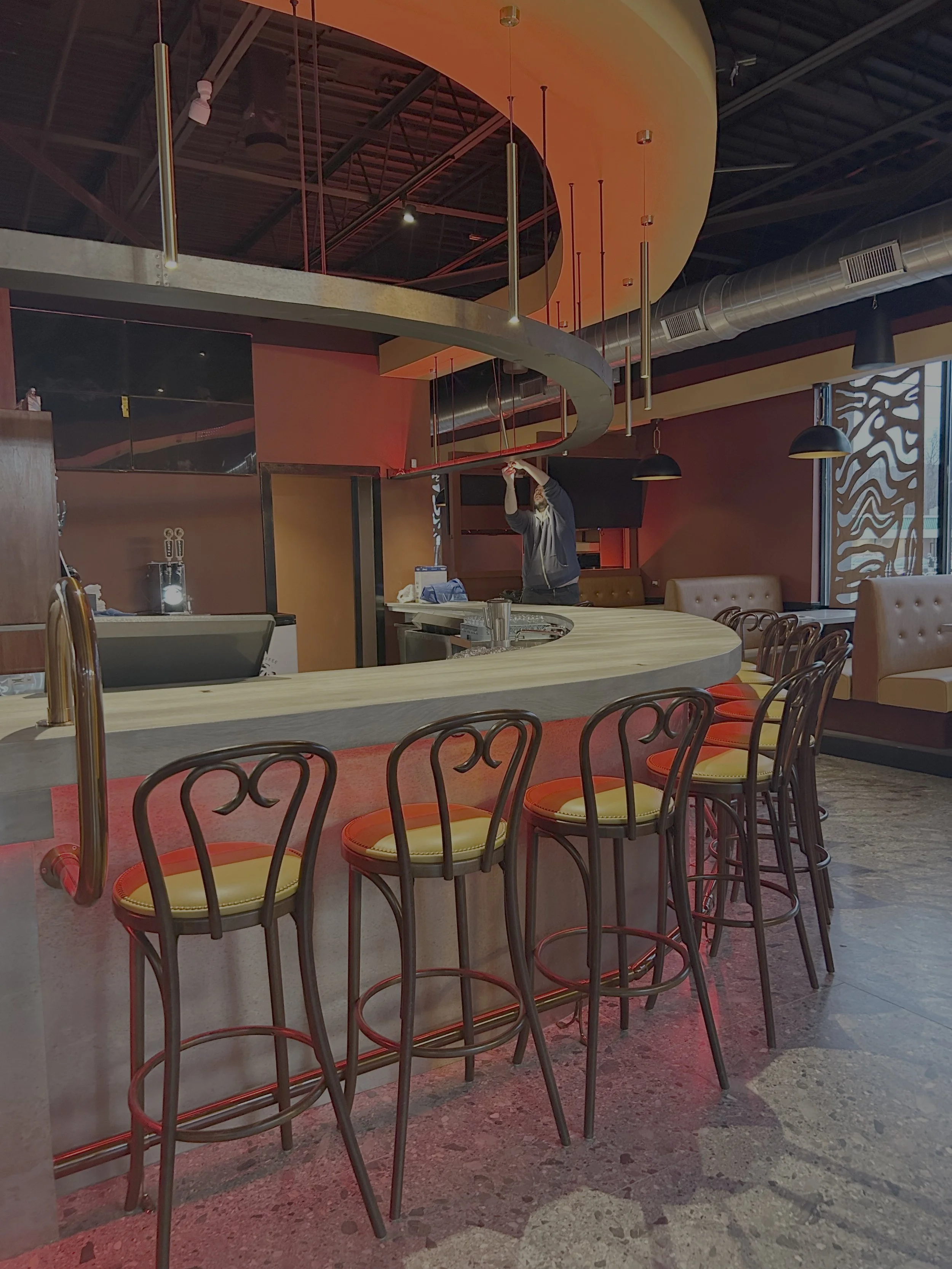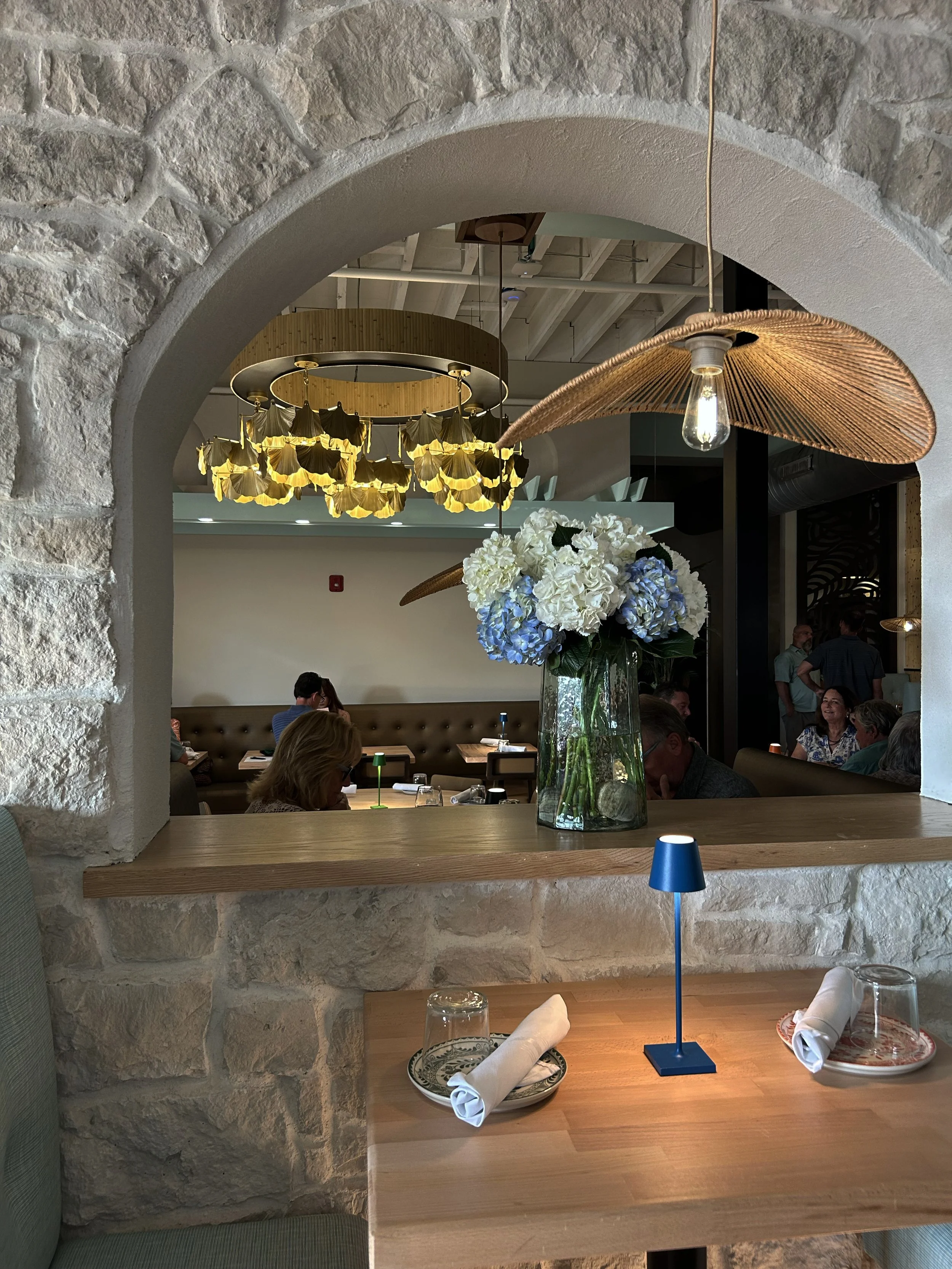
Most of what I do as a restaurant designer, you'll never notice — and that's on purpose. Before I ever think about drama, I design the bones of a restaurant to make money: a floor plan that moves guests and servers efficiently, turns tables, and pulls real revenue out of every square foot. That functional, revenue-generating design is the quiet foundation under every project I take on.
But that's not what this article is about. This one's about the fun stuff — the exciting, the dramatic, the jaw-dropping. The wow-factor elements that stop a guest in the doorway, make them reach for their phone, and send them telling everyone they know they have to see this place. Over the years — from an early edge-lit glass bar on the Jersey Shore to a 40-foot digital ceiling and a 12-foot indoor waterfall — I've made it my signature to give every restaurant one unforgettable moment. Here are nine of my favorites.
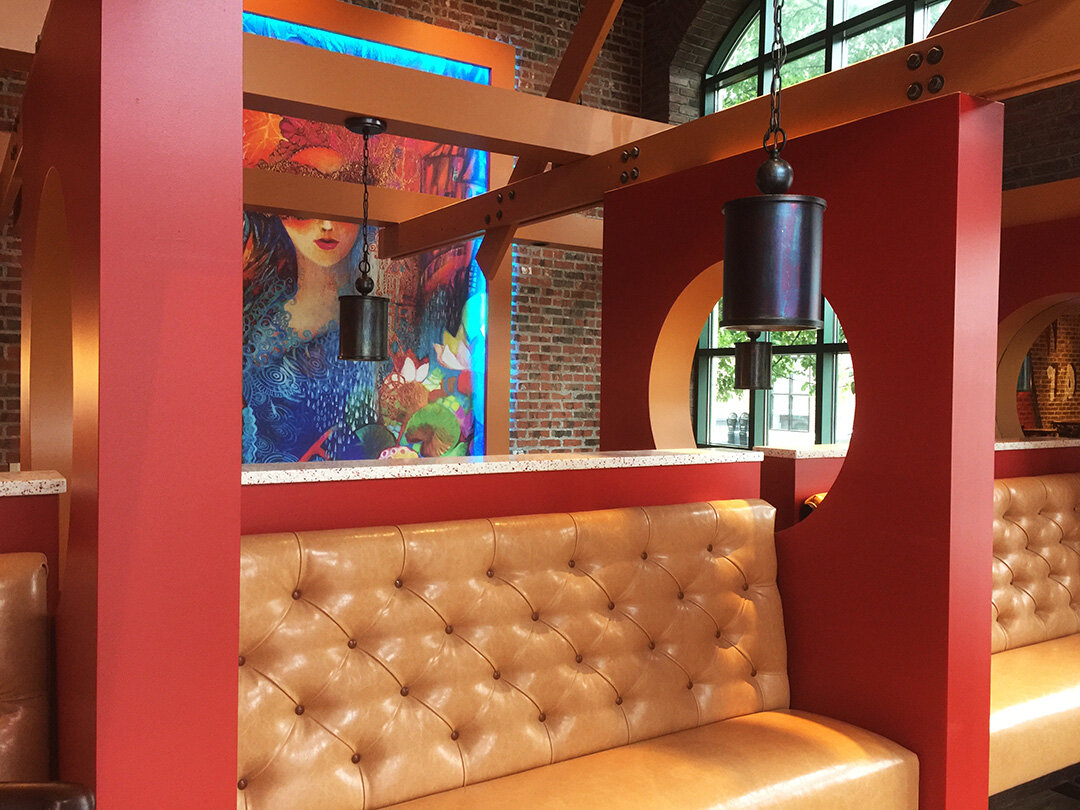
A Glowing Venetian Carnival — Marriott Hotel, Stamford, Connecticut
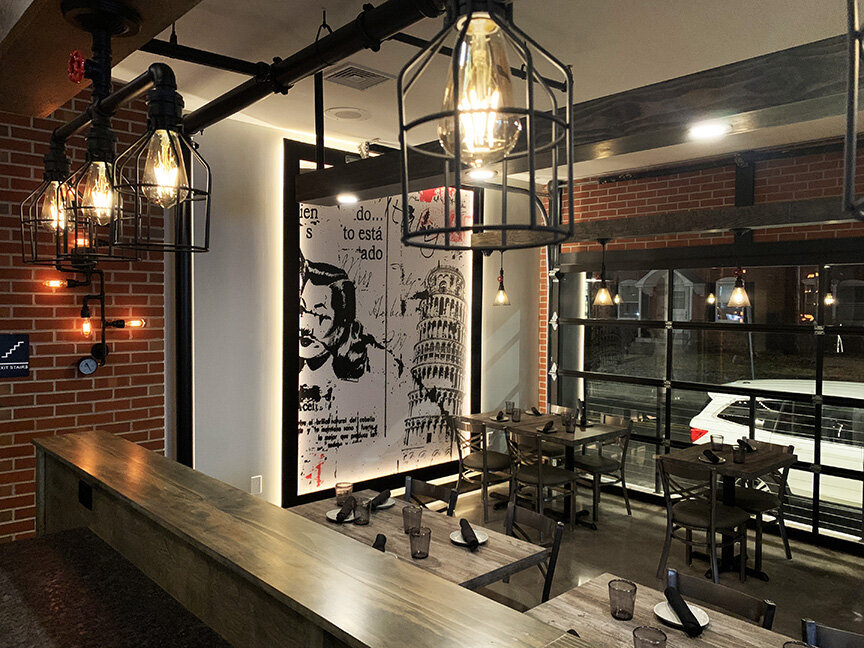
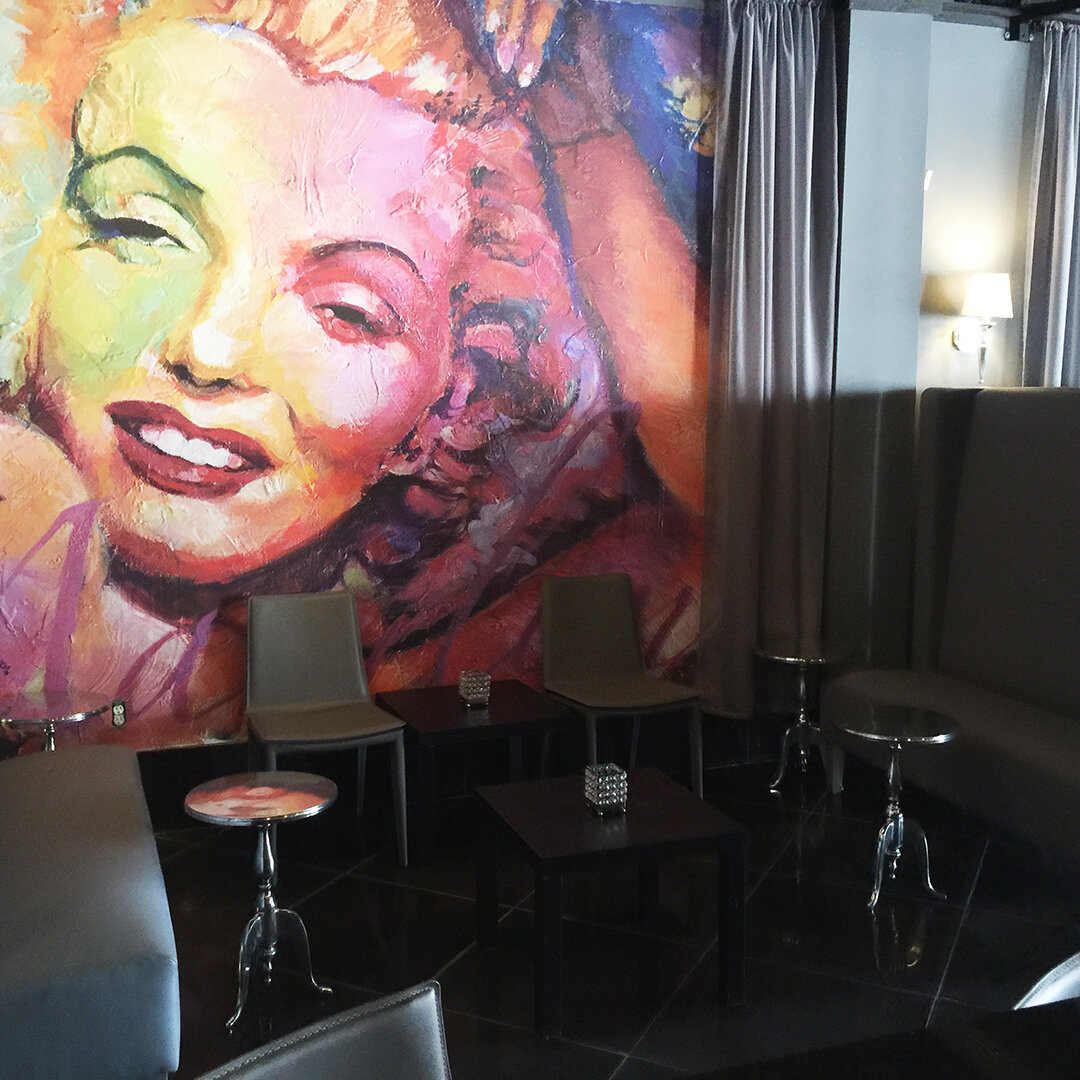
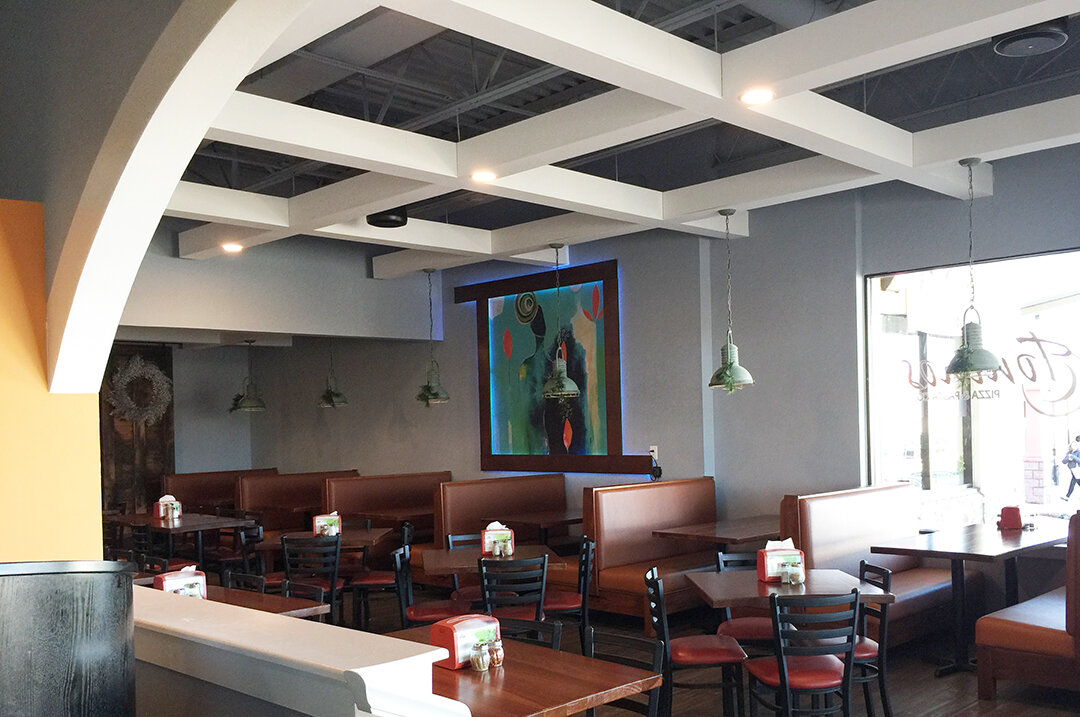
For the restaurant inside the Stamford Marriott, the theme was Venice — and I don't do Venice halfway. Digging into the city's character, I kept circling back to one image: the Carnevale di Venezia, the world-famous Venetian Carnival, where the entire city vanishes behind elaborate 18th-century costumes, dramatic hand-painted masks, masquerade balls, and boats gliding down the canals. That's not a theme — that's a feeling: mystery, romance, a little intrigue. I wanted guests to step straight into it.
So I took a striking Carnival poster and reimagined it as a large-scale feature mural, then wrapped it in a custom two-sided LED light frame that makes the whole piece glow from within. It commands the room the moment you enter — the masks seem to watch over the space, the warm light flatters every face in front of it, and a hotel restaurant suddenly feels like a hidden corner of Venice at midnight. Guests loved it. It became the piece people pointed to, photographed, and wanted to sit beside.
That's the job of a true wow-factor element: it hands a room an identity you feel before you've even opened the menu.
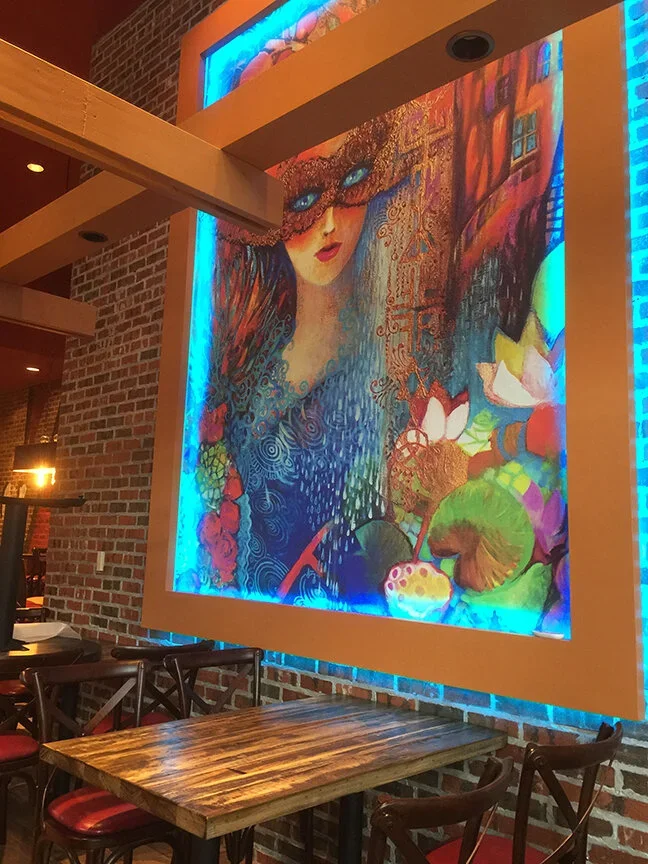
Venice comes to Stamford — a Carnevale di Venezia poster reimagined as a backlit, LED-framed feature mural in the Marriott Hotel restaurant.
A 40-Foot Underwater Sky — RiverRock Bar & Restaurant, Brick, NJ
Out on the marina at RiverRock, I wanted the ceiling to do the one thing ceilings never do: disappear. So we engineered a mammoth 40-foot digital ceiling screen and filled it with a living underwater world — schools of koi and tropical fish gliding over coral reefs, sunlight rippling down through clear blue water. Look up, and you're not under a roof anymore. You're sitting on the floor of a glowing, moving sea.
The scale is the whole magic. Stand in that room — look at the size of the guests below for a sense of just how enormous it is — and the entire sky overhead is alive: fish turning, light shifting, color washing across every table. And because RiverRock sits right on the water, there's a gorgeous trick built into it — real boats and open marina out the windows, an endless digital ocean overhead. Inside and outside melt into one world.
This is the kind of thing people drive out of their way to experience, then bring everyone they know back to see. That's what a real showpiece does: it turns a meal into an event, and a restaurant into a destination.
Immersive 40-foot digital underwater ceiling screen with koi and tropical fish above a full dining room, RiverRock Bar & Restaurant, Brick NJ — restaurant design by Raymond Haldeman — turns the ceiling into a living underwater world, right on the marina with real water just outside the windows.
14-Foot Antler Chandeliers — Olde Silver Tavern, Manalapan, NJ
Here's a rule I design by: scale is everything. You can hang something beautiful in a room, but if it isn't big — big enough to feel a little imposing — it just reads as "nice." And nobody ever drove across town for "nice." Size is what grabs people the second they walk in. Size is what creates the excitement.
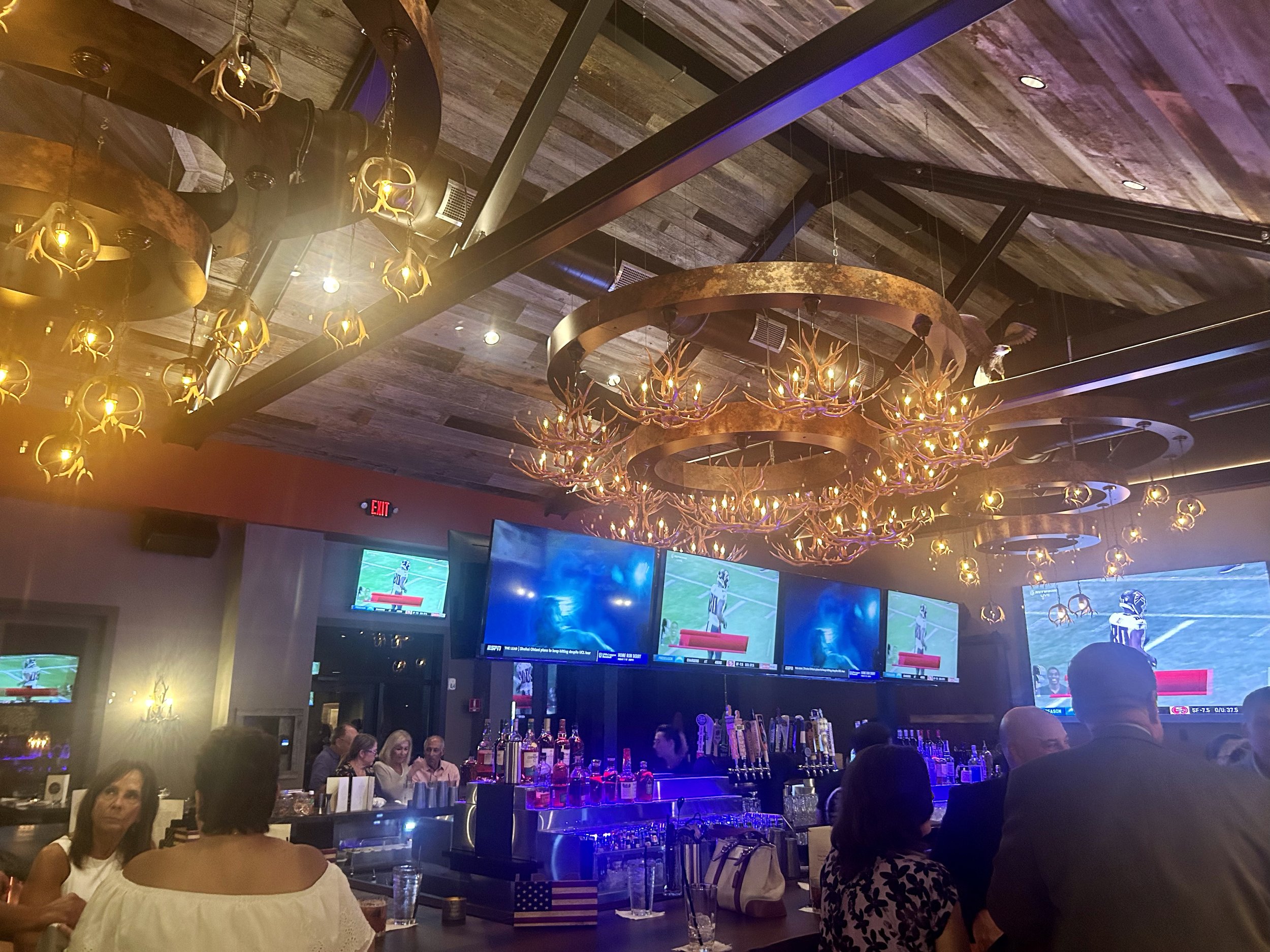
At the Olde Silver Tavern, that "something" is a set of 14-foot antler chandeliers I designed to crown the bar. Against the rustic reclaimed wood and the soaring beamed ceiling, they're enormous — tiered rings of antlers and warm, glowing light that pull every eye upward and set the entire mood of the room before you've so much as ordered a drink. They don't decorate the space. They command it.
And here's the part clients love most: going big didn't mean going broke. Because I designed these myself rather than buying pricey off-the-shelf fixtures — and because one commanding focal point lets you spend smart everywhere else — they delivered the full jaw-dropping wow-factor and saved the owner serious money. The most dramatic element in the room turned out to be one of the smartest lines on the budget. (That's the operator in me talking — I can't help it.)
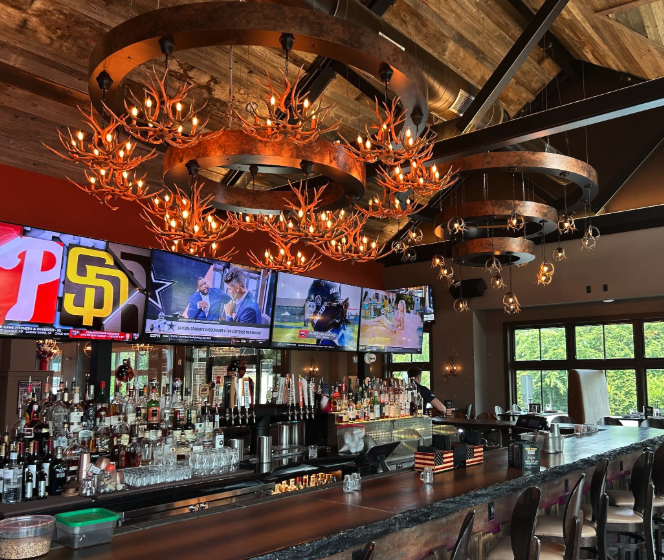
Go big, or go "nice" — custom 14-foot antler chandeliers crown the bar at the Olde Silver Tavern (Manalapan, NJ), a scale-driven wow-factor that also saved the owner money.
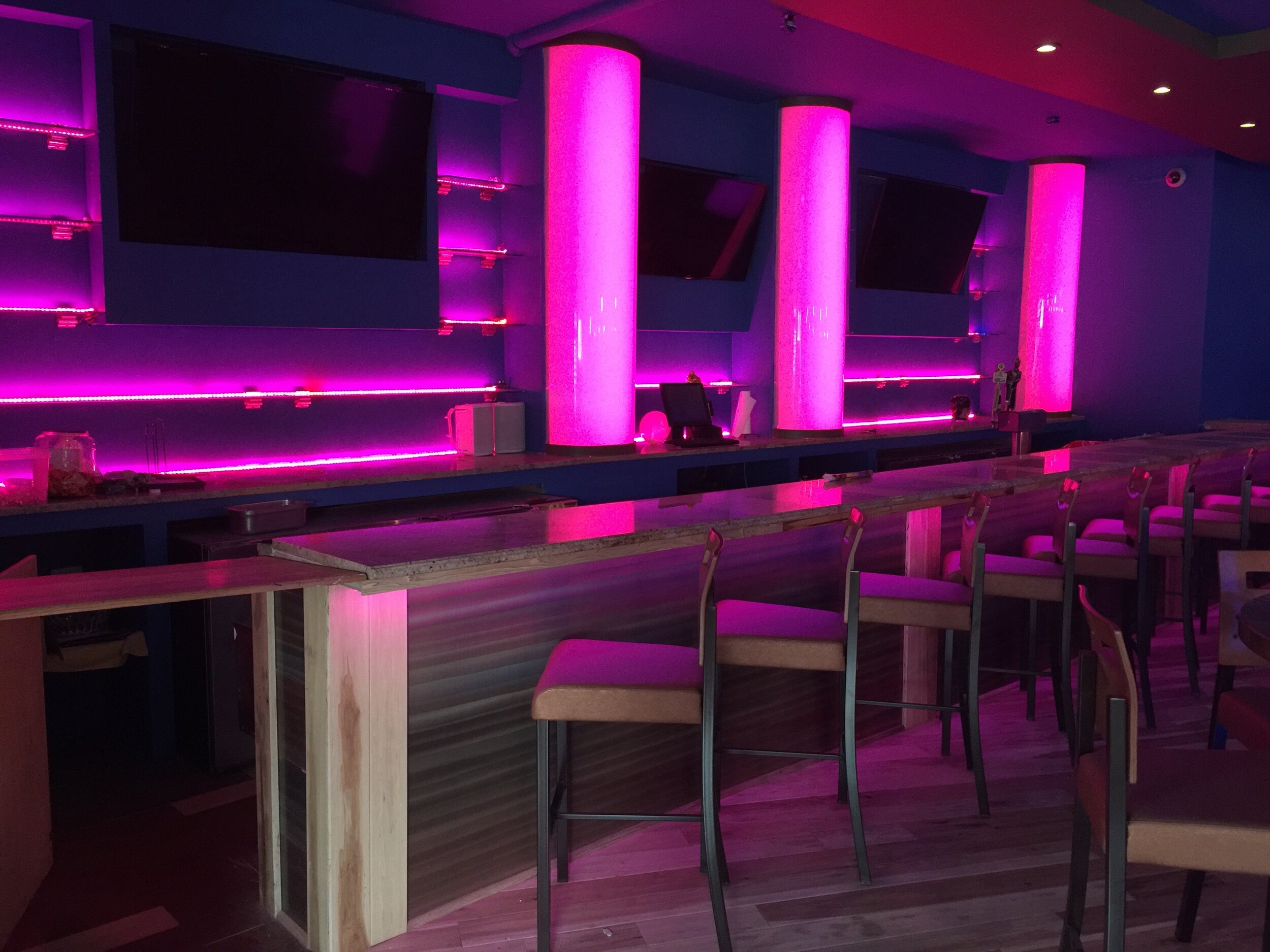
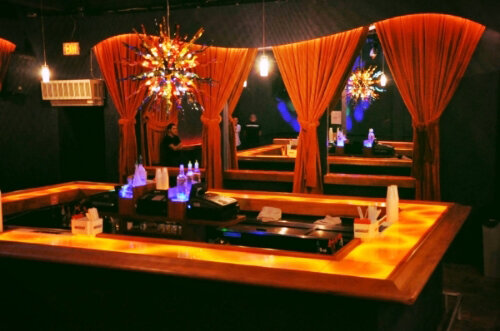
An Edge-Lit Glass Bar That Glows Like Water — FINS Bar & Grill, Cape May, NJ
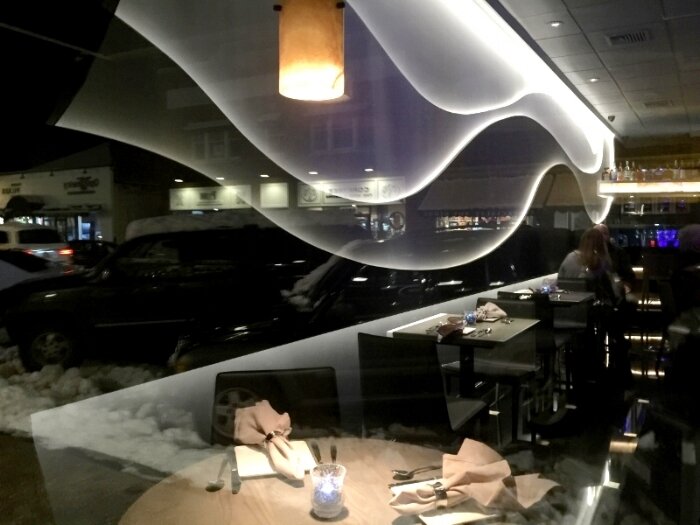
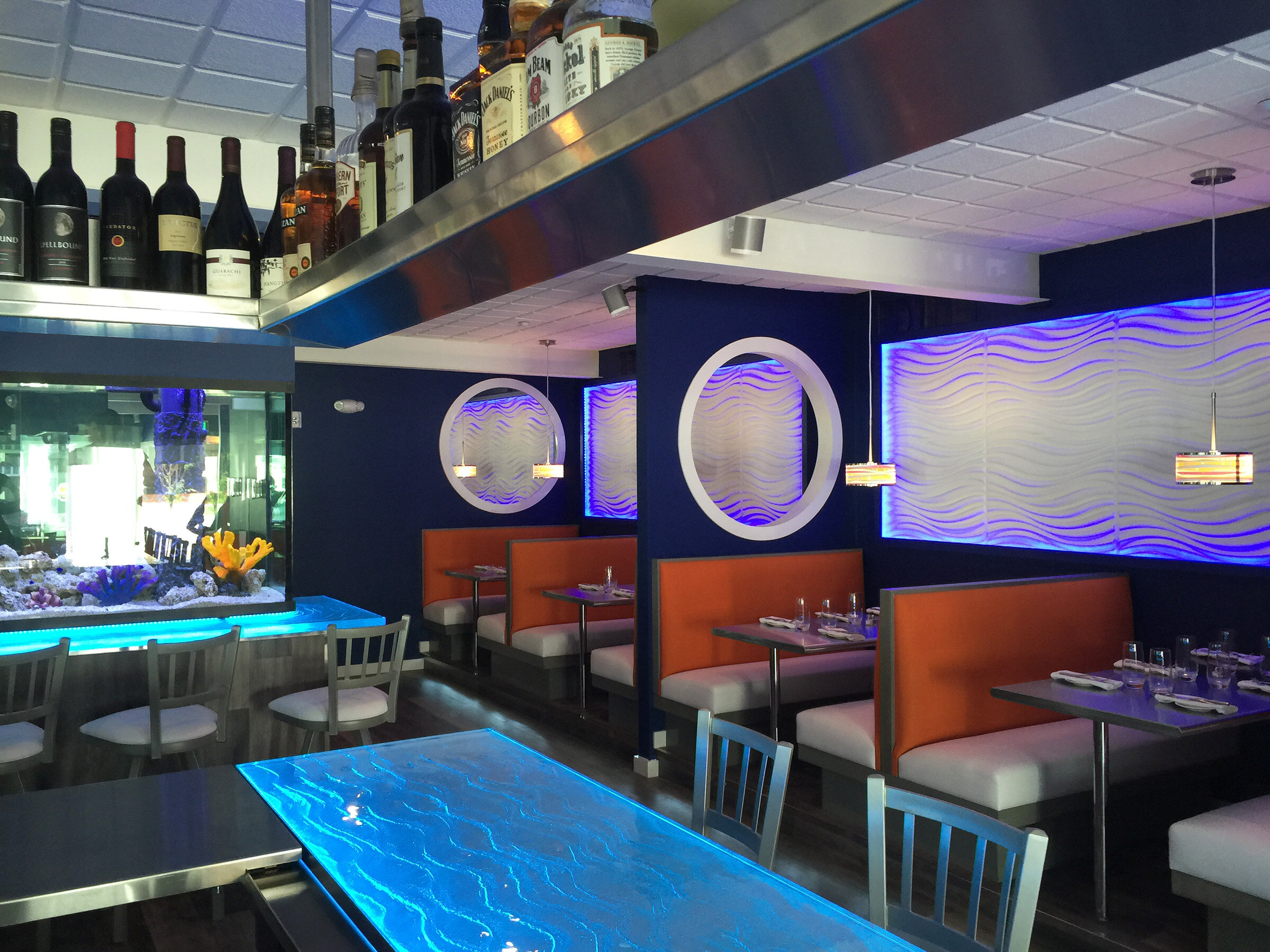
Some wow-factor elements stay with me because they were the first of their kind — and this edge-lit glass bar top at FINS in Cape May was one of my earliest true showpieces. The bar surface is thick glass, lit from within along its edges so the entire top glows, and textured so the light ripples and shifts like moving water. Sit down for a drink and your hands are resting on what looks like a pool of lit, living sea.
In a dark room washed in deep blue, it becomes the heart of the whole space — a long, luminous centerpiece that turns the simple act of bellying up to the bar into something cinematic. And it's a Jersey Shore seafood bar, so a bar top that looks like glowing water isn't just pretty — it is the concept, built right into the furniture.
You could let the photo say it all, and it does. But that's exactly the point of a true wow-factor piece: you don't have to explain it. People feel it the second they see it.
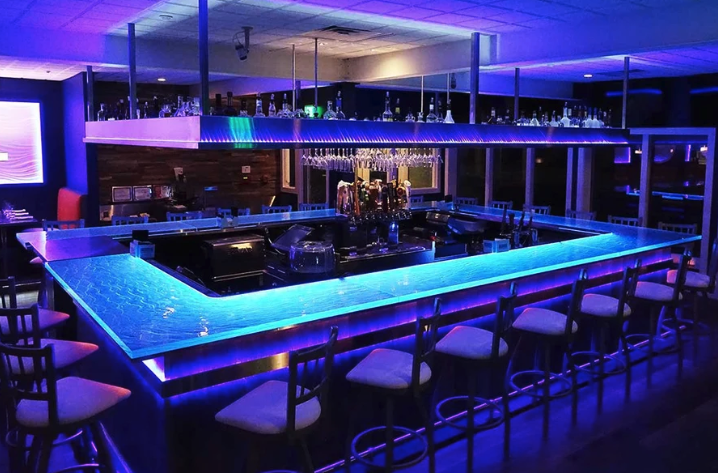
One of my earliest wow-factor showpieces — an edge-lit glass bar top at FINS Bar & Grill (Cape May, NJ) that glows like moving water.
Turning a "Big-Box Drop Ceiling" Into a Showpiece — Grace's Cafe, Phoenixville, PA
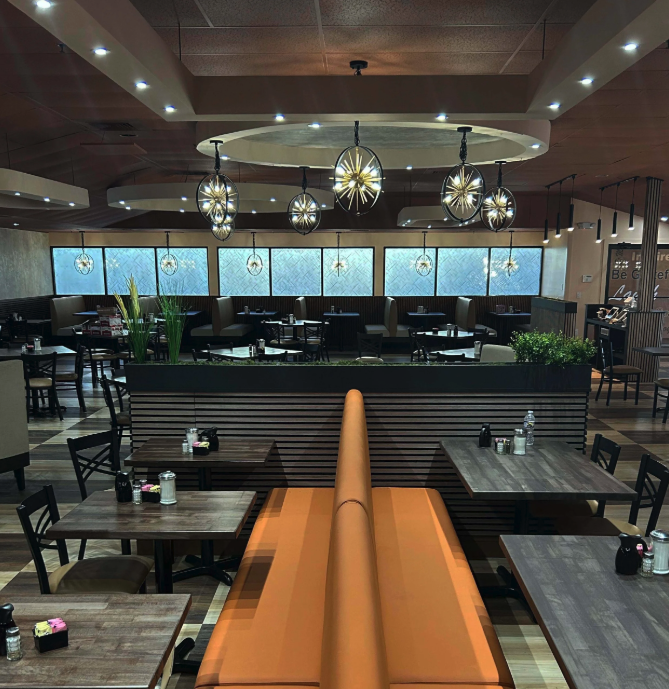
Not every wow-factor moment starts with a blank canvas. Sometimes the magic is in solving a problem — and at Grace's Cafe, the problem was staring straight down at the room. It had a massive commercial drop ceiling, the kind of flat grid you'd see in a big-box store, and it was flattening the whole space before a single guest sat down.
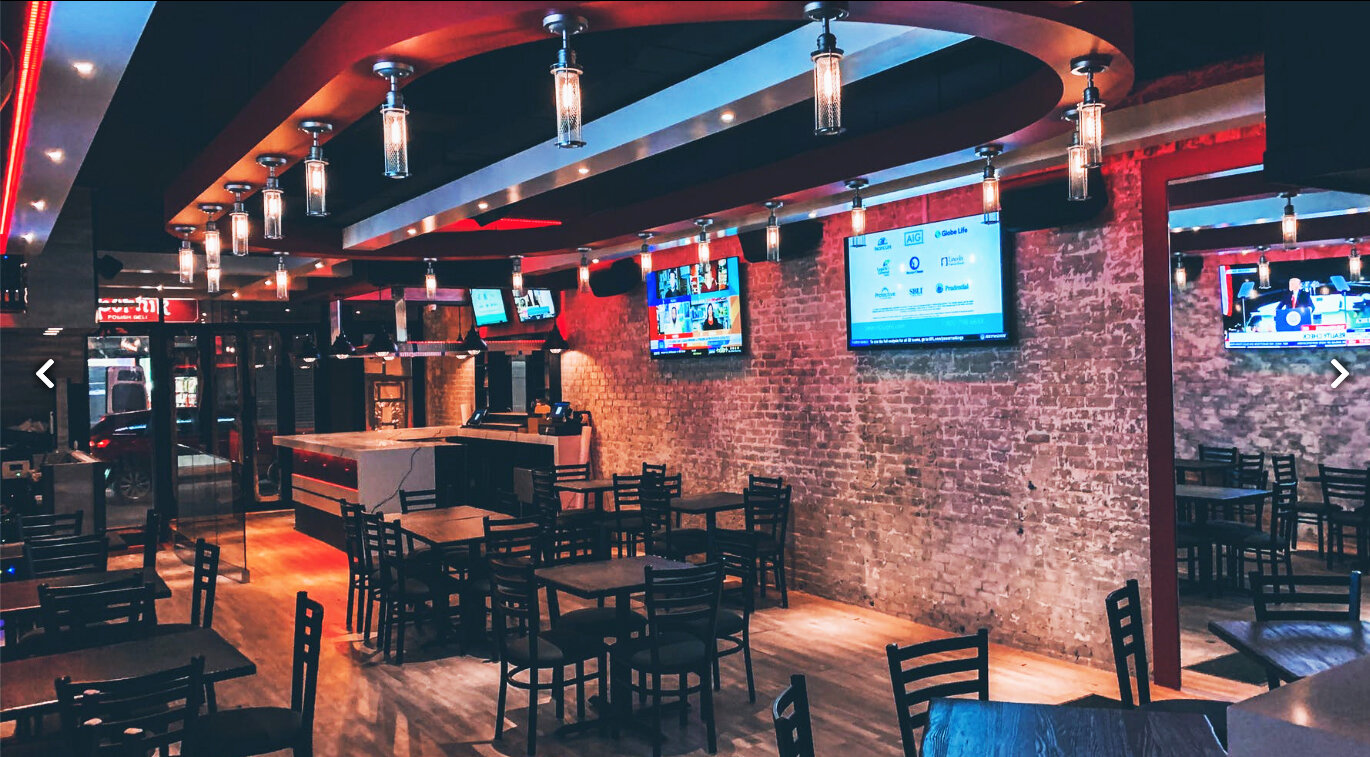
You can't always rip a ceiling like that out — so you out-design it. I painted it a deep, moody tone, dark enough to make the grid recede, but not so dark the room turned into a dingy basement. Then I gave people something far better to look at: a dramatic circular feature set into the center, finished in a textured metallic that catches the light like hammered silver, ringed by a constellation of starburst "sputnik" chandeliers in black iron. And I built lighting soffits suspended on iron bars, layering real architectural depth and shadow-play into what had been nothing but flat tile.
The result? A ceiling that went from the first thing you wanted to ignore to one of the first things you notice — in the best way. This is the part of the work I love most: give me an obstacle, and I'll turn it into the best feature in the room.
A Facade That Stops Traffic — Naxos Estiatorio, Woodland Park, NJ
Here's something people forget: your first wow-factor moment happens before anyone walks through the door. It happens from the street. At Naxos, a Greek restaurant in Woodland Park, I wanted the building itself to be the showpiece — so that at dusk, driving by, you simply couldn't not look.
The architecture nods to the Greek islands: crisp white stucco, clean stepped lines, a little bit of Santorini dropped onto a New Jersey corner. Then I let lighting do the real magic — oversized, large-scale wall sconces washing warm light up the facade, windows glowing gold from within, and uplighting that makes the whole building seem to float against the deep blue twilight sky. A plain corner lot becomes a postcard.
And the before-and-after on this one truly says it all — the jump from ordinary building to glowing destination is night and day (literally). Which points to the quiet business truth underneath all the beauty: a facade like this is advertising that never shuts off. Every car that rolls past at dusk gets a reason to pull in.
[IMAGE — alt text: Greek-island-style white facade of Naxos Estiatorio glowing at twilight with large-scale wall sconces and warm uplighting, Woodland Park NJ — restaurant design by Raymond Haldeman.] Caption: Curb appeal as wow-factor — dramatic large-scale sconces and warm uplighting make the Santorini-inspired facade of Naxos Estiatorio (Woodland Park, NJ) glow at dusk. (Shown here with the before-and-after.)
A Sculpted Ceiling and a Digital Waterfall — Cuzins Seafood Clam Bar, New Brunswick, NJ
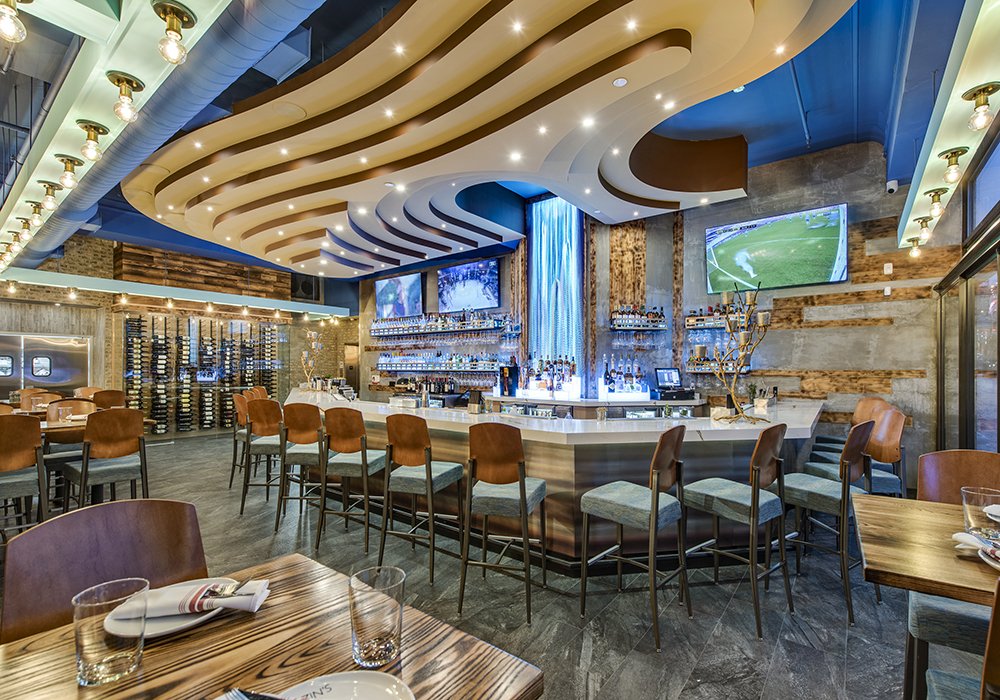
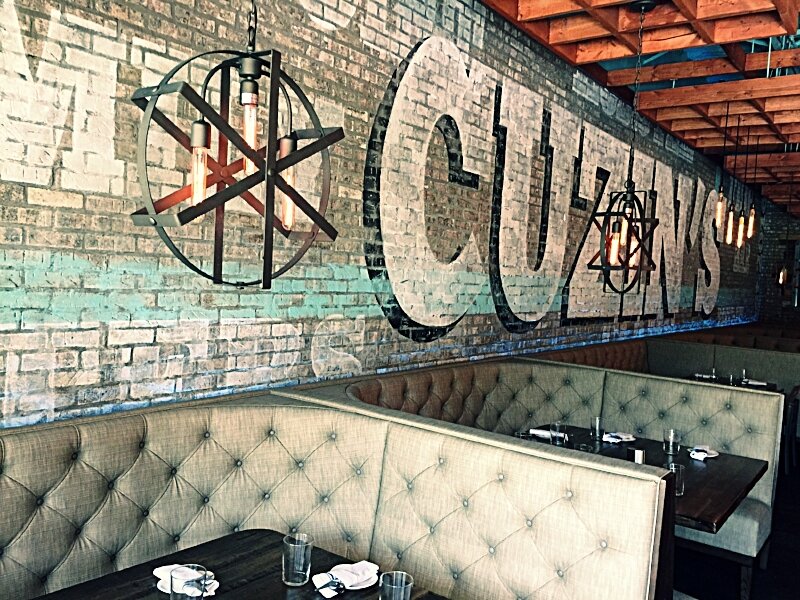
If you've followed my work lately, you know Cuzins Seafood Clam Bar in New Brunswick is the one I get asked about most — and the bar is where I let loose. The showstopper overhead is an inverted, tiered ceiling: curved wood planks cascading down in sculpted layers, each tier lined with recessed light, like a topographic wave frozen over the room. It gives the whole bar motion and drama even while it's standing perfectly still.
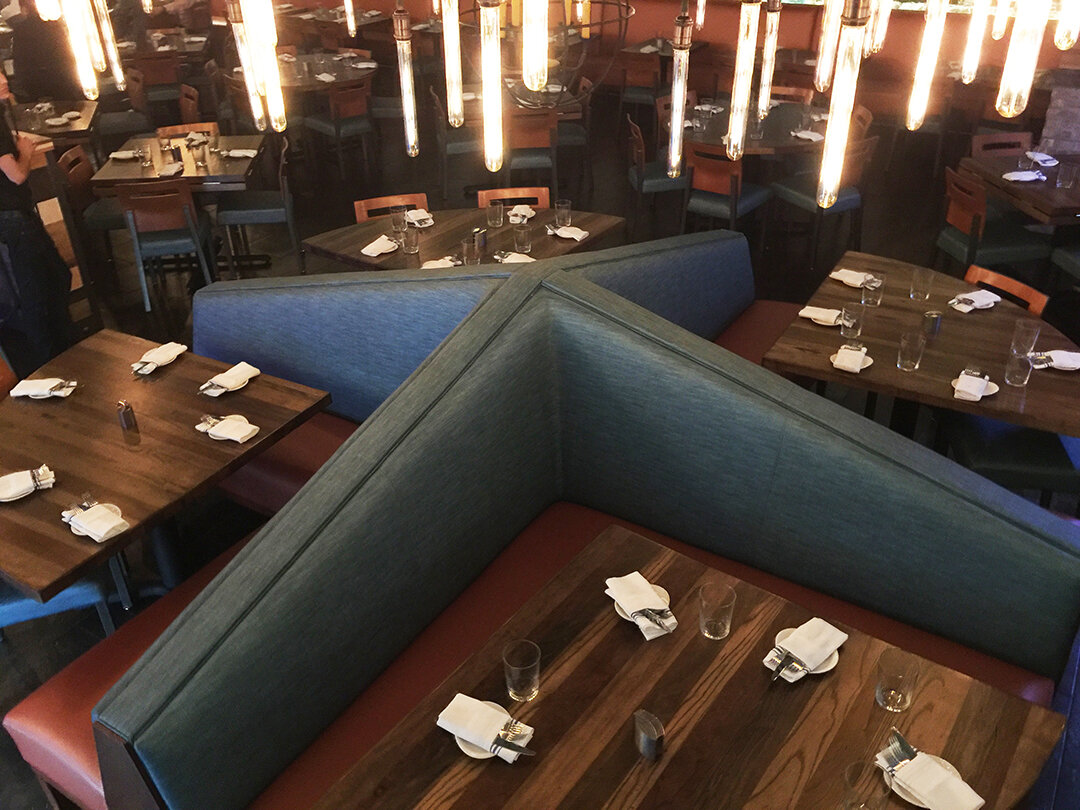
Underneath it, I turned up the color and the lighting details — warm woods, rich tones, rows of glowing Edison bulbs marching down the windows — so the space feels alive and vibrant from every seat. And then, because one jaw-drop is never quite enough for me, there's the centerpiece behind the bar: a roughly 12-foot digital three-dimensional waterfall that appears to pour straight from the ceiling across a glowing liquor display.
I try to give every room one main focal point that makes jaws drop. At Cuzins, I gave it two — and let them play off each other. That's what takes a casual seafood spot and turns it into a full-on destination.
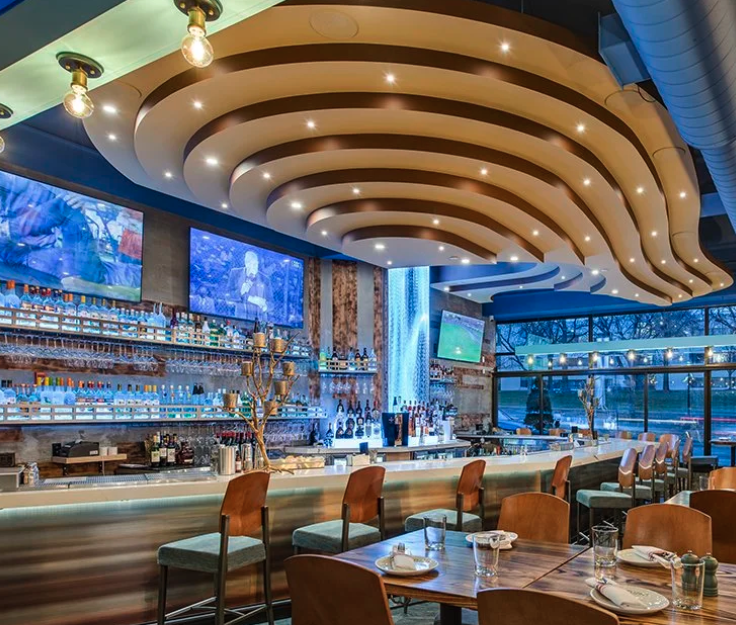
Two wow-factors in one room — a sculpted inverted tiered ceiling and a roughly 12-foot digital waterfall anchor the bar at Cuzins Seafood Clam Bar (New Brunswick, NJ).
An Old-World Sky Under a Copper Ceiling — Femmina Italian Restaurant, Medford, NJ
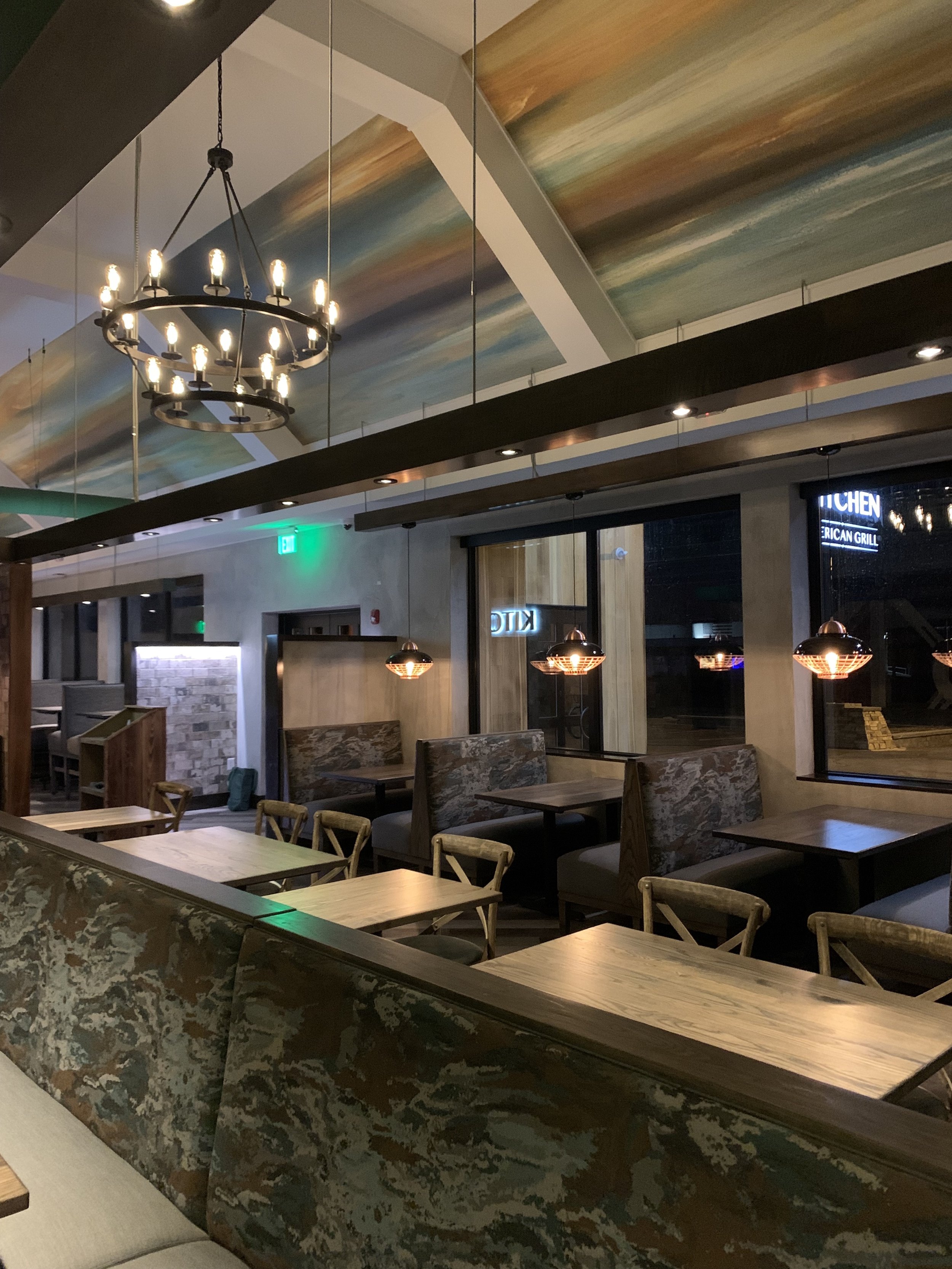
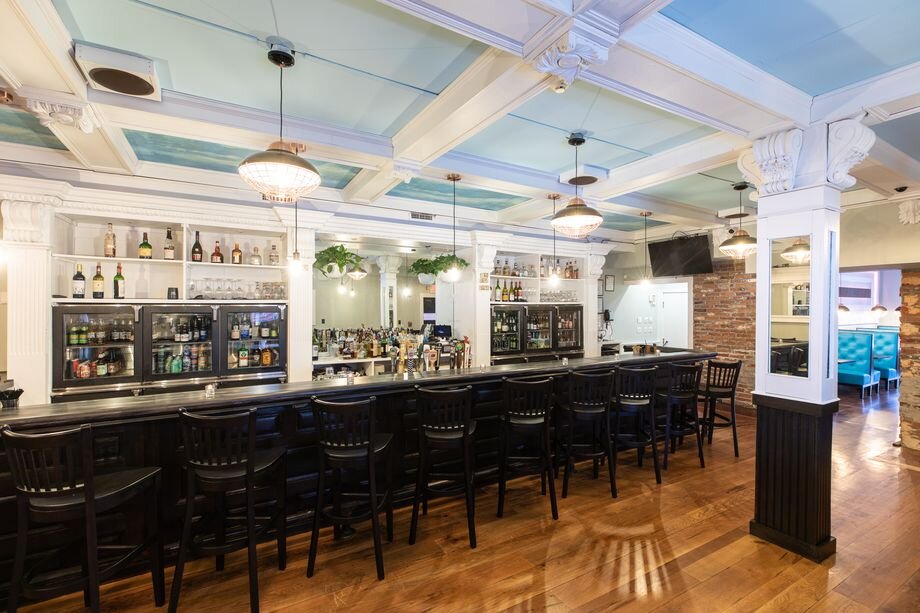
Drop ceilings show up again and again in the spaces I'm hired to transform — and at Femmina, I didn't hide this one. I reinvented it. Out went the plain white tiles, and in went copper-toned coffered inserts with a warm metallic glow. Suddenly the grid doesn't read as "office building" anymore. It reads as an old-world tin ceiling, the kind you'd find in a neighborhood trattoria that's been there for a hundred years.
At the center, I recessed a deep ceiling coffer, framed it in crisp white molding, and filled it with an old-world mural: a winged figure drifting across a painted Italian sky, the sort of thing you'd expect to discover looking up in a Roman palazzo. It gives the room height, a focal point, and a little bit of romance.
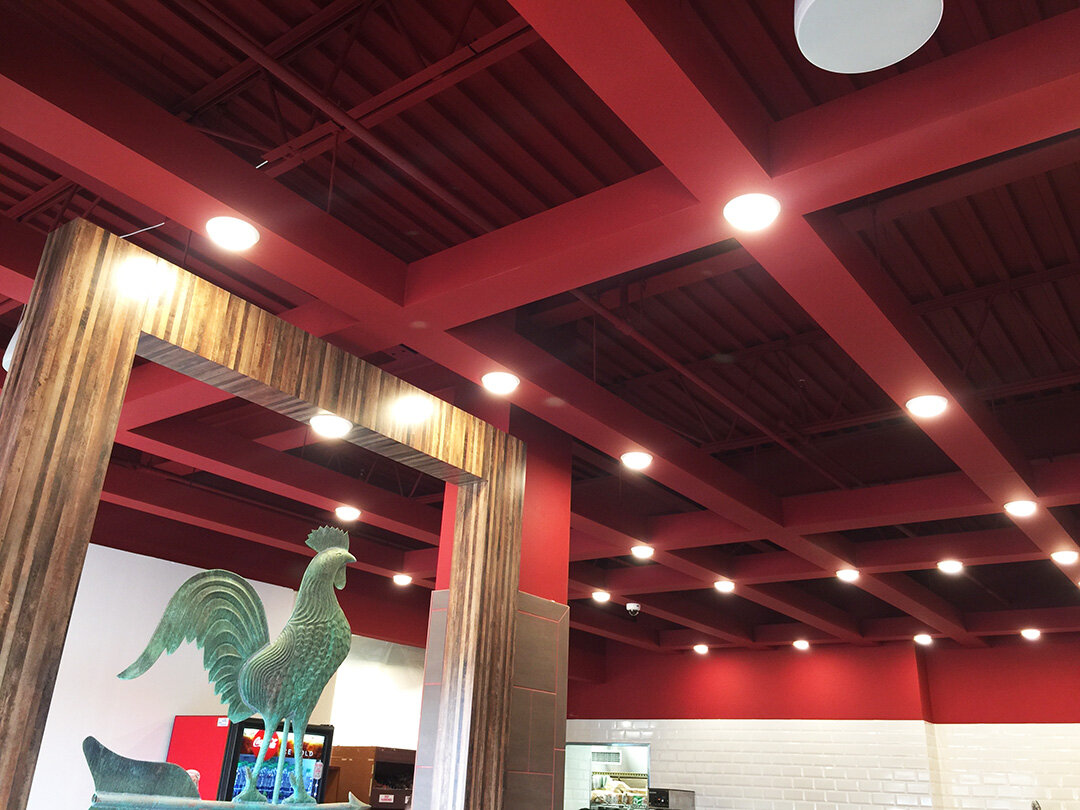
Then, because old-world on its own can start to feel heavy, I added color and movement: contemporary curved lighting soffits in bold red that float beneath the ceiling and sweep across the room like a ribbon, lined with bare Edison bulbs. The curve plays against the straight lines of the grid. The modern red plays against the classical painting.
That contrast is the whole point — old and new, classic and contemporary, in one look that's original and different from any other Italian restaurant around. And every piece earns its place: the copper warms the room, the coffer opens it up, and the soffits carry the light and lead the eye across the dining room. It doesn't just look good. It works.
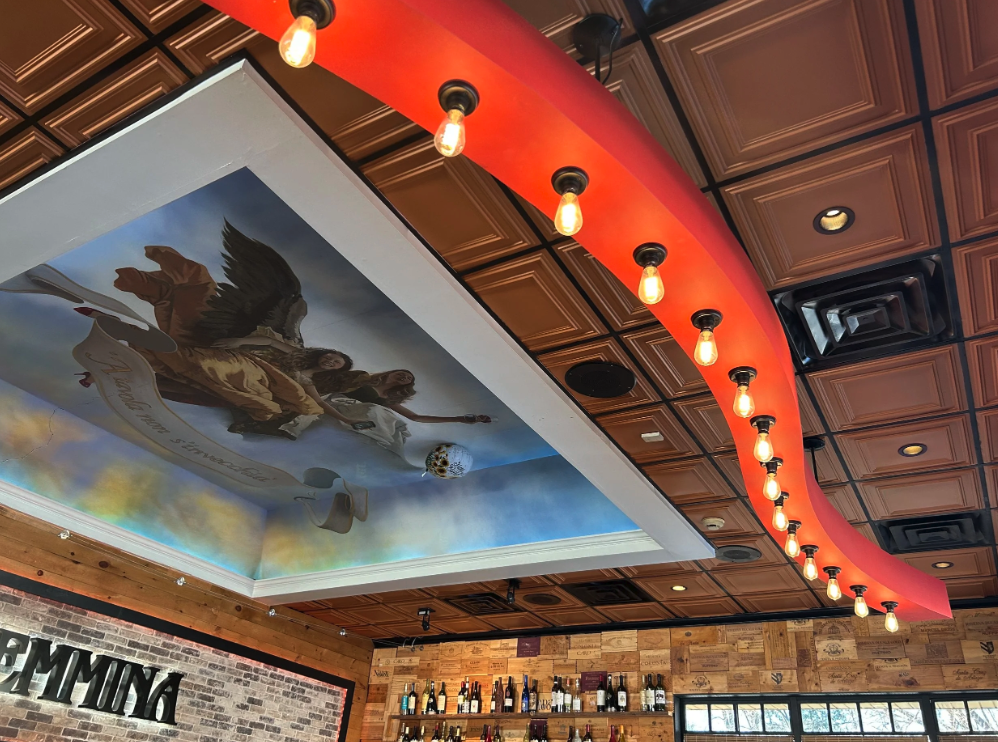
Old world meets new — copper-toned ceiling inserts, a recessed old-world sky mural, and a sweeping red floating soffit lined with Edison bulbs at Femmina Italian Restaurant (Medford, NJ).
A Living Copper Bar Top — Timber Breeze, Butternut, Wisconsin
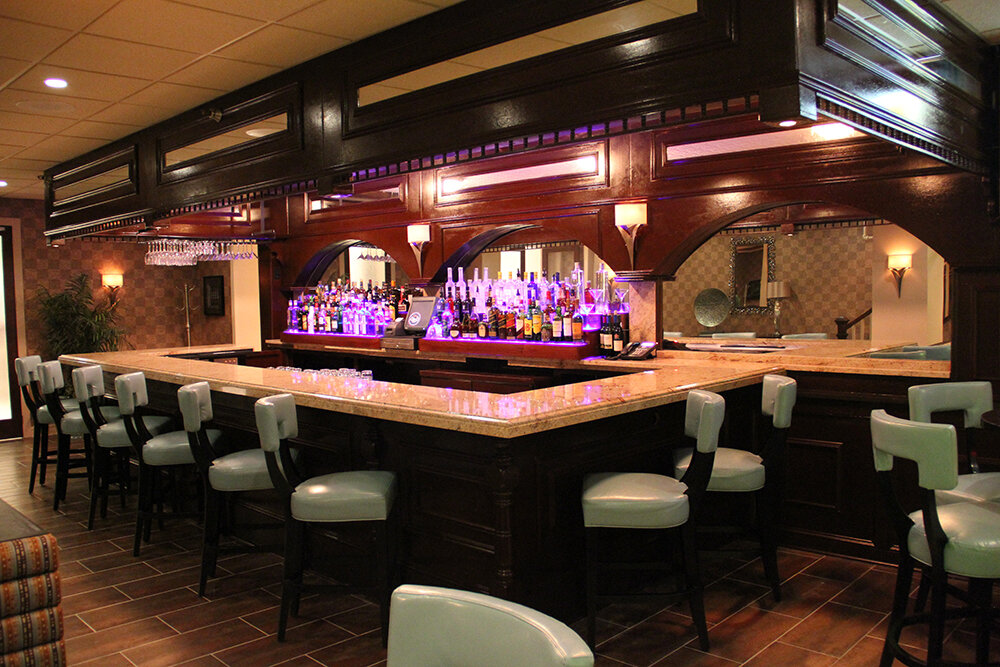
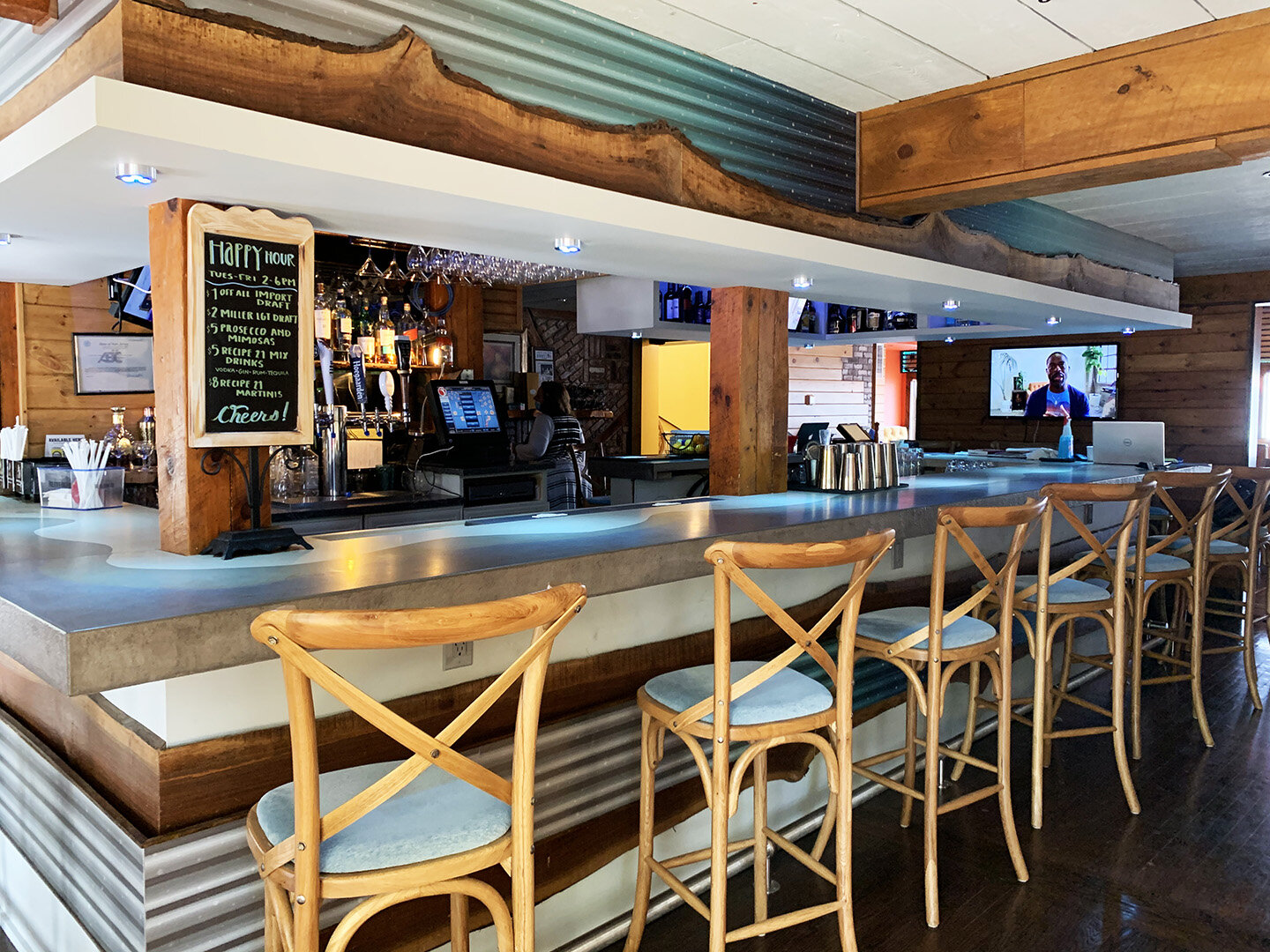
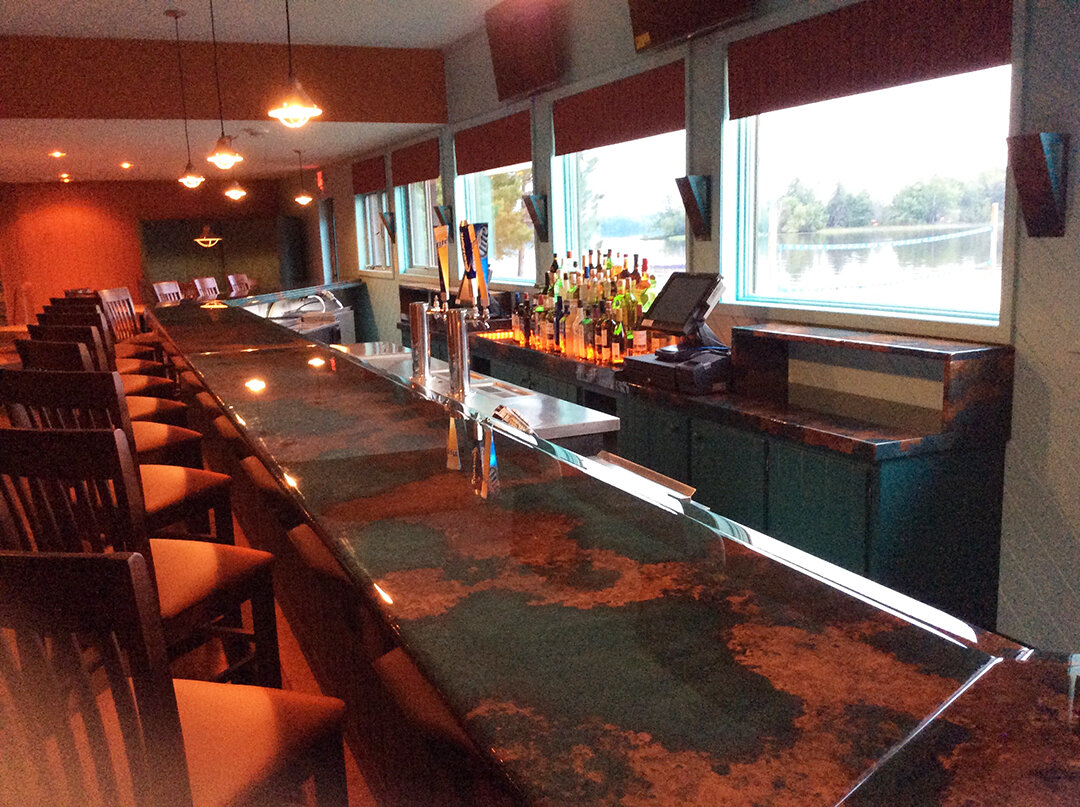
I'll finish with one of my favorites, and it's a long way from New Jersey: a cozy lakeside resort up in the Northwoods of Wisconsin called Timber Breeze. For their bar, I designed a one-of-a-kind copper bar top — and then let nature do half the work. The copper was patina'd, allowed to oxidize into drifting pools of turquoise and verdigris like an aerial map of islands, then sealed under a thick, glossy epoxy that locks it all in and makes it shine.
Under the bar's pin lights it comes alive — the surface catches every point of light, and the oxidation reads like an abstract painting you can set your drink on. And here's what I love most: no two will ever be alike. The chemistry of the copper decides the pattern, so this bar is literally a one-of-a-kind work of art that no one — including me — could ever exactly repeat.
That's a fitting note to end on, because it's the whole idea behind a wow-factor element: something singular. Something that could only live in this room, in this restaurant. Something people remember.
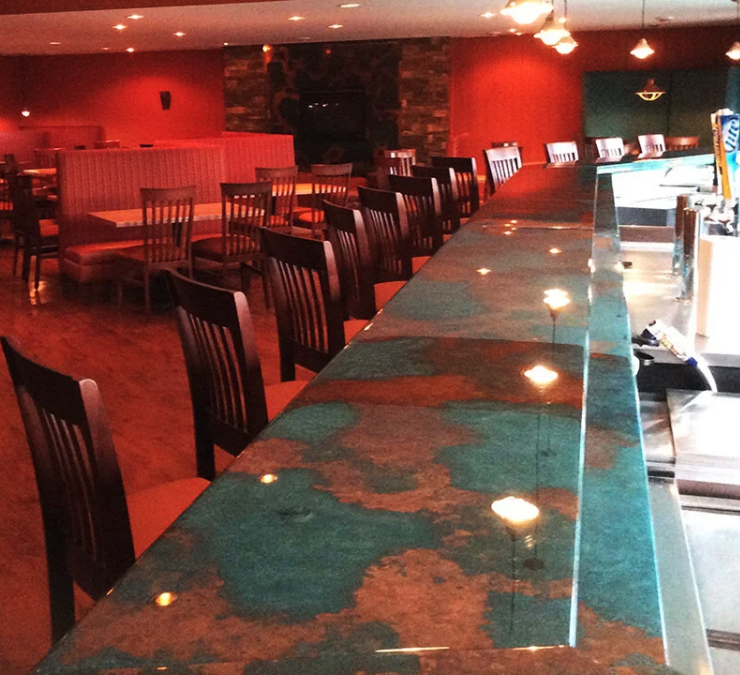
Nature as co-designer — a one-of-a-kind patina'd copper bar top, sealed under glossy epoxy, becomes a living work of art at Timber Breeze (Butternut, WI).
Bring Me Your Space
Every one of these started the same way: a room, an owner, and a single question — "what could this place be?" That's my favorite question in the world. I'm Raymond Haldeman, The Restaurant Designer. I design restaurants, bars, and nightclubs across New Jersey, the Jersey Shore, South Florida, and beyond — and I specialize in reviving closed and failing restaurants into destinations people drive out of their way to visit.
If you've got a space that should be turning heads — and turning tables — let's talk about the one wow-factor moment that could make it unforgettable.
📞 305-968-8855 · ✉️ therestaurantdesigner@gmail.com · 🌐 raymondhaldeman.com